













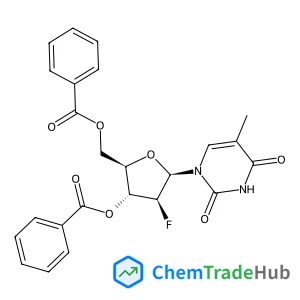
1-(3',5'-Di-O-benzoyl-2'-deoxy-2'-fluoro-b-D-arabinofuranosyl)thymine
CAS Number:
97614-47-6
Molecular Formula:
C24H21FN2O7
Yanbing Li, Youji Li, Zhiliang Jin, Noritatsu Tsubaki
The design and construction of advanced functional structures for photocatalysts has been proven to be an extremely effective approach to greatly enhance their properties toward higher solar-driven water splitting efficiency. Here, by taking advantage of the merits of large specific surface area, open framework structure, large ionic channels and interstices in the lattice and tunable composition of Prussian blue (PB), an open ZnCdS solid solution was obtained for the first time. In detail, the three ZnCdS solid solution derivatives, namely ZnCdS bulk, flake-bulk ZnCdS cage and hollow ZnCdS particle cage were successfully synthesized via C6CoK3N6 induction and NH3·H2O etching at ambient temperature. Interestingly, their specific surface areas and optical properties exhibit clearly visible differences, and their band structures display a stepped distribution. More importantly, the resulting hollow ZnCdS particle cage exhibits more excellent photocatalytic hydrogen evolution activities than the other two derivatives, and the hydrogen evolution rate reached approximately 23 mmol g−1 h−1 under 300 W xenon lamp irradiation with a light power of about 514 mW cm−2. The improved photocatalytic performances mainly benefit from the developed advantages that enriched the active sites, shortened the charge-migration distance, enlarged the surface area, derived more charge transfer channels, enhanced the redox capacity and reduced the reaction overpotential.
Tomoaki Nishino, Philippe Bühlmann, Takashi Ito, Yoshio Umezawa
DOI: 10.1039/B100685L
Christophe Innocent, Patrice Huguet, Jean Luc Bribes, Gérald Pourcelly, Mostefa Kameche
DOI: 10.1039/B008318F
A. Bradford, P. L. Drake, O. Worsfold, I. R. Peterson, D. J. Walton, G. J. Price
DOI: 10.1039/B008894N
Louise Breloy, Ozgur Yavuz, Ismail Yilmaz, Yusuf Yagci, Davy-Louis Versace
DOI: 10.1039/D1PY00462J
DOI: 10.1039/A905035C
Uwe Langer, Christof Hoelger, Gerd Buntkowsky, Hans-Martin Vieth, Hans-Heinrich Limbach
DOI: 10.1039/B007564G
C. G. Eisenhardt
DOI: 10.1039/B009507I
DOI: 10.1039/B100238O
K. E. Gubbins, R. Radhakrishnan
DOI: 10.1039/B009792F
(3.beta.)-3-Hydroxy-N,N-dimethyl-chol-5-en-24-amide (CAS: 79066-03-8) is primari...
5-(Aminomethyl)-2-methoxyphenol (CAS: 89702-89-6) is classified under GHS as a s...
Thieno[2,3-c]pyridin-7(6H)-one (CAS: 28981-13-7) is a heterocyclic organic compo...
1-[(6-Methoxy-3-pyridinyl)methyl]-4-piperidinamine dihydrochloride is generally ...
[(2E)-3-Phenyl-2-propen-1-yl]phosphonic acid (CAS: 146404-58-2) is regulated und...
6-Bromo-7-methoxyquinoline (CAS: 1620515-86-7) falls under the scope of the Glob...
This compound is primarily used in the pharmaceutical industry for the developme...
1-Ethyl-7-[2-methyl-6-(4H-1,2,4-triazol-3-yl)-3-pyridinyl]-3,5-dihydropyrazino[2...
Alternative reagents such as 2-[(dimethylamino)methyl]phenylboronic acid or rela...
3-(Piperidin-4-yloxy)pyridine (CAS: 310881-48-2) is an organic compound with the...
![Bis(N,N''-dimethylpiperazine)tetra[copper(I) iodide] structure](https://static.chemtradehub.com/structs/140/1401708-91-5-2b86.webp "Bis(N,N''-dimethylpiperazine)tetra[copper(I) iodide] structure")


amine structure](https://static.chemtradehub.com/structs/629/62924-61-2-0728.webp "[(2-chlorophenyl)methyl](ethyl)amine structure")




