













![(3E)-3-[4-Hydroxy-3,5-bis(2-methyl-2-propanyl)benzylidene]dihydro-2(3H)-furanone structure](https://static.chemtradehub.com/structs/102/102271-49-8-cba7.webp "(3E)-3-[4-Hydroxy-3,5-bis(2-methyl-2-propanyl)benzylidene]dihydro-2(3H)-furanone structure")
(3E)-3-[4-Hydroxy-3,5-bis(2-methyl-2-propanyl)benzylidene]dihydro-2(3H)-furanone
CAS Number:
102271-49-8
Molecular Formula:
C19H26O3
Ruru Yu, Yajie Wen
Lithium-metal batteries have revived increasing attention and research on account of the growing demands for high-energy electrical energy storage, but their unsatisfactory cycling stability and service safety have greatly limited their rapid development. In this study, a heat-resistant gel polymer electrolyte (GPE) based on a poly(vinylidene fluoridehexafluoropropylene) (PVDF-HFP)/poly-m-phenyleneisoph-thalamide (PMIA) nanofiber membrane doped with graphene oxide (GO) nanosheets was fabricated via a one-step electrospinning method. Significantly, the as-prepared heat-resistant gel PMIA separator with the assistance of GO sheets was endowed with a relatively low fiber diameter and large specific surface area, bringing about a markedly enhanced liquid electrolyte wettability and absorptivity so as to improve lithium-ions conduction and interfacial compatibility. Meanwhile, the obtained heat-resistant GO-modified GPE exhibited excellent heat resistance and strengthened mechanical strength, which in turn set a solid foundation for ensuring high security. Consequently, an assembled lithium-metal cell using the heat-resistant gel PMIA separator delivered a noticeable improvement in cycling stability with a capacity retention rate of 84.7% (0.077% capacity fading per cycle) after 200 cycles at 0.5C, accompanied by excellent rate performance with a high capacity recovery efficiency of 97.9%. This work shares a convenient strategy for the synthesis of a dual-functional and stable superstructure separator for advanced Li-ion batteries.
Nao Idaka, Satoru Nishiyama, Shigeru Tsuruya
DOI: 10.1039/B008093O
Teresa Torre, Carmelo Raimondo, Adolfo Parmaliana
DOI: 10.1039/B100091H
E. V. Albano
DOI: 10.1039/B008627O
P. Lindner, T. Narayanan
DOI: 10.1039/B009104I
Michael L. Klein
DOI: 10.1039/B009490K
T. Nakamura, K. Kaiya, N. Takahashi, T. Matsuzawa, M. Ohta, C. C. Rowlands, G. M. Smith, P. C. Riedi
DOI: 10.1039/B008251L
M. Gabriela Lagorio, Enrique San Román, André Zeug, Jörg Zimmermann, Beate Röder
DOI: 10.1039/B100077M
(3.beta.)-3-Hydroxy-N,N-dimethyl-chol-5-en-24-amide (CAS: 79066-03-8) is primari...
5-(Aminomethyl)-2-methoxyphenol (CAS: 89702-89-6) is classified under GHS as a s...
Thieno[2,3-c]pyridin-7(6H)-one (CAS: 28981-13-7) is a heterocyclic organic compo...
1-[(6-Methoxy-3-pyridinyl)methyl]-4-piperidinamine dihydrochloride is generally ...
[(2E)-3-Phenyl-2-propen-1-yl]phosphonic acid (CAS: 146404-58-2) is regulated und...
6-Bromo-7-methoxyquinoline (CAS: 1620515-86-7) falls under the scope of the Glob...
This compound is primarily used in the pharmaceutical industry for the developme...
1-Ethyl-7-[2-methyl-6-(4H-1,2,4-triazol-3-yl)-3-pyridinyl]-3,5-dihydropyrazino[2...
Alternative reagents such as 2-[(dimethylamino)methyl]phenylboronic acid or rela...
3-(Piperidin-4-yloxy)pyridine (CAS: 310881-48-2) is an organic compound with the...
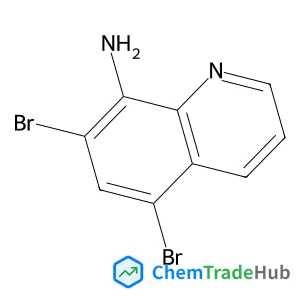
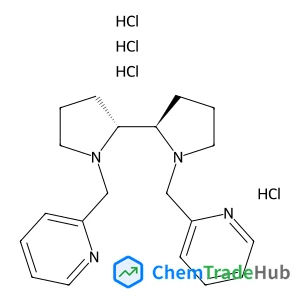
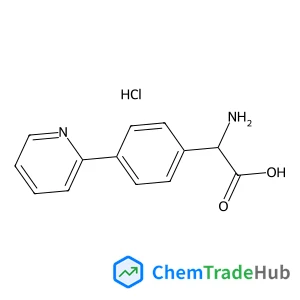
amine structure](https://static.chemtradehub.com/structs/629/62924-61-2-0728.webp "[(2-chlorophenyl)methyl](ethyl)amine structure")




