



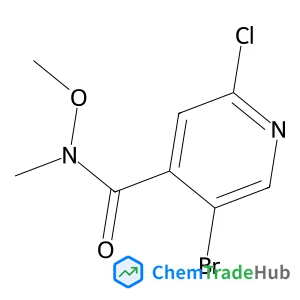
5-Bromo-2-chloro-N-methoxy-N-methylisonicotinamide
CAS Number:
1256790-08-5
Molecular Formula:
C8H8BrClN2O2
Changyuan Song, Xuying Chen, Rui Hao, Dongna Cai, Xiangwei Zhu, Hao Liu, Jinzhou Chen, Wentao Liu
Interfacial solar steam generation (ISSG) provides a facile and sustainable strategy for freshwater production from seawater. To further enhance steaming efficiency, exploration of novel photo-thermal materials and optimization of their heat transfer are two important considerations. However, for most steam generators, the exquisite design of their intrinsic evaporation architecture was less discussed, which in turn seriously reduced their solar-to-vapor conversion efficiency. In this study, a 3D steam generator that demonstrates intrinsic bi-functional areas (light absorption and thermal management) is prepared by local modification of cocoons at low temperatures. The obtained steam generator exhibits an evaporation rate as high as 1.44 kg m−2 h−1, and its heat conduction loss was reduced significantly to only 0.9%. More importantly, the intrinsic 3D structures of cocoons can help to maintain high evaporation rates of generators as the light incident angles varied from 0–90°, which facilitates their practical use, i.e. under moving sun. This work provides a paradigm shift to design cost-effective, high-efficiency and eco-friendly steam generators for high-performance saline water desalination.

Electroanalysis

Journal of Chemical Sciences

Bioorganic & Medicinal Chemistry

Critical Reviews in Solid State and Materials Sciences

Heteroatom Chemistry

Herald of the Russian Academy of Sciences

Biocatalysis and Biotransformation

Polycyclic Aromatic Compounds

Bioorganic & Medicinal Chemistry Letters

Colloid Journal
D. J. Diestler, G. T. Gao, X. C. Zeng
DOI: 10.1039/B007772K
Louise Breloy, Ozgur Yavuz, Ismail Yilmaz, Yusuf Yagci, Davy-Louis Versace
DOI: 10.1039/D1PY00462J
Jaroslaw Sadlo, Marek Danilczuk, Jacek Michalik
DOI: 10.1039/B008246P
J. R. Bamforth, J. H. Merkin, S. K. Scott, R. Tóth, V. Gáspár
DOI: 10.1039/B010094N
Prathyusha Chimala, M. Mario Perera, Aissatou Wade, Tucker McKenzie, Joshua Allor, Neil Ayres
DOI: 10.1039/D1PY00560J
Andreas Philippou, Anabela Valente, João Rocha, Michael Anderson
DOI: 10.1039/B006828O
Myleidi Vera, Bruno F. Urbano
DOI: 10.1039/D1PY00542A
(3.beta.)-3-Hydroxy-N,N-dimethyl-chol-5-en-24-amide (CAS: 79066-03-8) is primari...
5-(Aminomethyl)-2-methoxyphenol (CAS: 89702-89-6) is classified under GHS as a s...
Thieno[2,3-c]pyridin-7(6H)-one (CAS: 28981-13-7) is a heterocyclic organic compo...
1-[(6-Methoxy-3-pyridinyl)methyl]-4-piperidinamine dihydrochloride is generally ...
[(2E)-3-Phenyl-2-propen-1-yl]phosphonic acid (CAS: 146404-58-2) is regulated und...
6-Bromo-7-methoxyquinoline (CAS: 1620515-86-7) falls under the scope of the Glob...
This compound is primarily used in the pharmaceutical industry for the developme...
1-Ethyl-7-[2-methyl-6-(4H-1,2,4-triazol-3-yl)-3-pyridinyl]-3,5-dihydropyrazino[2...
Alternative reagents such as 2-[(dimethylamino)methyl]phenylboronic acid or rela...
3-(Piperidin-4-yloxy)pyridine (CAS: 310881-48-2) is an organic compound with the...
![N-[4-(Cyanoethynyl)phenyl]-16-oxo-4,7,10,13-tetraoxa-17-azahenicos-1-yn-21-amide structure](https://static.chemtradehub.com/structs/218/2183440-36-8-68cb.webp "N-[4-(Cyanoethynyl)phenyl]-16-oxo-4,7,10,13-tetraoxa-17-azahenicos-1-yn-21-amide structure")
![4,4-Difluoro-2-methyl-1-{[(2-methyl-2-propanyl)oxy]carbonyl}-L-proline structure](https://static.chemtradehub.com/structs/119/1194032-23-9-f426.webp "4,4-Difluoro-2-methyl-1-{[(2-methyl-2-propanyl)oxy]carbonyl}-L-proline structure")
![N-[(6-Bromo-3-pyridinyl)methyl]ethanamine structure](https://static.chemtradehub.com/structs/120/120740-05-8-ca55.webp "N-[(6-Bromo-3-pyridinyl)methyl]ethanamine structure")




