![Ethanone, 1-[4-chloro-2-(methylthio)-5-pyrimidinyl]- structure](https://static.chemtradehub.com/structs/661/66116-82-3-863e.webp "Ethanone, 1-[4-chloro-2-(methylthio)-5-pyrimidinyl]- structure")
Ethanone, 1-[4-chloro-2-(methylthio)-5-pyrimidinyl]-
CAS Number:
66116-82-3
Molecular Formula:
C7H7ClN2OS
Lalita Sharma, Ankita Mathur, Aditi Halder
Transition metal oxysulfides (TOSs) possess great catalytic activities towards electrochemical applications. TOS synthesis has faced a great challenge as it requires a controllable technique. In this article, molybdenum oxysulfide nano-flowers decorated on reduced graphene oxide (RGO) sheets were synthesised by a facile, easy and controllable plasma technique. Anionic substitution is performed by oxygen incorporation, which improves poor conductivity, lack of intrinsic activity and limited active sites. To control sulfur substitution, we have used the O2 plasma technique to incorporate O as an anionic substitute and form molybdenum oxysulfide. Anionic substitution by O2 plasma exposure is an effective, time-efficient, and promising way to fabricate transition metal oxysulfide. We found that after irradiation for continuously 180 s with O2 plasma partial S is substituted by O, which forms molybdenum oxysulfide with the formula MoS2−xOx supported on RGO. After anionic substitution, it shows high-performance towards the hydrogen evolution reaction (HER) electrocatalyst as well as towards supercapacitor applications. After irradiation for 180 s with O2 plasma, MoS2−xOx shows the best HER catalytic activity with an exchange current density of 8.6 × 10⁻⁵ A cm−2, Tafel slope of 140 mV dec−1 and transfer coefficient of 0.42. In this study, we also investigate the supercapacitor properties that delivered high specific capacitance (14.57 mF cm−2 at 0.01 mA cm−2) along with impressive cycling stability. This strategy will pave a new pathway for the development of TOSs, which act as a new class of electrocatalysts due to synergistic structural and electronic modulations.
(3.beta.)-3-Hydroxy-N,N-dimethyl-chol-5-en-24-amide (CAS: 79066-03-8) is primari...
5-(Aminomethyl)-2-methoxyphenol (CAS: 89702-89-6) is classified under GHS as a s...
Thieno[2,3-c]pyridin-7(6H)-one (CAS: 28981-13-7) is a heterocyclic organic compo...
1-[(6-Methoxy-3-pyridinyl)methyl]-4-piperidinamine dihydrochloride is generally ...
[(2E)-3-Phenyl-2-propen-1-yl]phosphonic acid (CAS: 146404-58-2) is regulated und...
6-Bromo-7-methoxyquinoline (CAS: 1620515-86-7) falls under the scope of the Glob...
This compound is primarily used in the pharmaceutical industry for the developme...
1-Ethyl-7-[2-methyl-6-(4H-1,2,4-triazol-3-yl)-3-pyridinyl]-3,5-dihydropyrazino[2...
Alternative reagents such as 2-[(dimethylamino)methyl]phenylboronic acid or rela...
3-(Piperidin-4-yloxy)pyridine (CAS: 310881-48-2) is an organic compound with the...
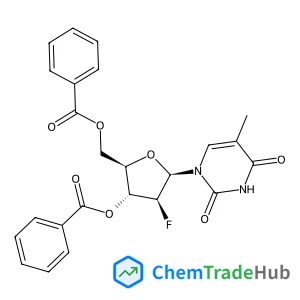
![N-[4-(Cyanoethynyl)phenyl]-16-oxo-4,7,10,13-tetraoxa-17-azahenicos-1-yn-21-amide structure](https://static.chemtradehub.com/structs/218/2183440-36-8-68cb.webp "N-[4-(Cyanoethynyl)phenyl]-16-oxo-4,7,10,13-tetraoxa-17-azahenicos-1-yn-21-amide structure")