













Dynamic interplay between interfacial nanobubbles: oversaturation promotes anisotropic depinning and bubble coalescence
Literature Information
Publication Date
2021-10-12
DOI
10.1039/D1CP03451K
Impact Factor
3.676
Authors
Yoko Tomo
View Original
Abstract
Probing the dynamics of nanobubbles is essential to understand their longevity and behavior. Importantly, such an observation requires tools and techniques having high temporal resolutions to capture the intrinsic characteristics of the nanobubbles. In this work, we have used the in situ liquid-phase electron microscopy (LPEM) technique to gain insights into nanobubbles’ behavior and their interfacial dynamics. Interestingly, we could observe a freely growing–shrinking nanobubble and a pinned nanobubble under the same experimental conditions, suggesting the possibility of multiple nanobubble stabilization theories and pathways. Remarkably, the study reveals that a freely growing–shrinking nanobubble induces anisotropic depinning in the three-phase contact line of a strongly pinned neighboring nanobubble. The anisotropic depinning is attributed to the differential local gas saturation levels, depending on the relative positioning of the freely growing–shrinking nanobubble. Furthermore, we also observed a unique pull–push phenomenon exhibited by the nanobubble's interfaces, which is attributed to the van der Waals interactions and the electric double layer collectively. The role of the electric double layer in suppressing and delaying the merging is also highlighted in this study. The present work aims to reveal the role of locally varying gas saturation in the depinning of nanobubbles, their longevity due to the electric double layer, and the consequent coalescence, which is crucial to understand the behavior of the nanobubbles. Our findings will essentially contribute to the understanding of these novel nanoscale gaseous domains and their dynamics.
Related Literature
DFT study of adsorption of hydrogen and carbon monoxide on PtxBi1−x/Pt(111) bimetallic overlayers: correlation to surface electronic properties
Igor Pašti, Slavko Mentus
2009-05-22
Paper
DOI: 10.1039/B823385C
Theoretical investigation on the influence of temperature and crystallographic orientation on the breaking behavior of copper nanowire
Yunhong Liu, Fenying Wang, Jianwei Zhao, Luyun Jiang, Manabu Kiguchi, Kei Murakoshi
2009-06-09
Paper
DOI: 10.1039/B902795E
Importance of the support material in thin palladium composite membranes for steady hydrogen permeation at elevated temperatures
Takuji Ikeda, David A. Pacheco Tanaka, Margot A. Llosa Tanco, Yoshito Wakui, Koich Sato, Fujio Mizukami, Toshishige M. Suzuki
2009-07-23
Paper
DOI: 10.1039/B909401F
Evolutionary structure prediction and electronic properties of indium oxide nanoclusters
Aron Walsh, Scott M. Woodley
2010-07-05
Paper
DOI: 10.1039/C0CP00056F
Energetic and electronic properties of X- (Si, Ge, Sn, Pb) doped TiO2 from first-principles
Run Long, Ying Dai, Guo Meng, Baibiao Huang
2009-07-09
Paper
DOI: 10.1039/B903298C
Chemical dynamics of large amplitude motion
Martin A. Suhm
2010-06-29
Editorial
DOI: 10.1039/C0CP90051F
Nitrile groups as vibrational probes of biomolecular structure and dynamics: an overview
Beth A. Lindquist, Kristina E. Furse, Steven A. Corcelli
2009-07-31
Perspective
DOI: 10.1039/B908588B
Electronic and magnetic properties of metal-doped BN sheet: A first-principles study
Y. G. Zhou, J. Xiao-Dong, Z. G. Wang, H. Y. Xiao, F. Gao, X. T. Zu
2010-06-07
Paper
DOI: 10.1039/B918183K
You might also like
Compound Q&A
What precautions should be taken when handling 2-Methyl-2-propanyl 5-amino-2-thiophenecarboxylate (CAS: 1498311-57-1)?
When handling 2-Methyl-2-propanyl 5-amino-2-thiophenecarboxylate (CAS: 1498311-5...
1498311-57-12-Methyl-2-propanyl ...
Compound Q&A
What are the physical and chemical properties of 5-Bromo-1,2-dichloro-3-fluorobenzene (CAS: 1000572-93-9)?
5-Bromo-1,2-dichloro-3-fluorobenzene (CAS: 1000572-93-9) is a crystalline solid ...
1000572-93-95-Bromo-1,2-dichloro...
Compound Q&A
How should (2R)-2-Amino-2-(4-bromophenyl)ethanol (CAS: 354153-64-3) be stored?
(2R)-2-Amino-2-(4-bromophenyl)ethanol (CAS: 354153-64-3) should be stored in a c...
354153-64-3(2R)-2-Amino-2-(4-br...
Compound Q&A
What regulatory guidelines apply to Methyl 4-(aminomethyl)tetrahydro-2H-pyran-4-carboxylate hydrochloride (CAS: 362707-24-2)?
Methyl 4-(aminomethyl)tetrahydro-2H-pyran-4-carboxylate hydrochloride (CAS: 3627...
362707-24-2Methyl 4-(aminomethy...
Compound Q&A
What are the main uses of 1,4-dimethyl-1H-pyrazole-5-sulfonyl chloride (CAS: 1174834-52-6)?
1,4-Dimethyl-1H-pyrazole-5-sulfonyl chloride is primarily used as an intermediat...
1174834-52-61,4-dimethyl-1H-pyra...
Compound Q&A
Is Dinaphtho[1,2-b:2',1'-d]furan (CAS: 239-69-0) safe?
Dinaphtho[1,2-b:2',1'-d]furan is generally safe when handled with appropriate pe...
239-69-0Dinaphtho[1,2-b:2',1...
Compound Q&A
What is the market or research trend for 7-Methyl-7,9-dihydro-1H-purine-2,6,8(3H)-trione (CAS: 612-37-3)?
The market for 7-Methyl-7,9-dihydro-1H-purine-2,6,8(3H)-trione (CAS: 612-37-3) i...
612-37-37-Methyl-7,9-dihydro...
Compound Q&A
What are the physical and chemical properties of 2-(4-Chlorophenyl)malonaldehyde (CAS: 205676-17-1)?
2-(4-Chlorophenyl)malonaldehyde (CAS: 205676-17-1) is a colorless or light yello...
205676-17-12-(4-Chlorophenyl)ma...
Compound Q&A
How is 2-Methylchrysene (CAS: 3351-32-4) typically synthesized?
2-Methylchrysene (CAS: 3351-32-4) is typically synthesized via the reaction of c...
3351-32-42-Methylchrysene
Compound Q&A
Is N-(6-aminopyrimidin-4-yl)acetamide (CAS: 89533-23-3) safe?
N-(6-aminopyrimidin-4-yl)acetamide (CAS: 89533-23-3) is generally considered saf...
89533-23-3N-(6-aminopyrimidin-...
Source Journal
Physical Chemistry Chemical Physics

CiteScore:
5.5
Self-citation Rate:
10.3%
Articles per Year:
3036
Physical Chemistry Chemical Physics (PCCP) is an international journal co-owned by 19 physical chemistry and physics societies from around the world. This journal publishes original, cutting-edge research in physical chemistry, chemical physics and biophysical chemistry. To be suitable for publication in PCCP, articles must include significant innovation and/or insight into physical chemistry; this is the most important criterion that reviewers and Editors will judge against when evaluating submissions. The journal has a broad scope and welcomes contributions spanning experiment, theory, computation and data science. Topical coverage includes spectroscopy, dynamics, kinetics, statistical mechanics, thermodynamics, electrochemistry, catalysis, surface science, quantum mechanics, quantum computing and machine learning. Interdisciplinary research areas such as polymers and soft matter, materials, nanoscience, energy, surfaces/interfaces, and biophysical chemistry are welcomed if they demonstrate significant innovation and/or insight into physical chemistry. Joined experimental/theoretical studies are particularly appreciated when complementary and based on up-to-date approaches.
Recommended Compounds
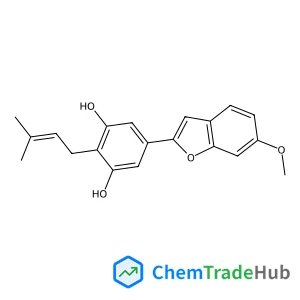
5-(6-Methoxy-1-benzofuran-2-yl)-2-(3-methyl-2-buten-1-yl)-1,3-benzenediol
CAS Number:
1017277-40-5
Molecular Formula:
C20H20O4
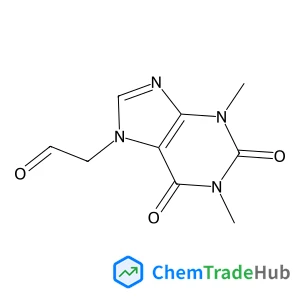
(1,3-Dimethyl-2,6-dioxo-1,2,3,6-tetrahydro-7H-purin-7-yl)acetaldehyde
CAS Number:
5614-53-9
Molecular Formula:
C9H10N4O3
Recommended Suppliers






Disclaimer
This page provides academic journal information for reference and research purposes only. We are not affiliated with any journal publishers and do not handle publication submissions. For publication-related inquiries, please contact the respective journal publishers directly.
If you notice any inaccuracies in the information displayed, please contact us at support@chemtradehub.com. We will promptly review and address your concerns.