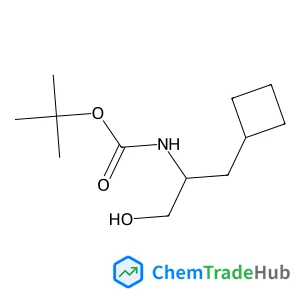
2-Methyl-2-propanyl (1-cyclobutyl-3-hydroxy-2-propanyl)carbamate
CAS Number:
816429-99-9
Molecular Formula:
C12H23NO3
Yuta Shudo, Hikaru Zenno, Masahiro Fukuda, Manabu Nakaya, Nurun Nahar Rabin, Leonard F. Lindoy
The interlayer spaces in two dimensional (2D) layered materials such as graphene, metal oxides and metal chalcogenides can be used in a number of roles that include the trapping of gases, for ion transfer and for water purification applications. In such spaces, “inner” pressure occurs on guest species enclosed between the layers and its variation can, in principal, be used for precisely controlling particular guest properties. In this study, a mixture of two 2D materials including graphene oxide (GO) and nickel hydroxide (Ni(OH)2), was employed to yield an anisotropic GO–Ni(OH)2 hybrid 2D sheet. The inner pressure associated with this material was able to be tuned by reduction of the GO (to yield rGO) and this in turn was shown to affect the magnetic behaviour of Ni(OH)2. The ferromagnetic transition temperature (Tc) for Ni(OH)2 decreases as the interlayer distance became shorter, which is opposite to the behaviour observed for the application of hydrostatic pressure to the hybrid sheet. The uniaxial pressure affecting the interlayer of the 2D material, and generated by the reduction of GO to rGO, has the potential to not only influence the behaviour of a range of magnetic materials, but also individual properties of other types of functional materials.
Aron Walsh, Scott M. Woodley
DOI: 10.1039/C0CP00056F
Eugen Illenberger
DOI: 10.1039/B908192E
Paolo Bartolini, Claudio Sangregorio, Andrea Taschin
DOI: 10.1039/B923682A
Ilya V. Pentin, J. Christian Schön, Martin Jansen
DOI: 10.1039/C004040C
When handling 2-Methyl-2-propanyl 5-amino-2-thiophenecarboxylate (CAS: 1498311-5...
5-Bromo-1,2-dichloro-3-fluorobenzene (CAS: 1000572-93-9) is a crystalline solid ...
(2R)-2-Amino-2-(4-bromophenyl)ethanol (CAS: 354153-64-3) should be stored in a c...
Methyl 4-(aminomethyl)tetrahydro-2H-pyran-4-carboxylate hydrochloride (CAS: 3627...
1,4-Dimethyl-1H-pyrazole-5-sulfonyl chloride is primarily used as an intermediat...
Dinaphtho[1,2-b:2',1'-d]furan is generally safe when handled with appropriate pe...
The market for 7-Methyl-7,9-dihydro-1H-purine-2,6,8(3H)-trione (CAS: 612-37-3) i...
2-(4-Chlorophenyl)malonaldehyde (CAS: 205676-17-1) is a colorless or light yello...
2-Methylchrysene (CAS: 3351-32-4) is typically synthesized via the reaction of c...
N-(6-aminopyrimidin-4-yl)acetamide (CAS: 89533-23-3) is generally considered saf...

Physical Chemistry Chemical Physics (PCCP) is an international journal co-owned by 19 physical chemistry and physics societies from around the world. This journal publishes original, cutting-edge research in physical chemistry, chemical physics and biophysical chemistry. To be suitable for publication in PCCP, articles must include significant innovation and/or insight into physical chemistry; this is the most important criterion that reviewers and Editors will judge against when evaluating submissions. The journal has a broad scope and welcomes contributions spanning experiment, theory, computation and data science. Topical coverage includes spectroscopy, dynamics, kinetics, statistical mechanics, thermodynamics, electrochemistry, catalysis, surface science, quantum mechanics, quantum computing and machine learning. Interdisciplinary research areas such as polymers and soft matter, materials, nanoscience, energy, surfaces/interfaces, and biophysical chemistry are welcomed if they demonstrate significant innovation and/or insight into physical chemistry. Joined experimental/theoretical studies are particularly appreciated when complementary and based on up-to-date approaches.

![1-{[5-(4,4,5,5-Tetramethyl-1,3,2-dioxaborolan-2-yl)-2-thienyl]methyl}piperidine structure](https://static.chemtradehub.com/structs/121/1218790-44-3-baef.webp "1-{[5-(4,4,5,5-Tetramethyl-1,3,2-dioxaborolan-2-yl)-2-thienyl]methyl}piperidine structure")