












Bond-forming and electron-transfer reactivity between Ar2+ and N2
Literature Information
Publication Date
2021-04-26
DOI
10.1039/D1CP00918D
Impact Factor
3.676
Authors
Sam Armenta Butt, Stephen D. Price
View Original
Abstract
Collisions between Ar2+ and N2 have been studied using a coincidence technique at a centre-of-mass (CM) collision energy of 5.1 eV. Four reaction channels generating pairs of monocations are observed: Ar+ + N2+, Ar+ + N+, ArN+ + N+ and N+ + N+. The formation of Ar+ + N2+ is the most intense channel, displaying forward scattering but with a marked tail to higher scattering angles. This scattering, and other dynamics data, is indicative of direct electron transfer competing with a ‘sticky’ collision between the Ar2+ and N2 reactants. Here Ar+ is generated in its ground (2P) state and N2+ is primarily in the low vibrational levels of the C2Σu+ state. A minor channel involving the initial population of higher energy N2+ states, lying above the dissociation asymptote to N+ + N, which fluoresce to stable states of N2+ is also identified. The formation of Ar+ + N+ by dissociative single electron transfer again reveals the involvement of two different pathways for the initial electron transfer (direct or complexation). This reaction pathway predominantly involves excited states of Ar2+ (1D and 1S) populating N2+* in its dissociative C2Σu+, 22Πg and D2Πg states. Formation of ArN+ + N+ proceeds via a direct mechanism. The ArN+ is formed, with significant vibrational excitation, in its ground (X3Σ−) state. Formation of N+ + N+ is also observed as a consequence of double electron transfer forming N22+. The exoergicity of the subsequent N22+ dissociation reveals the population of the A1Πu and D3Πg dication states.
Related Literature
Self-diffusion, velocity cross-correlation, distinct diffusion and resistance coefficients of the ionic liquid [BMIM][Tf2N] at high pressure
Kenneth R. Harris, Mitsuhiro Kanakubo
2015-08-20
Paper
DOI: 10.1039/C5CP04277A
The effects of cation–anion clustering on defect migration in MgAl2O4
Richard J. Zamora, Arthur F. Voter, Danny Perez, Romain Perriot, Blas P. Uberuaga
2016-06-28
Paper
DOI: 10.1039/C6CP03931F
The new dimension of silver
Li-Ming Yang, Thomas Frauenheim, Eric Ganz
2015-07-06
Communication
DOI: 10.1039/C5CP03465E
The time scale of the quaternary structural changes in hemoglobin revealed using the transient grating technique
Jungkweon Choi
2015-08-14
Communication
DOI: 10.1039/C5CP03059E
Electrochemical electron paramagnetic resonance utilizing loop gap resonators and micro-electrochemical cells
Mika A. Tamski, Julie V. Macpherson, Patrick R. Unwin, Mark E. Newton
2015-08-13
Paper
DOI: 10.1039/C5CP04259C
Computational screening for effective Ge1−xSix nanowire photocatalyst
Teck L. Tan, Man-Fai Ng
2015-07-13
Paper
DOI: 10.1039/C5CP03077C
Magnetoresistive polyaniline–silicon carbide metacomposites: plasma frequency determination and high magnetic field sensitivity
Hongbo Gu, Jiang Guo, Mojammel Alam Khan, David P. Young, T. D. Shen, Suying Wei, Zhanhu Guo
2016-06-24
Communication
DOI: 10.1039/C6CP02694J
The effect of terminal substituents on the electronic properties of rod-shaped [HGaNH]n oligomers
A. V. Pomogaeva, A. Y. Timoshkin
2016-06-28
Paper
DOI: 10.1039/C6CP02576E
Metallonaphthalocyanines as triplet sensitizers for near-infrared photon upconversion beyond 850 nm
Shogo Amemori, Nobuo Kimizuka
2015-08-03
Communication
DOI: 10.1039/C5CP02733K
You might also like
Compound Q&A
How should waste containing N-Methoxy-N-methyl-1,3-thiazole-5-carboxamide (CAS: 898825-89-3) be handled?
Waste containing N-Methoxy-N-methyl-1,3-thiazole-5-carboxamide (CAS: 898825-89-3...
898825-89-3N-Methoxy-N-methyl-1...
Compound Q&A
How should N-(4-Biphenylyl)dibenzo[b,d]furan-4-amine (CAS: 1318338-47-4) be stored?
N-(4-Biphenylyl)dibenzo[b,d]furan-4-amine should be stored in a tightly sealed c...
1318338-47-4N-(4-Biphenylyl)dibe...
Compound Q&A
What is the market or research trend for 3-Acetamido-5-amino-2,4,6-triiodobenzoic acid (CAS: 1713-07-1)?
The market for 3-Acetamido-5-amino-2,4,6-triiodobenzoic acid (CAS: 1713-07-1) is...
1713-07-13-Acetamido-5-amino-...
Compound Q&A
How should Benzyl 2-O-acetyl-3,4,6-tri-O-benzyl-beta-D-galactopyranoside (CAS: 61820-03-9) be stored?
Benzyl 2-O-acetyl-3,4,6-tri-O-benzyl-beta-D-galactopyranoside (CAS: 61820-03-9) ...
61820-03-9Benzyl 2-O-acetyl-3,...
Compound Q&A
What regulatory guidelines apply to 2-Ethylpiperazine dihydrochloride (CAS: 438050-52-3)?
2-Ethylpiperazine dihydrochloride (CAS: 438050-52-3) is regulated under the Glob...
438050-52-32-Ethylpiperazine di...
Compound Q&A
What regulatory guidelines apply to 1,1'-[1,3-Phenylenebis(methylene)]bis(3-methyl-1H-pyrrole-2,5-dione) (CAS: 119462-56-5)?
1,1'-[1,3-Phenylenebis(methylene)]bis(3-methyl-1H-pyrrole-2,5-dione) (CAS: 11946...
119462-56-51,1'-[1,3-Phenyleneb...
Compound Q&A
Are there alternatives to 5-Fluoro-2-(1-pyrrolidinyl)pyridine (CAS: 1287217-79-1) in synthesis?
Several alternatives can be used in the synthesis of 5-Fluoro-2-(1-pyrrolidinyl)...
1287217-79-15-Fluoro-2-(1-pyrrol...
Compound Q&A
What precautions should be taken when handling 1-((2R,3R,4R,5R)-5-((bis(4-methoxyphenyl)(phenyl)methoxy)methyl)-4-hydroxy-3-methoxytetrahydrofuran-2-yl)-5-methylpyrimidine-2,4(1H,3H)-dione (CAS: 153631-19-7)?
Proper personal protective equipment (PPE) must be worn when handling this compo...
153631-19-71-((2R,3R,4R,5R)-5-(...
Compound Q&A
What precautions should be taken when handling 6-Bromoimidazo[1,2-a]pyridin-8-amine (CAS: 676371-00-9)?
When handling 6-Bromoimidazo[1,2-a]pyridin-8-amine, it is important to wear appr...
676371-00-96-Bromoimidazo[1,2-a...
Compound Q&A
Are there alternatives to (2S,4R)-4-(4-Nitrobenzyl)pyrrolidine-2-carboxylic acid hydrochloride (CAS: 1049740-22-8) in synthesis?
Alternatives to (2S,4R)-4-(4-Nitrobenzyl)pyrrolidine-2-carboxylic acid hydrochlo...
1049740-22-8(2S,4R)-4-(4-Nitrobe...
Source Journal
Physical Chemistry Chemical Physics

CiteScore:
5.5
Self-citation Rate:
10.3%
Articles per Year:
3036
Physical Chemistry Chemical Physics (PCCP) is an international journal co-owned by 19 physical chemistry and physics societies from around the world. This journal publishes original, cutting-edge research in physical chemistry, chemical physics and biophysical chemistry. To be suitable for publication in PCCP, articles must include significant innovation and/or insight into physical chemistry; this is the most important criterion that reviewers and Editors will judge against when evaluating submissions. The journal has a broad scope and welcomes contributions spanning experiment, theory, computation and data science. Topical coverage includes spectroscopy, dynamics, kinetics, statistical mechanics, thermodynamics, electrochemistry, catalysis, surface science, quantum mechanics, quantum computing and machine learning. Interdisciplinary research areas such as polymers and soft matter, materials, nanoscience, energy, surfaces/interfaces, and biophysical chemistry are welcomed if they demonstrate significant innovation and/or insight into physical chemistry. Joined experimental/theoretical studies are particularly appreciated when complementary and based on up-to-date approaches.
Recommended Compounds
![[5-fluoro-2-(morpholine-4-carbonyl)phenyl]boronic acid structure](https://static.chemtradehub.com/structs/121/1217501-26-2-505c.webp "[5-fluoro-2-(morpholine-4-carbonyl)phenyl]boronic acid structure")
[5-fluoro-2-(morpholine-4-carbonyl)phenyl]boronic acid
CAS Number:
1217501-26-2
Molecular Formula:
C11H13BFNO4
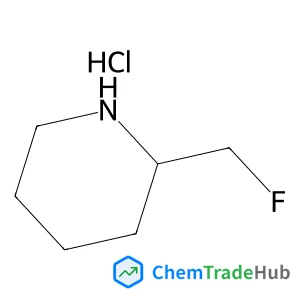
(2S)-2-(Fluoromethyl)piperidine hydrochloride (1:1)
CAS Number:
886216-73-5
Molecular Formula:
C6H13ClFN
Recommended Suppliers







Disclaimer
This page provides academic journal information for reference and research purposes only. We are not affiliated with any journal publishers and do not handle publication submissions. For publication-related inquiries, please contact the respective journal publishers directly.
If you notice any inaccuracies in the information displayed, please contact us at support@chemtradehub.com. We will promptly review and address your concerns.