


Non-invasively improving the Schottky barrier of MoS2/metal contacts by inserting a SiC layer
Literature Information
Publication Date
2021-07-02
DOI
10.1039/D1CP00842K
Impact Factor
3.676
Authors
Xumei Zhao, Lin Yuan, Boyu Wang, Caijuan Xia, Fei Ma
View Original
Abstract
The applications of two-dimensional (2D) materials in electronics, optoelectronics, and spintronics are limited by the high contact resistance at the metal/semiconductor interface owing to the strong Fermi-level pinning. In this study, an interlayer insertion strategy is proposed to solve this problem, and first principles calculations are done to study the influences of inserting a SiC layer on the Schottky barrier and electronic properties of MoS2/metals (Mg, Al, In, Cu, Ag, Au, Pd, Ti, and Sc). The average charge value substantially increased (≥0.060 e) at the interface between SiC and MoS2 layers, and then no tunneling barrier appeared except for the MoS2/Au contact by inserting the SiC layer. Moreover, ΦSB,N almost decreases for the MoS2/metal contacts by inserting the SiC layer. When Ti, Cu, Au, and Pd are used as electrodes, the n-type Schottky barrier is formed with the ΦSB,N values of 0.479 eV, −0.073 eV, 0.498 eV, and 0.225 eV, respectively. However, if Al, In, Mg, and Ag are used as electrodes, the systems are transformed into Ohmic contact. These findings provide a practical guideline for depinning the Fermi level at contact interfaces and designing the high performance TMD-based nanoelectronic devices.
Recommended Journals

Russian Journal of Bioorganic Chemistry

Nature Medicine

Russian Journal of Organic Chemistry

Russian Chemical Bulletin

Crystallography Reports

Chemistry Education Research and Practice

Saudi Pharmaceutical Journal

Russian Journal of Applied Chemistry

Journal of Natural Medicines

Organic Process Research & Development
Related Literature
Direct synthesis of cyclic lipopeptides using intramolecular native chemical ligation and thiol–ene CLipPA chemistry
2020-02-05
Paper
DOI: 10.1039/D0OB00203H
TEMPO catalyzed oxidative dehydrogenation of hydrazobenzenes to azobenzenes
Ronibala Devi Laishram, Yong Yang, Jiayan Li, Dandan Xu, Yong Zhan, Yang Luo, Zhimin Su, Sagar More
2020-04-15
Communication
DOI: 10.1039/D0OB00103A
Dearomatization of 3-cyanoindoles by (3 + 2) cycloaddition: from batch to flow chemistry
Maxime Manneveau, Saori Tanii, Fanny Gens, Julien Legros
2020-04-20
Communication
DOI: 10.1039/D0OB00582G
The endo-aza-Michael addition in the synthesis of piperidines and pyrrolidines
Roderick W. Bates, Weiting Ko, Viktor Barát
2020-01-16
Review Article
DOI: 10.1039/C9OB02388G
Tandem addition/cyclization for synthesis of 2-aroyl benzofurans and 2-aroyl indoles by carbopalladation of nitriles
Julin Gong, Kun Hu, Yinlin Shao, Renhao Li, Yetong Zhang, Maolin Hu, Jiuxi Chen
2019-12-13
Paper
DOI: 10.1039/C9OB02408E
Insights into DNA catalysis from structural and functional studies of the 8-17 DNAzyme
Marjorie Cepeda-Plaza, Alessio Peracchi
2020-01-28
Review Article
DOI: 10.1039/C9OB02453K
The reticent tautomer: exploiting the interesting multisite and multitype reactivity of 4-pyrrolin-2-ones
Tamsyn Montagnon, Dimitris Kalaitzakis, Manolis Sofiadis, Georgios Vassilikogiannakis
2019-11-30
Review Article
DOI: 10.1039/C9OB02471A
Solvent-sensitive circularly polarized luminescent compounds bearing a 9,9′-spirobi[fluorene] skeleton
Masahiro Kubo, Ko Takase, Keiichi Noguchi, Koji Nakano
2020-03-17
Paper
DOI: 10.1039/C9OB02681A
Chemoselective photocatalytic oxidation of alcohols to aldehydes and ketones by nitromethane on titanium dioxide under violet 400 nm LED light irradiation
Azam Rahimi Niaraki, Mohammad Reza Saraee, Babak Kaboudin
2020-03-07
Paper
DOI: 10.1039/C9OB02183C
You might also like
Compound Q&A
What regulatory guidelines apply to 6-Bromo-2-methylimidazo[1,2-a]pyrimidine (CAS: 1111638-05-1)?
6-Bromo-2-methylimidazo[1,2-a]pyrimidine (CAS: 1111638-05-1) falls under various...
1111638-05-16-Bromo-2-methylimid...
Compound Q&A
Are there alternatives to 1-Pyrrolidineethanol, β-methyl-α-phenyl-, (αS,βR) (CAS: 123620-80-4) in synthesis?
While there are no direct alternatives, similar compounds like 1-Pyrrolidineetha...
123620-80-41-Pyrrolidineethanol...
Compound Q&A
Is 4-Methyl-2,6-bis(2-methyl-2-propanyl)phenyl methylcarbamate (CAS: 1918-11-2) safe?
4-Methyl-2,6-bis(2-methyl-2-propanyl)phenyl methylcarbamate (CAS: 1918-11-2) is ...
1918-11-24-Methyl-2,6-bis(2-m...
Compound Q&A
How should 2-(3-Bromo-4-fluorophenyl)-1,3-dioxolane (CAS: 77771-04-1) be stored?
2-(3-Bromo-4-fluorophenyl)-1,3-dioxolane (CAS: 77771-04-1) should be stored in a...
77771-04-12-(3-Bromo-4-fluorop...
Compound Q&A
What are the physical and chemical properties of 4,5,6,7-Tetrahydro-1H-indazole hydrochloride (CAS: 18161-11-0)?
4,5,6,7-Tetrahydro-1H-indazole hydrochloride is a white crystalline solid with a...
18161-11-04,5,6,7-Tetrahydro-1...
Compound Q&A
What is (2R)-1-Methoxy-3-phenyl-2-propanamine (CAS: 59919-07-2)?
(2R)-1-Methoxy-3-phenyl-2-propanamine is a chiral organic compound with the CAS ...
59919-07-2(2R)-1-Methoxy-3-phe...
Compound Q&A
What industries use Ethyl 1-(1-phenylethyl)-1H-imidazole-5-carboxylate (CAS: 56649-47-9)?
Ethyl 1-(1-phenylethyl)-1H-imidazole-5-carboxylate is used in various industries...
56649-47-9Ethyl 1-(1-phenyleth...
Compound Q&A
What regulatory guidelines apply to 4-[(1E,3S)-1-(4-Hydroxyphenyl)-1,4-pentadien-3-yl]phenol (CAS: 17676-24-3)?
4-[(1E,3S)-1-(4-Hydroxyphenyl)-1,4-pentadien-3-yl]phenol (CAS: 17676-24-3) falls...
17676-24-34-[(1E,3S)-1-(4-Hydr...
Compound Q&A
What industries use (S)-3-Amino-5-phenylpentanoic acid hydrochloride (CAS: 331846-97-0)?
(S)-3-Amino-5-phenylpentanoic acid hydrochloride is primarily used in the pharma...
331846-97-0(S)-3-Amino-5-phenyl...
Compound Q&A
How is 7-methoxy-1-benzothiophene-2-carboxylic acid (CAS: 88791-07-5) typically synthesized?
7-Methoxy-1-benzothiophene-2-carboxylic acid is typically synthesized by reactin...
88791-07-57-methoxy-1-benzothi...
Source Journal
Physical Chemistry Chemical Physics

CiteScore:
5.5
Self-citation Rate:
10.3%
Articles per Year:
3036
Physical Chemistry Chemical Physics (PCCP) is an international journal co-owned by 19 physical chemistry and physics societies from around the world. This journal publishes original, cutting-edge research in physical chemistry, chemical physics and biophysical chemistry. To be suitable for publication in PCCP, articles must include significant innovation and/or insight into physical chemistry; this is the most important criterion that reviewers and Editors will judge against when evaluating submissions. The journal has a broad scope and welcomes contributions spanning experiment, theory, computation and data science. Topical coverage includes spectroscopy, dynamics, kinetics, statistical mechanics, thermodynamics, electrochemistry, catalysis, surface science, quantum mechanics, quantum computing and machine learning. Interdisciplinary research areas such as polymers and soft matter, materials, nanoscience, energy, surfaces/interfaces, and biophysical chemistry are welcomed if they demonstrate significant innovation and/or insight into physical chemistry. Joined experimental/theoretical studies are particularly appreciated when complementary and based on up-to-date approaches.
Recommended Compounds
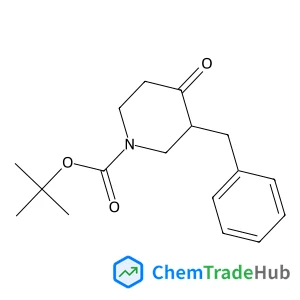
2-Methyl-2-propanyl 3-benzyl-4-oxo-1-piperidinecarboxylate
CAS Number:
193274-82-7
Molecular Formula:
C17H23NO3
Recommended Suppliers





Disclaimer
This page provides academic journal information for reference and research purposes only. We are not affiliated with any journal publishers and do not handle publication submissions. For publication-related inquiries, please contact the respective journal publishers directly.
If you notice any inaccuracies in the information displayed, please contact us at support@chemtradehub.com. We will promptly review and address your concerns.