


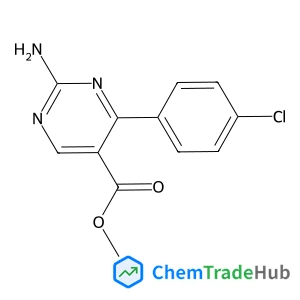
Methyl 2-amino-4-(4-chlorophenyl)-5-pyrimidinecarboxylate
CAS Number:
1133115-56-6
Molecular Formula:
C12H10ClN3O2
Haidong Feng, Alex Jafek, Raheel Samuel, James Hotaling, Timothy G. Jenkins, Kenneth I. Aston, Bruce K. Gale
Immotile and rare sperm isolation from a complex cell background is an essential process for infertility treatment. The traditional sperm collection process from a biopsy sample requires long, tedious searches, yet still results in low sperm retrieval. In this work, a high recovery, high throughput sperm separation process is proposed for the clinical biopsy sperm retrieval process. It is found that sperm have different focusing positions compared with non-sperm cells in the inertial flow, which is explained by a sperm alignment phenomenon. Separation in the spiral channel device results in a 95.6% sperm recovery in which 87.4% of non-sperm cells get removed. Rare sperm isolation from a clinical biopsy sample is performed with the current approach. The chance of finding sperm is shown to increase 8.2 fold in the treated samples. The achieved results highly support this method being used for the development of a rapid biopsy sperm sorting process. In addition, the mechanism was proposed and can be applied for the high-efficiency separation of non-spherical particles in general.

Current Opinion in Solid State & Materials Science

Russian Journal of Coordination Chemistry

Russian Journal of Bioorganic Chemistry

Chemical Communications

Organic Process Research & Development

Journal of Natural Medicines

Saudi Pharmaceutical Journal

Journal of Peptide Science

Russian Journal of General Chemistry

Drug Discovery Today
DOI: 10.1039/B915171K
Pavel S. Ruvinskiy, Antoine Bonnefont, Maryam Bayati, Elena R. Savinova
DOI: 10.1039/C0CP00593B
J. Léonard, D. Sharma, B. Szafarowicz, K. Torgasin, S. Haacke
DOI: 10.1039/C0CP00615G
Craig R. Gregor, Eleonora Cerasoli, Paul R. Tulip, Maxim G. Ryadnov, Glenn J. Martyna
DOI: 10.1039/C0CP01502D
Lucia Flamigni, Dagmara Wyrostek, Roman Voloshchuk, Daniel T. Gryko
DOI: 10.1039/B916525H
Benjamin Mintz, T. Daniel Crawford
DOI: 10.1039/C0CP00864H
Jose M. Paredes, Angel Orte, Luis Crovetto, Jose M. Alvarez-Pez, Ramon Rios, Maria J. Ruedas-Rama, Eva M. Talavera
DOI: 10.1039/B917333C
2-Methylbenzene-1,4-diamine dihydrochloride (CAS: 615-45-2) should be stored in ...
(1S,4S)-2,5-Diazabicyclo[2.2.1]heptane dihydrobromide is generally considered sa...
(6-Chloropyridazin-3-YL)methanamine finds applications in the pharmaceutical ind...
2-Fluoro-3-methylphenol is primarily used in the synthesis of pharmaceuticals, p...
When handling 3-Methoxy-4-nitrobenzonitrile, it is important to wear appropriate...
When handling 1,3-Oxazolo[4,5-b]pyridine-2(3H)-thione (CAS: 211949-57-4), it is ...
4-Ethynylbenzamide (CAS: 90347-86-7) falls under various regulatory guidelines i...
3-(2-Ethylphenyl)-2-thioxo-4-imidazolidinone is primarily used as an intermediat...
(2-Fluoro-6-methoxyphenyl)acetic acid, also known as 4-fluoro-3-methoxybenzoic a...
Market trends for 2-[4-(Hydroxymethyl)phenoxy]ethanol (CAS: 102196-18-9) indicat...

Analyst publishes analytical and bioanalytical research that reports premier fundamental discoveries and inventions, and the applications of those discoveries, unconfined by traditional discipline barriers.
![Methyl 2-[5-(3-Phenoxyphenyl)-2H-tetrazol-2-yl]acetate structure](https://static.chemtradehub.com/structs/130/1305320-60-8-84b4.webp "Methyl 2-[5-(3-Phenoxyphenyl)-2H-tetrazol-2-yl]acetate structure")
![[1-(5-Methyl-2-pyridinyl)-1H-pyrazol-4-yl]methanol structure](https://static.chemtradehub.com/structs/143/1439822-99-7-6cc9.webp "[1-(5-Methyl-2-pyridinyl)-1H-pyrazol-4-yl]methanol structure")






