


MCR-ALS with sample insertion constraint to enhance the sensitivity of surface-enhanced Raman scattering detection
Literature Information
Publication Date
2021-03-11
DOI
10.1039/D1AN00069A
Impact Factor
4.616
Authors
Thanyada Sukmanee, Sanong Ekgasit, Yasutaka Kitahama, Yukihiro Ozaki
View Original
Abstract
The multivariate curve resolution-alternative least squares (MCR-ALS) algorithm was modified with sample insertion constraint to deconvolute the overlapping peaks in SERS spectra. The developed method was evaluated by the spectral data simulated using a Gaussian distribution function to generate two independent peaks corresponding to a capping agent and an analyte. The spectra were generated with different overlapping levels and various intensity ratios of the analyte to the capping agent. By using MCR-ALS with the sample insertion constraint, the peak of the capping agent was completely excluded to obtain a calibration model of the analyte with R2 > 0.95 under all conditions. Furthermore, our developed method was later applied to a real SERS measurement to quantify carbofuran (analyte) using the azo-coupling reaction with p-ATP (capping agent) on silver nanoparticles as a SERS substrate. A calibration model of derivative carbofuran phenol was generated with R2 = 0.99 and LOD = 28.19 ppm. To assess the performance of the calibration model, the model was used to estimate the concentration of carbofuran in an external validation set. It was found that the RMSE of prediction was only 2.109 with a promising R2 = 0.97.
Recommended Journals

Critical Reviews in Solid State and Materials Sciences

Journal of Asian Natural Products Research

Atomization and Sprays

Chinese Journal of Chemistry

Colloid Journal

Main Group Chemistry

Medicinal Chemistry Research

Acta Metallurgica Sinica-English Letters

Polycyclic Aromatic Compounds

Bioorganic & Medicinal Chemistry
Related Literature
Reaction pathways for hydrogen desorption from magnesium hydride/hydroxide composites: bulk and interface effects
F. Leardini, J. R. Ares, J. Bodega, J. F. Fernández, I. J. Ferrer, C. Sánchez
2009-11-16
Paper
DOI: 10.1039/B912964B
Solvent structural relaxation dynamics in dipolar solvation studied by resonant pump polarizability response spectroscopy
Sungnam Park, Jeongho Kim, Andrew M. Moran, Norbert F. Scherer
2010-11-23
Paper
DOI: 10.1039/C0CP01252A
Measuring the three-phase contact angle of nanoparticles at fluid interfaces
Olivier J. Cayre, Martien A. Cohen Stuart, Simeon D. Stoyanov, Vesselin N. Paunov
2009-11-11
Communication
DOI: 10.1039/B917353F
Mitochondrial biofuel cells: expanding fuel diversity to amino acids
Dushyant Bhatnagar, Shuai Xu, Caitlin Fischer, Robert L. Arechederra, Shelley D. Minteer
2010-11-10
Perspective
DOI: 10.1039/C0CP01362E
Compact microcubic structures platform based on self-assembly Prussian blue nanoparticles with highly tuneable conductivity
Maria Guix
2010-10-26
Paper
DOI: 10.1039/C0CP00960A
Enhancing the interactions between neutral molecular tweezers and anions
Jose M. Hermida-Ramón, Marcos Mandado, Marta Sánchez-Lozano, Carlos M. Estévez
2009-11-09
Paper
DOI: 10.1039/B915483C
ZnO-based dye solar cell with pure ionic-liquid electrolyte and organic sensitizer: the relevance of the dye–oxide interaction in an ionic-liquid medium
E. Guillén, J. Idígoras, T. Berger, J. A. Anta, C. Fernández-Lorenzo, R. Alcántara, J. Navas, J. Martín-Calleja
2010-10-26
Paper
DOI: 10.1039/C0CP00507J
EXAFS and XRD characterization of palladium sorbents for high temperature mercury capture from fuel gas
Stephen Poulston, Timothy I. Hyde, Hugh Hamilton, Olivier Mathon, Carmelo Prestipino, Andrew W. J. Smith
2009-11-13
Paper
DOI: 10.1039/B911941H
You might also like
Compound Q&A
How should 2-Methylbenzene-1,4-diamine dihydrochloride (CAS: 615-45-2) be stored?
2-Methylbenzene-1,4-diamine dihydrochloride (CAS: 615-45-2) should be stored in ...
615-45-22-Methylbenzene-1,4-...
Compound Q&A
Is (1S,4S)-2,5-Diazabicyclo[2.2.1]heptane dihydrobromide (CAS: 132747-20-7) safe?
(1S,4S)-2,5-Diazabicyclo[2.2.1]heptane dihydrobromide is generally considered sa...
132747-20-7(1S,4S)-2,5-Diazabic...
Compound Q&A
What industries use (6-Chloropyridazin-3-YL)methanamine (CAS: 871826-15-2)?
(6-Chloropyridazin-3-YL)methanamine finds applications in the pharmaceutical ind...
871826-15-2(6-Chloropyridazin-3...
Compound Q&A
What are the main uses of 2-Fluoro-3-methylphenol (CAS: 77772-72-6)?
2-Fluoro-3-methylphenol is primarily used in the synthesis of pharmaceuticals, p...
77772-72-62-Fluoro-3-methylphe...
Compound Q&A
What precautions should be taken when handling 3-Methoxy-4-nitrobenzonitrile (CAS: 177476-75-4)?
When handling 3-Methoxy-4-nitrobenzonitrile, it is important to wear appropriate...
177476-75-43-Methoxy-4-nitroben...
Compound Q&A
What precautions should be taken when handling 1,3-Oxazolo[4,5-b]pyridine-2(3H)-thione (CAS: 211949-57-4)?
When handling 1,3-Oxazolo[4,5-b]pyridine-2(3H)-thione (CAS: 211949-57-4), it is ...
211949-57-4[1,3]Oxazolo[4,5-b]p...
Compound Q&A
What regulatory guidelines apply to 4-Ethynylbenzamide (CAS: 90347-86-7)?
4-Ethynylbenzamide (CAS: 90347-86-7) falls under various regulatory guidelines i...
90347-86-74-Ethynylbenzamide
Compound Q&A
What are the main uses of 3-(2-Ethylphenyl)-2-thioxo-4-imidazolidinone (CAS: 186822-57-1)?
3-(2-Ethylphenyl)-2-thioxo-4-imidazolidinone is primarily used as an intermediat...
186822-57-13-(2-Ethylphenyl)-2-...
Compound Q&A
What is (2-Fluoro-6-methoxyphenyl)acetic acid (CAS: 500912-19-6)?
(2-Fluoro-6-methoxyphenyl)acetic acid, also known as 4-fluoro-3-methoxybenzoic a...
500912-19-6(2-Fluoro-6-methoxyp...
Compound Q&A
What is the market or research trend for 2-[4-(Hydroxymethyl)phenoxy]ethanol (CAS: 102196-18-9)?
Market trends for 2-[4-(Hydroxymethyl)phenoxy]ethanol (CAS: 102196-18-9) indicat...
102196-18-92-[4-(Hydroxymethyl)...
Source Journal
Analyst

CiteScore:
7.8
Self-citation Rate:
5.6%
Articles per Year:
653
Analyst publishes analytical and bioanalytical research that reports premier fundamental discoveries and inventions, and the applications of those discoveries, unconfined by traditional discipline barriers.
Recommended Compounds
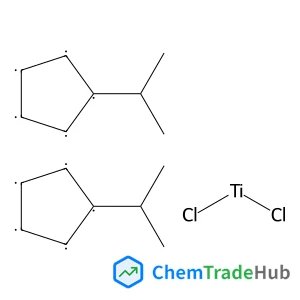
BIS(I-PROPYLCYCLOPENTADIENYL)TITANIUM DICHLORIDE
CAS Number:
12130-65-3
Molecular Formula:
C16H22Cl2Ti


Methyl 2-amino-4-(4-chlorophenyl)-5-pyrimidinecarboxylate
CAS Number:
1133115-56-6
Molecular Formula:
C12H10ClN3O2
Recommended Suppliers




Disclaimer
This page provides academic journal information for reference and research purposes only. We are not affiliated with any journal publishers and do not handle publication submissions. For publication-related inquiries, please contact the respective journal publishers directly.
If you notice any inaccuracies in the information displayed, please contact us at support@chemtradehub.com. We will promptly review and address your concerns.