












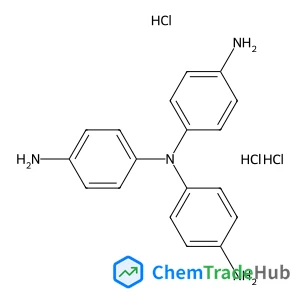
N1,N1-Bis(4-aminophenyl)benzene-1,4-diamine trihydrochloride
CAS Number:
114254-48-7
Molecular Formula:
C18H21Cl3N4
Shansheng Yu
The oxygen reduction reaction (ORR) that occurs on the outermost layer of electrocatalysts is significantly affected by the composition and structure of the electrocatalysts. During the preparation of PtM alloy electrocatalysts, high-temperature annealing in an inert or reducing atmosphere could promote the segregation of M toward the core, forming a highly active Pt-skin structure. However, under fuel cell operating conditions, the adsorption of oxygen-containing groups could stimulate the easily dissolved M to segregate to the surface, reducing the activity and stability of the electrocatalysts. In this work, we conducted segregation energy calculation of PtM (M = Cu, Pd, Au) electrocatalysts under specific adsorption (SA), aqueous solution (AS) and an external electric field (EEF) with a density functional theory method. It was found that different factors have different effects on the segregation energy: ΔΔESA ≫ ΔΔEEEF > ΔΔEAS. The coupling effects have also been considered and compared: ΔΔESA+EEF > ΔΔESA+AS > ΔΔEEEF+AS. When including all three factors, the change of segregation energy could reach 1.63 eV. Therefore, operating conditions have a noteworthy influence on the segregation behavior of PtM ORR electrocatalysts, which should be considered in the further design of PtM ORR electrocatalysts.
Yoshiko K. Takahara, Koji Tachi, Takao Sakata, Toshiaki Hasegawa, Hirotaro Mori, Michio Matsumura, Bunsho Ohtani
DOI: 10.1039/B507123B
Weijun Niu, Caroline O'Sullivan, Brett M. Rambo, Mark D. Smith, John J. Lavigne
DOI: 10.1039/B504634C
Joseph N. Grima, Kenneth E. Evans
DOI: 10.1039/B505839B
Robin B. Bedford, Duncan W. Bruce, Robert M. Frost, Michael Hird
DOI: 10.1039/B507133J
James J. Murphy, Kotohiro Nomura
DOI: 10.1039/B506877K
Michihiro Shirakawa, Norifumi Fujita, Takahiro Tani, Kenji Kaneko, Seiji Shinkai
DOI: 10.1039/B506148B
Maurilio Galletta, Sebastiano Campagna, Manuel Quesada, Gilles Ulrich, Raymond Ziessel
DOI: 10.1039/B507196H
Ramsey Ida, Gang Wu
DOI: 10.1039/B505674H
Waste containing N-Methoxy-N-methyl-1,3-thiazole-5-carboxamide (CAS: 898825-89-3...
N-(4-Biphenylyl)dibenzo[b,d]furan-4-amine should be stored in a tightly sealed c...
The market for 3-Acetamido-5-amino-2,4,6-triiodobenzoic acid (CAS: 1713-07-1) is...
Benzyl 2-O-acetyl-3,4,6-tri-O-benzyl-beta-D-galactopyranoside (CAS: 61820-03-9) ...
2-Ethylpiperazine dihydrochloride (CAS: 438050-52-3) is regulated under the Glob...
1,1'-[1,3-Phenylenebis(methylene)]bis(3-methyl-1H-pyrrole-2,5-dione) (CAS: 11946...
Several alternatives can be used in the synthesis of 5-Fluoro-2-(1-pyrrolidinyl)...
Proper personal protective equipment (PPE) must be worn when handling this compo...
When handling 6-Bromoimidazo[1,2-a]pyridin-8-amine, it is important to wear appr...
Alternatives to (2S,4R)-4-(4-Nitrobenzyl)pyrrolidine-2-carboxylic acid hydrochlo...

Physical Chemistry Chemical Physics (PCCP) is an international journal co-owned by 19 physical chemistry and physics societies from around the world. This journal publishes original, cutting-edge research in physical chemistry, chemical physics and biophysical chemistry. To be suitable for publication in PCCP, articles must include significant innovation and/or insight into physical chemistry; this is the most important criterion that reviewers and Editors will judge against when evaluating submissions. The journal has a broad scope and welcomes contributions spanning experiment, theory, computation and data science. Topical coverage includes spectroscopy, dynamics, kinetics, statistical mechanics, thermodynamics, electrochemistry, catalysis, surface science, quantum mechanics, quantum computing and machine learning. Interdisciplinary research areas such as polymers and soft matter, materials, nanoscience, energy, surfaces/interfaces, and biophysical chemistry are welcomed if they demonstrate significant innovation and/or insight into physical chemistry. Joined experimental/theoretical studies are particularly appreciated when complementary and based on up-to-date approaches.
![tert-Butyl 6-chloro-4-oxospiro[chroman-2,4'-piperidine]-1'-carboxylate structure](https://static.chemtradehub.com/structs/101/1011482-37-3-88a5.webp "tert-Butyl 6-chloro-4-oxospiro[chroman-2,4'-piperidine]-1'-carboxylate structure")
![4-Chloro-2-{[(2-chlorophenoxy)acetyl]amino}benzoic acid structure](https://static.chemtradehub.com/structs/351/351424-20-9-9467.webp "4-Chloro-2-{[(2-chlorophenoxy)acetyl]amino}benzoic acid structure")
![2-Methyl-2-propanyl {3-[4-(4,4,5,5-tetramethyl-1,3,2-dioxaborolan-2-yl)phenyl]-3-oxetanyl}carbamate structure](https://static.chemtradehub.com/structs/127/1279090-25-3-1b84.webp "2-Methyl-2-propanyl {3-[4-(4,4,5,5-tetramethyl-1,3,2-dioxaborolan-2-yl)phenyl]-3-oxetanyl}carbamate structure")




