












A water solvent-assisted condensation polymerization strategy of superhydrophobic lignocellulosic fibers for efficient oil/water separation
Literature Information
Publication Date
2019-06-14
DOI
10.1039/C9TA04815D
Impact Factor
12.732
Authors
Lei Kang, Jinpeng Li, Jinsong Zeng, Wenhua Gao, Jun Xu, Zheng Cheng, Kefu Chen, Bin Wang
View Original
Abstract
Superhydrophobic surfaces have received increasing attention in a broad range of important fields including oily wastewater treatment and oil collection in spills accidents. However, the preparation of such superhydrophobic surfaces has been proven to be energy-intensive and these surfaces are non-degradable. Herein, a naturally abundant fibrous substrate (i.e., lignocellulosic fibers and cotton fabric), mainly composed of cellulose, combining inexpensive bulk chemicals (melamine, formaldehyde, and octadecylamine) was cleverly designed and strategically exploited for the low-cost, easy scale-up, and eco-friendly superhydrophobic surface. These superhydrophobic surfaces can be used to clean different forms of oil-contaminations, including floating light-oil and sedimentary heavy-oil (with an efficiency above 700 wt% for various oils). This study showed that the superhydrophobic surfaces created via a scalable and green water solvent-assisted condensation reaction can achieve high water repellency both in air and in oil, and exhibited a single efficient avenue for gravity-driven active filtration of oil. The superhydrophobicity of the octadecylamine–melamine–formaldehyde (OMF) lignocellulosic fibers remained unperturbed even after long-term exposure to UV radiation (at both 254 nm and 365 nm) for 168 h. The OMF lignocellulosic fibers showed good antifouling properties and maintained high separation efficiency (>95%) as well as a high water contact angle (>150°) after being repeatedly used for 70 cycles. Furthermore, this strategy exhibited good versatility for superhydrophobic cotton fabrics with high contact angles (>160°) and high water/oil separation efficiency (96%).
Related Literature
Two-dimensional electronic-vibrational spectra: modeling correlated electronic and nuclear motion
F. Terenziani, A. Painelli
2015-04-20
Paper
DOI: 10.1039/C5CP01485A
Using lithium carbonate-based electron injection structures in high-performance inverted organic light-emitting diodes
Chih-Hao Chang, Ming-Kuan Hsu, Szu-Wei Wu, Mei-Hsin Chen, Hung-Hsuan Lin, Chia-Shou Li, Tun-Wen Pi, Hsin-Hua Chang, Nien-Po Chen
2015-04-16
Paper
DOI: 10.1039/C5CP01692D
Improving As(iii) adsorption on graphene based surfaces: impact of chemical doping
Diego Cortés-Arriagada, Alejandro Toro-Labbé
2015-04-02
Paper
DOI: 10.1039/C5CP01313E
A quantum biochemistry investigation of willardiine partial agonism in AMPA receptors
José X. Lima Neto, Umberto L. Fulco, Eudenilson L. Albuquerque, Gilberto Corso, Eveline M. Bezerra, Ewerton W. S. Caetano, Roner F. da Costa, Valder N. Freire
2015-04-13
Paper
DOI: 10.1039/C4CP05630B
A molecular dynamics study of guest–host hydrogen bonding in alcohol clathrate hydrates
Masaki Hiratsuka, Ryo Ohmura, Amadeu K. Sum, Saman Alavi, Kenji Yasuoka
2015-03-25
Paper
DOI: 10.1039/C4CP05732E
A microfluidic platform for quantitative measurements of effective protein charges and single ion binding in solution
Therese W. Herling, Paolo Arosio, Thomas Müller, Sara Linse, Tuomas P. J. Knowles
2015-04-16
Paper
DOI: 10.1039/C5CP00746A
Dynamics of aqueous binary glass-formers confined in MCM-41
Khalid Elamin, Helén Jansson, Jan Swenson
2015-04-20
Paper
DOI: 10.1039/C5CP00751H
Experimental and first-principles investigation of the adsorption and entrapping of guanine with SiO2 clusters of sol–gel silicate material for understanding DNA photodamage
V. L. Chandraboss, B. Karthikeyan, S. Senthilvelan
2015-04-02
Paper
DOI: 10.1039/C5CP00451A
Infrared spectra of small anionic water clusters from density functional theory and wavefunction theory calculations
Sai Duan, Guangjun Tian, Jun Jiang, Xin Xu
2015-04-13
Paper
DOI: 10.1039/C5CP01378J
Self-assembly and coverage dependent thermally induced conformational changes of Ni(ii)-meso-tetrakis (4-tert-butylphenyl) benzoporphyrin on Cu(111)
2015-04-20
Paper
DOI: 10.1039/C5CP01490E
You might also like
Compound Q&A
What are the main uses of (5-Sulfamoyl-3-pyridinyl)boronic acid (CAS: 951233-61-7)?
(5-Sulfamoyl-3-pyridinyl)boronic acid is primarily used in chemical synthesis, p...
951233-61-7(5-Sulfamoyl-3-pyrid...
Compound Q&A
How is Benzyl 2-methyl-2-(methylsulfonyl)-4-pentenoate (CAS: 1942858-50-5) typically synthesized?
Benzyl 2-methyl-2-(methylsulfonyl)-4-pentenoate is typically synthesized via est...
1942858-50-5Benzyl 2-methyl-2-(m...
Compound Q&A
What precautions should be taken when handling 8-Fluoroquinolin-6-ol (CAS: 209353-22-0)?
When handling 8-Fluoroquinolin-6-ol (CAS: 209353-22-0), it is important to use p...
209353-22-08-Fluoroquinolin-6-o...
Compound Q&A
What are the physical and chemical properties of 1,3-Dibromo-5-(2-methyl-2-propanyl)benzene (CAS: 129316-09-2)?
1,3-Dibromo-5-(2-methyl-2-propanyl)benzene (CAS: 129316-09-2) is a crystalline c...
129316-09-21,3-Dibromo-5-(2-met...
Compound Q&A
What industries use Ethyl 7-chloro-4-oxo-1-(1,3-thiazol-2-yl)-1,4-dihydro-1,8-naphthyridine-3-carboxylate (CAS: 174726-87-5)?
Ethyl 7-chloro-4-oxo-1-(1,3-thiazol-2-yl)-1,4-dihydro-1,8-naphthyridine-3-carbox...
174726-87-5Ethyl 7-chloro-4-oxo...
Compound Q&A
What precautions should be taken when handling Delta-7-Avenasterol (CAS: 23290-26-8)?
When handling Delta-7-Avenasterol (CAS: 23290-26-8), it is important to wear app...
23290-26-8Delta-7-Avenasterol
Compound Q&A
What precautions should be taken when handling N-({(5R)-3-[3-Fluoro-4-(4-morpholinyl)phenyl]-2-oxo-1,3-oxazolidin-5-yl}methyl)acetamide (CAS: 872992-20-6)?
Proper handling involves the use of personal protective equipment such as gloves...
872992-20-6N-({(5R)-3-[3-Fluoro...
Compound Q&A
What precautions should be taken when handling 2-Methyl-2-proanyl 4-[(2-aminophenyl)amino]-1-piperidinecarboxylate (CAS: 79099-00-6)?
When handling 2-Methyl-2-proanyl 4-[(2-aminophenyl)amino]-1-piperidinecarboxylat...
79099-00-62-Methyl-2-propanyl ...
Compound Q&A
What is N-Methyl-4-chlorobenzylamine hydrochloride (CAS: 65542-24-7)?
N-Methyl-4-chlorobenzylamine hydrochloride (CAS: 65542-24-7) is a organic compou...
65542-24-7N-Methyl-4-chloroben...
Compound Q&A
Is [2-(Dodecyloxy)ethoxy]acetic acid (CAS: 27306-90-7) safe?
[2-(Dodecyloxy)ethoxy]acetic acid (CAS: 27306-90-7) is generally considered safe...
27306-90-7[2-(Dodecyloxy)ethox...
Source Journal
Journal of Materials Chemistry A

CiteScore:
19.5
Self-citation Rate:
4.7%
Articles per Year:
2211
Journal of Materials Chemistry A, B & C cover high quality studies across all fields of materials chemistry. The journals focus on those theoretical or experimental studies that report new understanding, applications, properties and synthesis of materials. The journals have a strong history of publishing quality reports of interest to interdisciplinary communities and providing an efficient and rigorous service through peer review and publication. The journals are led by an international team of Editors-in-Chief and Associate Editors who are all active researchers in their fields. Journal of Materials Chemistry A, B & C are separated by the intended application of the material studied. Broadly, applications in energy and sustainability are of interest to Journal of Materials Chemistry A, applications in biology and medicine are of interest to Journal of Materials Chemistry B, and applications in optical, magnetic and electronic devices are of interest to Journal of Materials Chemistry C. More than one Journal of Materials Chemistry journal may be suitable for certain fields and researchers are encouraged to submit their paper to the journal that they feel best fits for their particular article. Example topic areas within the scope of Journal of Materials Chemistry A are listed below. This list is neither exhaustive nor exclusive. Artificial photosynthesis Batteries Carbon dioxide conversion Catalysis Fuel cells Gas capture/separation/storage Green/sustainable materials Hydrogen generation Hydrogen storage Photocatalysis Photovoltaics Self-cleaning materials Self-healing materials Sensors Supercapacitors Thermoelectrics Water splitting Water treatment
Recommended Compounds
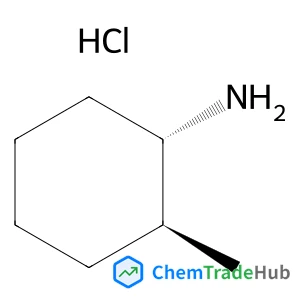
(1R,2R)-2-Methylcyclohexanamine hydrochloride (1:1)
CAS Number:
39558-31-1
Molecular Formula:
C7H16ClN
![4,10-Dihydroxy-3H-pyrano[3,4,5-kl]xanthen-3-one structure](https://static.chemtradehub.com/structs/125/1259330-61-4-de48.webp "4,10-Dihydroxy-3H-pyrano[3,4,5-kl]xanthen-3-one structure")
Recommended Suppliers





Disclaimer
This page provides academic journal information for reference and research purposes only. We are not affiliated with any journal publishers and do not handle publication submissions. For publication-related inquiries, please contact the respective journal publishers directly.
If you notice any inaccuracies in the information displayed, please contact us at support@chemtradehub.com. We will promptly review and address your concerns.