![2-Methyl-2-propanyl 4-oxo-3,9-diazabicyclo[4.2.1]nonane-9-carboxylate structure](https://static.chemtradehub.com/structs/131/1312456-05-5-9a15.webp "2-Methyl-2-propanyl 4-oxo-3,9-diazabicyclo[4.2.1]nonane-9-carboxylate structure")
2-Methyl-2-propanyl 4-oxo-3,9-diazabicyclo[4.2.1]nonane-9-carboxylate
CAS Number:
1312456-05-5
Molecular Formula:
C12H20N2O3
Shaik Gouse Peera, Nam Hoon Kim
A porous, efficient, and durable nonprecious electrocatalyst for the oxygen reduction reaction (ORR) under both alkaline and acidic conditions is synthesized by a green, solvent-free, one-pot, economical, scalable, and template-free strategy. In situ formed graphitic carbon nitride (g-C3N4) is utilized as a sacrificial template for constructing the core–shell Fe3C@NSC electrocatalyst with a highly porous substructure and nanosheet-like morphology. The presence of glucose facilitates the homogeneous distribution of nanoparticles and establishes the nanosheet structure, otherwise agglomeration and formation of nanotubes occur in the Fe3C@NSC electrocatalyst. Optimizing the synthetic conditions generates a highly active ORR electrocatalyst with a unique mesoporous architecture, large surface area, high nitrogen doping level, encapsulated Fe3C nanoparticles in NS co-doped carbon layers and multiple exposed edge active centers. The best performing electrocatalyst displays outstanding ORR performance under alkaline conditions with onset potential and half-wave potential (E1/2) values of 1.059 and 0.938 V vs. the reversible hydrogen electrode (RHE), much higher than those of the state-of-the-art commercial Pt/C (20%), and admirable performance in acidic media. In addition, it exhibits 4e− selectivity, tolerance toward methanol, and superb durability with zero degradation after 12 000 potential cycles under both alkaline and acidic conditions. These exceptional characteristics make the as-synthesized electrocatalyst one of the top-level non-precious ORR electrocatalysts reported to date.
Shuang Gao, Fei Zeng, Minjuan Wang, Guangyue Wang, Cheng Song, Feng Pan
DOI: 10.1039/C5CP01235J
Arpan Bhattacharya, Surajit Chatterjee, Roopali Prajapati, Tushar Kanti Mukherjee
DOI: 10.1039/C5CP00543D
M. Kazemi, D. Biria, H. Rismani-Yazdi
DOI: 10.1039/C5CP00904A
Yuqing Zheng
DOI: 10.1039/C5CP01858G
Markus Kessel, Roger A. De Souza, Manfred Martin
DOI: 10.1039/C5CP01187F
Carlos Moya, María del Puerto Morales, Xavier Batlle, Amílcar Labarta
DOI: 10.1039/C5CP01052G
V. L. Chandraboss, B. Karthikeyan, S. Senthilvelan
DOI: 10.1039/C5CP00451A
Kada Yesudas, Eluvathingal D. Jemmis, Kotamarthi Bhanuprakash
DOI: 10.1039/C5CP01410G
Yushi Wen, Chaoyang Zhang, Xianggui Xue, Xinping Long
DOI: 10.1039/C5CP00006H
Jing Ge, Zhigang Geng, Shenlong Jiang, Kaili Fan, Zhenkun Guo, Jiahua Hu, Zongwei Chen
DOI: 10.1039/C5CP00323G
(5-Sulfamoyl-3-pyridinyl)boronic acid is primarily used in chemical synthesis, p...
Benzyl 2-methyl-2-(methylsulfonyl)-4-pentenoate is typically synthesized via est...
When handling 8-Fluoroquinolin-6-ol (CAS: 209353-22-0), it is important to use p...
1,3-Dibromo-5-(2-methyl-2-propanyl)benzene (CAS: 129316-09-2) is a crystalline c...
Ethyl 7-chloro-4-oxo-1-(1,3-thiazol-2-yl)-1,4-dihydro-1,8-naphthyridine-3-carbox...
When handling Delta-7-Avenasterol (CAS: 23290-26-8), it is important to wear app...
Proper handling involves the use of personal protective equipment such as gloves...
When handling 2-Methyl-2-proanyl 4-[(2-aminophenyl)amino]-1-piperidinecarboxylat...
N-Methyl-4-chlorobenzylamine hydrochloride (CAS: 65542-24-7) is a organic compou...
[2-(Dodecyloxy)ethoxy]acetic acid (CAS: 27306-90-7) is generally considered safe...
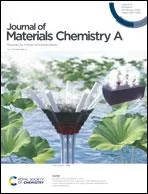
Journal of Materials Chemistry A, B & C cover high quality studies across all fields of materials chemistry. The journals focus on those theoretical or experimental studies that report new understanding, applications, properties and synthesis of materials. The journals have a strong history of publishing quality reports of interest to interdisciplinary communities and providing an efficient and rigorous service through peer review and publication. The journals are led by an international team of Editors-in-Chief and Associate Editors who are all active researchers in their fields. Journal of Materials Chemistry A, B & C are separated by the intended application of the material studied. Broadly, applications in energy and sustainability are of interest to Journal of Materials Chemistry A, applications in biology and medicine are of interest to Journal of Materials Chemistry B, and applications in optical, magnetic and electronic devices are of interest to Journal of Materials Chemistry C. More than one Journal of Materials Chemistry journal may be suitable for certain fields and researchers are encouraged to submit their paper to the journal that they feel best fits for their particular article. Example topic areas within the scope of Journal of Materials Chemistry A are listed below. This list is neither exhaustive nor exclusive. Artificial photosynthesis Batteries Carbon dioxide conversion Catalysis Fuel cells Gas capture/separation/storage Green/sustainable materials Hydrogen generation Hydrogen storage Photocatalysis Photovoltaics Self-cleaning materials Self-healing materials Sensors Supercapacitors Thermoelectrics Water splitting Water treatment
![2-Azaspiro[4.5]decane-3,8-dione structure](https://static.chemtradehub.com/structs/914/914780-96-4-e94b.webp "2-Azaspiro[4.5]decane-3,8-dione structure")