












Back cover
Literature Information
Publication Date
DOI
10.1039/C9OB90119A
Impact Factor
3.876
Authors
View Original
Abstract
A graphical abstract is available for this content
Related Literature
An adaptive quantum mechanics/molecular mechanics method for the infrared spectrum of water: incorporation of the quantum effect between solute and solvent
Hiroshi C. Watanabe, Misa Banno, Minoru Sakurai
2016-02-08
Paper
DOI: 10.1039/C5CP07136D
Tuning the charge state of Ag and Au atoms and clusters deposited on oxide surfaces by doping: a DFT study of the adsorption properties of nitrogen- and niobium-doped TiO2 and ZrO2
Philomena Schlexer, Antonio Ruiz Puigdollers, Gianfranco Pacchioni
2015-07-31
Paper
DOI: 10.1039/C5CP03834K
Deciphering conformational transitions of proteins by small angle X-ray scattering and normal mode analysis
Alejandro Panjkovich, Dmitri I. Svergun
2015-11-16
Paper
DOI: 10.1039/C5CP04540A
Graphenol defects induced blue emission enhancement in chemically reduced graphene quantum dots
Wenkai Zhang, Yingqiu Liu, Xianrui Meng, Tao Ding, Yuanqing Xu, Hao Xu, Yanrong Ren, Baoying Liu, Jiajia Huang, Jinghe Yang, Xiaomin Fang
2015-07-31
Paper
DOI: 10.1039/C5CP03434E
Strong electron donation induced differential nonradiative decay pathways for para and meta GFP chromophore analogues
Tanmay Chatterjee, Mrinal Mandal, Venkatesh Gude, Partha Pratim Bag, Prasun K. Mandal
2015-06-25
Paper
DOI: 10.1039/C5CP03086B
Collisional excitation of CH(X2Π) by He: new ab initio potential energy surfaces and scattering calculations
Sarantos Marinakis, Indigo Lily Dean, Jacek Kłos, François Lique
2015-07-29
Paper
DOI: 10.1039/C5CP03696H
Direct observation of vinyl hydroperoxide
Fang Liu, Yi Fang, Manoj Kumar, Ward H. Thompson, Marsha I. Lester
2015-07-22
Communication
DOI: 10.1039/C5CP02917A
Ultraviolet-light-driven doping modulation in chemical vapor deposition grown graphene
M. W. Iqbal, M. F. Khan, Jonghwa Eom
2015-07-08
Paper
DOI: 10.1039/C5CP02159F
A first-principles examination of conducting monolayer 1T′-MX2 (M = Mo, W; X = S, Se, Te): promising catalysts for hydrogen evolution reaction and its enhancement by strain
Shi-Hsin Lin, Jer-Lai Kuo
2015-07-16
Paper
DOI: 10.1039/C5CP03799A
A novel synthetic strategy for magnetite-type compounds. A combined experimental and DFT-computational study
Luigi Cigarini, Davide Vanossi, Claudio Fontanesi
2015-07-08
Paper
DOI: 10.1039/C5CP01852H
You might also like
Compound Q&A
What is 1-(2,4,6-Trifluorophenyl)ethanol (CAS: 1250113-83-7)?
1-(2,4,6-Trifluorophenyl)ethanol is an organic compound with the CAS number 1250...
1250113-83-71-(2,4,6-Trifluoroph...
Compound Q&A
Is 1-(2,4-Dimethoxybenzyl)-4-(hydroxymethyl)-2-pyrrolidinone (CAS: 919111-34-5) safe?
1-(2,4-Dimethoxybenzyl)-4-(hydroxymethyl)-2-pyrrolidinone (CAS: 919111-34-5) is ...
919111-34-51-(2,4-Dimethoxybenz...
Compound Q&A
What are the physical and chemical properties of (7S,15R)-6β,15-Diacetoxy-7α,20-epoxy-7-hydroxykaura-2,16-dien-1-one (CAS: 51419-51-3)?
(7S,15R)-6β,15-Diacetoxy-7α,20-epoxy-7-hydroxykaura-2,16-dien-1-one is a crystal...
51419-51-3(7S,15R)-6β,15-Diace...
Compound Q&A
What regulatory guidelines apply to rac-ethyl (1r,4r)-4-hydroxycyclohexane-1-carboxylate, trans (CAS: 3618-04-0)?
The compound rac-ethyl (1r,4r)-4-hydroxycyclohexane-1-carboxylate, trans (CAS: 3...
3618-04-0rac-ethyl (1r,4r)-4-...
Compound Q&A
What is the market or research trend for 2-(2,4-Difluorophenoxy)-3-nitropyridine (CAS: 175135-62-3)?
The market for 2-(2,4-Difluorophenoxy)-3-nitropyridine (CAS: 175135-62-3) is cur...
175135-62-32-(2,4-Difluoropheno...
Compound Q&A
What are the main uses of 6-Diazo-5-oxo-L-norleucine (CAS: 157-03-9)?
The main uses of 6-Diazo-5-oxo-L-norleucine (CAS: 157-03-9) include research in ...
157-03-96-Diazo-5-oxo-L-norl...
Compound Q&A
What precautions should be taken when handling 2-Aminoethyl-mono-amide-DOTA-tris(tBu ester) (CAS: 173308-19-5)?
When handling 2-Aminoethyl-mono-amide-DOTA-tris(tBu ester) (CAS: 173308-19-5), i...
173308-19-52-Aminoethyl-mono-am...
Compound Q&A
How is 5-Methylimidazo[1,2-a]pyridine-3-carbaldehyde (CAS: 178488-37-4) typically synthesized?
5-Methylimidazo[1,2-a]pyridine-3-carbaldehyde (CAS: 178488-37-4) can be synthesi...
178488-37-45-Methylimidazo[1,2-...
Compound Q&A
Are there alternatives to 2,4,6-Trihydroxyisophthalaldehyde (CAS: 4396-13-8) in synthesis?
There are alternative reagents that can be used in the synthesis of 2,4,6-Trihyd...
4396-13-82,4,6-Trihydroxyisop...
Compound Q&A
What is (2Z)-3-(5-Fluoro-1H-indol-3-yl)-2-sulfanylacrylic acid (CAS: 179461-52-0)?
(2Z)-3-(5-Fluoro-1H-indol-3-yl)-2-sulfanylacrylic acid is a chemical compound wi...
179461-52-0(2Z)-3-(5-Fluoro-1H-...
Source Journal
Organic & Biomolecular Chemistry

CiteScore:
3.4
Self-citation Rate:
10.3%
Articles per Year:
1041
Organic & Biomolecular Chemistry (OBC) publishes original and high impact research and reviews in organic chemistry. We welcome research that shows new or significantly improved protocols or methodologies in total synthesis, synthetic methodology or physical and theoretical organic chemistry as well as research that shows a significant advance in the organic chemistry or molecular design aspects of chemical biology, catalysis, supramolecular and macromolecular chemistry, theoretical chemistry, mechanism-oriented physical organic chemistry, medicinal chemistry or natural products. Articles published in the journal should report new work which makes a highly-significant impact in the field. Routine and incremental work is generally not suitable for publication in the journal. More details about key areas of our scope are below. In all cases authors should include in their article clear rationale for why their research has been carried out.
Recommended Compounds
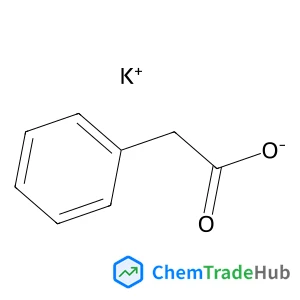
![Imidazo[1,5-a]pyrazine structure](https://static.chemtradehub.com/structs/274/274-49-7-d749.webp "Imidazo[1,5-a]pyrazine structure")
Recommended Suppliers





Disclaimer
This page provides academic journal information for reference and research purposes only. We are not affiliated with any journal publishers and do not handle publication submissions. For publication-related inquiries, please contact the respective journal publishers directly.
If you notice any inaccuracies in the information displayed, please contact us at support@chemtradehub.com. We will promptly review and address your concerns.