












Coupling of two curved polyaromatic radical-anions: stabilization of dimers by counterions
Literature Information
Publication Date
2020-03-04
DOI
10.1039/C9CP06935F
Impact Factor
3.676
Authors
Melisa Alkan, Andrey Yu. Rogachev
View Original
Abstract
In this study, a comprehensive theoretical investigation of both kinetic and thermodynamic stabilities was performed for dimeric dianionic systems (C20H10)22− and (C28H14)22−, neutralized by two alkali metal cations. The influence of the counterions was of primary interest. The impact of the additional/spectator ligand(s) was elucidated by considering adducts with four molecules of diglyme or two molecules of 18-crown-6 ether. Importantly, both types of systems – in the form of contact-ion pair (CIP) and solvent-separated ion pair (SSIP) – were considered. The SSIP set was augmented by the adduct, in which the dimeric dianionic species were neutralized with purely organic cations N(CH3)4+ and P(CH3)4+. Detailed analysis of the bonding revealed that the presence of the counterions made these systems thermodynamically stable. This finding is in sharp contrast with results obtained for isolated (PAH)22− systems, which were previously found to be thermodynamically unstable, but kinetically persistent. The introduction of the alkali metal cations to the system significantly increases the ionic term (ΔEelstat), whereas the repulsive ΔEPauli one was found to be substantially reduced. Considering that the orbital component (ΔEorb) exhibited only a moderate decrease and the preparation energy (ΔEprep) showed no changes, the above-mentioned changes in ΔEelstat and ΔEPauli provided a clear explanation for the increase of the thermodynamic stability of the target species. Importantly, a clear correlation between the size of the alkali metal cation and stability of the target dimeric product was established. Thermodynamic stability of the system rises with a decrease in the size of M+ due to enlargement of the ΔEorb. Evaluated energy barriers (as spin-crossing points between singlet and triplet energy surfaces) were found to be equal to +15.85 kcal mol−1 and +18.5 kcal mol−1 for [(Cs+)2{(C20H10)22−}] and [(Cs+)2{(C28H14)22−}], respectively, which is substantially higher than those calculated for isolated (PAH)22− systems (+10.00 kcal mol−1 for (C20H10)22− and +12.35 kcal mol−1 for (C28H14)22−). Thus, this study identified the presence of counterions as the key factor, which have a dramatic influence on the thermodynamic and kinetic stabilities of the aimed dianionic dimeric systems, which are formed by two curved polyaromatic monoanion-radicals.
Recommended Journals
Related Literature
Organoboron/iodide-catalyzed photoredox N-functionalization of NH-sulfoximines/sulfonimidamides
Jiawei Huang, Xiaoman Li, Yu Wei, Liang Xu
2023-10-24
Communication
DOI: 10.1039/D3CC04351G
Skeletal rearrangement of a boron-containing annulenic molecule into a macrocycle bridged by an electronically stabilized boron cation
2023-10-24
Communication
DOI: 10.1039/D3CC04830F
Construction of 5-methyleneoxazolidine-2,4-diones bearing modifiable halogen groups through a halopalladation strategy
Huilin Zhan, Bin Chen, Biao Zhu, Xiang Li, Zhengyu Han, Jianwei Sun, Hai Huang
2023-10-24
Communication
DOI: 10.1039/D3CC04475K
Poly(ferrocenylene iminoborane): an inorganic–organic hybrid polymer comprising a backbone of moderately interacting ferrocenes‡
Vivien Zeh, Johannes S. Schneider, Jonas Bachmann, Ivo Krummenacher, Holger Braunschweig, Holger Helten
2023-10-26
Communication
DOI: 10.1039/D3CC03523A
No-wash fluorogenic labeling of proteins for reversible photoswitching in live cells
Kenji Torii, Yuichiro Hori
2023-12-18
Edge Article
DOI: 10.1039/D3SC04953A
A summary of calixarene-based fluorescent sensors developed during the past five years
Haixian Ren, Hongliang Wang, Wei Wen, Sha Li, Nana Li, Fangjun Huo
2023-10-24
Highlight
DOI: 10.1039/D3CC04179D
You might also like
Compound Q&A
What are the main uses of (5-Sulfamoyl-3-pyridinyl)boronic acid (CAS: 951233-61-7)?
(5-Sulfamoyl-3-pyridinyl)boronic acid is primarily used in chemical synthesis, p...
951233-61-7(5-Sulfamoyl-3-pyrid...
Compound Q&A
How is Benzyl 2-methyl-2-(methylsulfonyl)-4-pentenoate (CAS: 1942858-50-5) typically synthesized?
Benzyl 2-methyl-2-(methylsulfonyl)-4-pentenoate is typically synthesized via est...
1942858-50-5Benzyl 2-methyl-2-(m...
Compound Q&A
What precautions should be taken when handling 8-Fluoroquinolin-6-ol (CAS: 209353-22-0)?
When handling 8-Fluoroquinolin-6-ol (CAS: 209353-22-0), it is important to use p...
209353-22-08-Fluoroquinolin-6-o...
Compound Q&A
What are the physical and chemical properties of 1,3-Dibromo-5-(2-methyl-2-propanyl)benzene (CAS: 129316-09-2)?
1,3-Dibromo-5-(2-methyl-2-propanyl)benzene (CAS: 129316-09-2) is a crystalline c...
129316-09-21,3-Dibromo-5-(2-met...
Compound Q&A
What industries use Ethyl 7-chloro-4-oxo-1-(1,3-thiazol-2-yl)-1,4-dihydro-1,8-naphthyridine-3-carboxylate (CAS: 174726-87-5)?
Ethyl 7-chloro-4-oxo-1-(1,3-thiazol-2-yl)-1,4-dihydro-1,8-naphthyridine-3-carbox...
174726-87-5Ethyl 7-chloro-4-oxo...
Compound Q&A
What precautions should be taken when handling Delta-7-Avenasterol (CAS: 23290-26-8)?
When handling Delta-7-Avenasterol (CAS: 23290-26-8), it is important to wear app...
23290-26-8Delta-7-Avenasterol
Compound Q&A
What precautions should be taken when handling N-({(5R)-3-[3-Fluoro-4-(4-morpholinyl)phenyl]-2-oxo-1,3-oxazolidin-5-yl}methyl)acetamide (CAS: 872992-20-6)?
Proper handling involves the use of personal protective equipment such as gloves...
872992-20-6N-({(5R)-3-[3-Fluoro...
Compound Q&A
What precautions should be taken when handling 2-Methyl-2-proanyl 4-[(2-aminophenyl)amino]-1-piperidinecarboxylate (CAS: 79099-00-6)?
When handling 2-Methyl-2-proanyl 4-[(2-aminophenyl)amino]-1-piperidinecarboxylat...
79099-00-62-Methyl-2-propanyl ...
Compound Q&A
What is N-Methyl-4-chlorobenzylamine hydrochloride (CAS: 65542-24-7)?
N-Methyl-4-chlorobenzylamine hydrochloride (CAS: 65542-24-7) is a organic compou...
65542-24-7N-Methyl-4-chloroben...
Compound Q&A
Is [2-(Dodecyloxy)ethoxy]acetic acid (CAS: 27306-90-7) safe?
[2-(Dodecyloxy)ethoxy]acetic acid (CAS: 27306-90-7) is generally considered safe...
27306-90-7[2-(Dodecyloxy)ethox...
Source Journal
Physical Chemistry Chemical Physics

CiteScore:
5.5
Self-citation Rate:
10.3%
Articles per Year:
3036
Physical Chemistry Chemical Physics (PCCP) is an international journal co-owned by 19 physical chemistry and physics societies from around the world. This journal publishes original, cutting-edge research in physical chemistry, chemical physics and biophysical chemistry. To be suitable for publication in PCCP, articles must include significant innovation and/or insight into physical chemistry; this is the most important criterion that reviewers and Editors will judge against when evaluating submissions. The journal has a broad scope and welcomes contributions spanning experiment, theory, computation and data science. Topical coverage includes spectroscopy, dynamics, kinetics, statistical mechanics, thermodynamics, electrochemistry, catalysis, surface science, quantum mechanics, quantum computing and machine learning. Interdisciplinary research areas such as polymers and soft matter, materials, nanoscience, energy, surfaces/interfaces, and biophysical chemistry are welcomed if they demonstrate significant innovation and/or insight into physical chemistry. Joined experimental/theoretical studies are particularly appreciated when complementary and based on up-to-date approaches.
Recommended Compounds
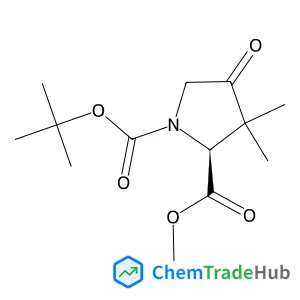
2-Methyl 1-(2-methyl-2-propanyl) (2S)-3,3-dimethyl-4-oxo-1,2-pyrrolidinedicarboxylate
CAS Number:
478698-30-5
Molecular Formula:
C13H21NO5
![5-Chloropyrrolo[2,1-f][1,2,4]triazin-4(3H)-one structure](https://static.chemtradehub.com/structs/888/888720-60-3-4f7c.webp "5-Chloropyrrolo[2,1-f][1,2,4]triazin-4(3H)-one structure")
Recommended Suppliers





Disclaimer
This page provides academic journal information for reference and research purposes only. We are not affiliated with any journal publishers and do not handle publication submissions. For publication-related inquiries, please contact the respective journal publishers directly.
If you notice any inaccuracies in the information displayed, please contact us at support@chemtradehub.com. We will promptly review and address your concerns.