












Assessing the properties of supercritical water in terms of structural dynamics and electronic polarization effects
Literature Information
Publication Date
2019-11-01
DOI
10.1039/C9CP05610F
Impact Factor
3.676
Authors
Philipp Schienbein, Dominik Marx
View Original
Abstract
Supercritical water features fascinating physical properties which are fundamentally different compared to ambient liquid water. Importantly, it can gradually be compressed from gas-like to liquid-like densities while avoiding any thermodynamic phase transition. Although the interest in supercritical water has recently increased, many microscopic characteristics still remain unknown. Based on extensive ab initio molecular dynamics simulations using the RPBE-D3 density functional along a supercritical isotherm and the isochore from the ambient liquid into the supercritical phase, we provide a comprehensive picture of supercritical water regarding its structural, dynamical and electronic properties depending on the chosen thermodynamic state point. Our results do not only show that the effective molecular dipole moment of water can be gradually tuned as a function of density along an isotherm, but also that it correlates linearly with the number of H-bond neighbors all the way from liquid-like to gas-like densities which is shown to be caused by many-body electronic polarization and charge transfer effects. Remarkably, these polarization and charge transfer effects are still present even at rather low gas-like densities. Regarding the dynamics, the H-bond lifetime is largely decreased in supercritical water and follows an Arrhenius-type behavior as a function of temperature, while it is essentially unaffected by the extreme density changes along the supercritical isotherm. In contrast, the self-diffusion coefficient dramatically varies as a function of density along the isotherm, while it scales essentially linearly as a function of temperature along the isochore.
Related Literature
Confinement effects for ionic carriers in SrTiO3 ultrathin films: first-principles calculations of oxygen vacancies
R. A. Evarestov, J. Maier
2010-11-29
Communication
DOI: 10.1039/C0CP01060J
Effects of mutation on the amyloidogenic propensity of apolipoprotein C-II60–70peptide
Nevena Todorova, Andrew Hung, Simon M. Maaser, Michael D. W. Griffin, John Karas, Geoffrey J. Howlett, Irene Yarovsky
2010-10-11
Paper
DOI: 10.1039/C0CP00299B
Photoinduced tautomeric transformations of xanthurenic acid
Vadim V. Yanshole, Peter S. Sherin, Nina P. Gritsan, Olga A. Snytnikova, Victor I. Mamatyuk, Jakob Grilj, Eric Vauthey, Renad Z. Sagdeev, Yuri P. Tsentalovich
2010-07-08
Paper
DOI: 10.1039/C000735H
A chemical dynamics, kinetics, and theoretical study on the reaction of the cyano radical (CN; X2Σ+) with phenylacetylene (C6H5CCH; X1A1)
Chris J. Bennett, Sébastien B. Morales, Sébastien D. Le Picard, André Canosa, Ian R. Sims, Y. H. Shih, A. H. H. Chang, Xibin Gu, Fantong Zhang, Ralf I. Kaiser
2010-04-06
Paper
DOI: 10.1039/B925072G
Iodineoxidation by hydrogen peroxide in acidic solutions, Bray-Liebhafsky reaction and other related reactions
2010-04-23
Paper
DOI: 10.1039/B927432D
Ionic liquids and solids with paramagnetic anions‡
James F. Wishart
2010-06-18
Paper
DOI: 10.1039/B920652N
Effect of solvent and additives on the open-circuit voltage of ZnO-based dye-sensitized solar cells: a combined theoretical and experimental study
Tangui Le Bahers, Frédéric Labat, Thierry Pauporté, Ilaria Ciofini
2010-10-15
Paper
DOI: 10.1039/C004358C
Differences in structure, energy, and spectrum between neutral, protonated, and deprotonated phenol dimers: comparison of various density functionals with ab initio theory
Maciej Kołaski, Anupriya Kumar, N. Jiten Singh, Kwang S. Kim
2010-11-09
Paper
DOI: 10.1039/C003008B
Simultaneous adsorption of benzene and dioxygen in CuHY zeolites as a precursor process to the aerobic oxidation of benzene to phenol
Shampa Santra, Hermann Stoll, Guntram Rauhut
2010-02-10
Paper
DOI: 10.1039/B921531J
Nanoscale coupling of photons to vibrational excitation of Agnanoparticle 2D array studied by scanning tunneling microscope light emission spectroscopy
Satoshi Katano, Yoichi Uehara
2010-10-12
Paper
DOI: 10.1039/C0CP01005G
You might also like
Compound Q&A
How should waste containing N-Methoxy-N-methyl-1,3-thiazole-5-carboxamide (CAS: 898825-89-3) be handled?
Waste containing N-Methoxy-N-methyl-1,3-thiazole-5-carboxamide (CAS: 898825-89-3...
898825-89-3N-Methoxy-N-methyl-1...
Compound Q&A
How should N-(4-Biphenylyl)dibenzo[b,d]furan-4-amine (CAS: 1318338-47-4) be stored?
N-(4-Biphenylyl)dibenzo[b,d]furan-4-amine should be stored in a tightly sealed c...
1318338-47-4N-(4-Biphenylyl)dibe...
Compound Q&A
What is the market or research trend for 3-Acetamido-5-amino-2,4,6-triiodobenzoic acid (CAS: 1713-07-1)?
The market for 3-Acetamido-5-amino-2,4,6-triiodobenzoic acid (CAS: 1713-07-1) is...
1713-07-13-Acetamido-5-amino-...
Compound Q&A
How should Benzyl 2-O-acetyl-3,4,6-tri-O-benzyl-beta-D-galactopyranoside (CAS: 61820-03-9) be stored?
Benzyl 2-O-acetyl-3,4,6-tri-O-benzyl-beta-D-galactopyranoside (CAS: 61820-03-9) ...
61820-03-9Benzyl 2-O-acetyl-3,...
Compound Q&A
What regulatory guidelines apply to 2-Ethylpiperazine dihydrochloride (CAS: 438050-52-3)?
2-Ethylpiperazine dihydrochloride (CAS: 438050-52-3) is regulated under the Glob...
438050-52-32-Ethylpiperazine di...
Compound Q&A
What regulatory guidelines apply to 1,1'-[1,3-Phenylenebis(methylene)]bis(3-methyl-1H-pyrrole-2,5-dione) (CAS: 119462-56-5)?
1,1'-[1,3-Phenylenebis(methylene)]bis(3-methyl-1H-pyrrole-2,5-dione) (CAS: 11946...
119462-56-51,1'-[1,3-Phenyleneb...
Compound Q&A
Are there alternatives to 5-Fluoro-2-(1-pyrrolidinyl)pyridine (CAS: 1287217-79-1) in synthesis?
Several alternatives can be used in the synthesis of 5-Fluoro-2-(1-pyrrolidinyl)...
1287217-79-15-Fluoro-2-(1-pyrrol...
Compound Q&A
What precautions should be taken when handling 1-((2R,3R,4R,5R)-5-((bis(4-methoxyphenyl)(phenyl)methoxy)methyl)-4-hydroxy-3-methoxytetrahydrofuran-2-yl)-5-methylpyrimidine-2,4(1H,3H)-dione (CAS: 153631-19-7)?
Proper personal protective equipment (PPE) must be worn when handling this compo...
153631-19-71-((2R,3R,4R,5R)-5-(...
Compound Q&A
What precautions should be taken when handling 6-Bromoimidazo[1,2-a]pyridin-8-amine (CAS: 676371-00-9)?
When handling 6-Bromoimidazo[1,2-a]pyridin-8-amine, it is important to wear appr...
676371-00-96-Bromoimidazo[1,2-a...
Compound Q&A
Are there alternatives to (2S,4R)-4-(4-Nitrobenzyl)pyrrolidine-2-carboxylic acid hydrochloride (CAS: 1049740-22-8) in synthesis?
Alternatives to (2S,4R)-4-(4-Nitrobenzyl)pyrrolidine-2-carboxylic acid hydrochlo...
1049740-22-8(2S,4R)-4-(4-Nitrobe...
Source Journal
Physical Chemistry Chemical Physics

CiteScore:
5.5
Self-citation Rate:
10.3%
Articles per Year:
3036
Physical Chemistry Chemical Physics (PCCP) is an international journal co-owned by 19 physical chemistry and physics societies from around the world. This journal publishes original, cutting-edge research in physical chemistry, chemical physics and biophysical chemistry. To be suitable for publication in PCCP, articles must include significant innovation and/or insight into physical chemistry; this is the most important criterion that reviewers and Editors will judge against when evaluating submissions. The journal has a broad scope and welcomes contributions spanning experiment, theory, computation and data science. Topical coverage includes spectroscopy, dynamics, kinetics, statistical mechanics, thermodynamics, electrochemistry, catalysis, surface science, quantum mechanics, quantum computing and machine learning. Interdisciplinary research areas such as polymers and soft matter, materials, nanoscience, energy, surfaces/interfaces, and biophysical chemistry are welcomed if they demonstrate significant innovation and/or insight into physical chemistry. Joined experimental/theoretical studies are particularly appreciated when complementary and based on up-to-date approaches.
Recommended Compounds
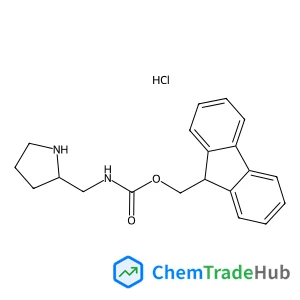
(S)-(9H-Fluoren-9-yl)methyl (pyrrolidin-2-ylmethyl)carbamate hydrochloride
CAS Number:
1217813-15-4
Molecular Formula:
C20H23ClN2O2
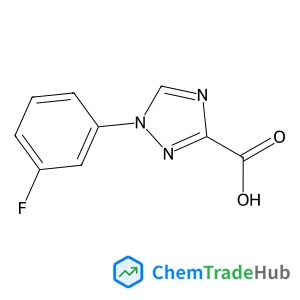
1-(3-Fluorophenyl)-1H-1,2,4-triazole-3-carboxylic acid
CAS Number:
1292369-51-7
Molecular Formula:
C9H6FN3O2
![2-Methyl-2-propanyl {3-[4-(4,4,5,5-tetramethyl-1,3,2-dioxaborolan-2-yl)phenyl]-3-oxetanyl}carbamate structure](https://static.chemtradehub.com/structs/127/1279090-25-3-1b84.webp "2-Methyl-2-propanyl {3-[4-(4,4,5,5-tetramethyl-1,3,2-dioxaborolan-2-yl)phenyl]-3-oxetanyl}carbamate structure")
2-Methyl-2-propanyl {3-[4-(4,4,5,5-tetramethyl-1,3,2-dioxaborolan-2-yl)phenyl]-3-oxetanyl}carbamate
CAS Number:
1279090-25-3
Molecular Formula:
C20H30BNO5
Recommended Suppliers





Disclaimer
This page provides academic journal information for reference and research purposes only. We are not affiliated with any journal publishers and do not handle publication submissions. For publication-related inquiries, please contact the respective journal publishers directly.
If you notice any inaccuracies in the information displayed, please contact us at support@chemtradehub.com. We will promptly review and address your concerns.