













MOLC. A reversible coarse grained approach using anisotropic beads for the modelling of organic functional materials
Literature Information
Publication Date
2019-11-21
DOI
10.1039/C9CP04120F
Impact Factor
3.676
Authors
Matteo Ricci, Otello Maria Roscioni, Lara Querciagrossa, Claudio Zannoni
View Original
Abstract
We describe the development and implementation of a coarse grained (CG) modelling approach where complex organic molecules, and particularly the π-conjugated ones often employed in organic electronics, are modelled in terms of connected sets of attractive–repulsive biaxial Gay–Berne ellipsoidal beads. The CG model is aimed at reproducing realistically large scale morphologies (e.g. up to 100 nm thick films) for the materials involved, while being able to generate, with a back-mapping procedure, atomistic coordinates suitable, with limited effort, to be applied for charge transport calculations. Detailed methodology and an application to the common hole transporter material α-NPD are provided.
Related Literature
Metal–organic frameworks for next-generation energy storage devices; a systematic review
Zeshan Ali Sandhu, Muhammad Asam Raza, Nasser S. Awwad, Hala A. Ibrahium, Umme Farwa, Sawera Ashraf, Arooj Dildar, Eman Fatima, Sufyan Ashraf, Furqan Ali
2023-11-17
Review Article
DOI: 10.1039/D3MA00822C
A comprehensive insight into deep-level defect engineering in antimony chalcogenide solar cells
Swapnil Barthwal, Siddhant Singh, Abhishek K. Chauhan, Nimitha S. Prabhu, Akila G. Prabhudessai, K. Ramesh
2023-10-13
Review Article
DOI: 10.1039/D3MA00479A
DPP-bridged narrow band gap oligomer-like donor materials: significant effect of molecular structure regulation on photovoltaic performance
Chang Liu, Lunxiang Yin, Yanli Guo, Bao Xie, Xu Wang, Yanqin Li
2023-12-06
Paper
DOI: 10.1039/D3MA00925D
The particle size control of ruthenium-encapsulated hollow silica sphere catalysts for the hydrogenation of carbon dioxide into formic acid
Tetsuo Umegaki, Eiji Nagakubo, Kenjiro Saeki, Yoshiyuki Kojima
2023-11-01
Paper
DOI: 10.1039/D3MA00331K
A nanostructured lateral flow immunoassay strip combined with Au@SiO2 SERS nanotags for multiplex biomarker detection
Fei Zheng, Bing Liu, Yanhui Wan, Qingjiang Sun, Jingjie Sha
2023-11-09
Paper
DOI: 10.1039/D3MA00595J
Synchrotron macro ATR-FTIR micro-spectroscopy to unlock silver ion-induced biochemical alterations in bacteria
Giang Tuyet Pham, Jitraporn Vongsvivut, Melissa H. Brown, Vi Khanh Truong, Krasimir Vasilev
2023-11-01
Paper
DOI: 10.1039/D3MA00598D
Carbohydrate polymer-supported metal and metal oxide nanoparticles for constructing electrochemical sensors
2023-11-30
Review Article
DOI: 10.1039/D3MA00706E
Post-lithiation: a way to control the ionic conductivity of solid-state thin film electrolyte
Jixi Chen, Alessandro Palliotto, Shinhee Yun, Dennis Valbjørn Christensen, Vincenzo Esposito, Nini Pryds
2023-11-18
Paper
DOI: 10.1039/D3MA00894K
Correction: Green pepper-derived hierarchical porous carbon for supercapacitors with high performance
Yicheng Zeng, Fuming Zhang, Jinggao Wu, Jing Huang
2023-11-30
Correction
DOI: 10.1039/D3MA90097E
Rapid solid-state metathesis reactions for the formation of cobalt–iron monoboride solid-solutions and investigation of their water splitting electrocatalytic activity
Janaka P. Abeysinghe, Edward G. Gillan
2023-12-15
Paper
DOI: 10.1039/D3MA00728F
You might also like
Compound Q&A
What are the main uses of (5-Sulfamoyl-3-pyridinyl)boronic acid (CAS: 951233-61-7)?
(5-Sulfamoyl-3-pyridinyl)boronic acid is primarily used in chemical synthesis, p...
951233-61-7(5-Sulfamoyl-3-pyrid...
Compound Q&A
How is Benzyl 2-methyl-2-(methylsulfonyl)-4-pentenoate (CAS: 1942858-50-5) typically synthesized?
Benzyl 2-methyl-2-(methylsulfonyl)-4-pentenoate is typically synthesized via est...
1942858-50-5Benzyl 2-methyl-2-(m...
Compound Q&A
What precautions should be taken when handling 8-Fluoroquinolin-6-ol (CAS: 209353-22-0)?
When handling 8-Fluoroquinolin-6-ol (CAS: 209353-22-0), it is important to use p...
209353-22-08-Fluoroquinolin-6-o...
Compound Q&A
What are the physical and chemical properties of 1,3-Dibromo-5-(2-methyl-2-propanyl)benzene (CAS: 129316-09-2)?
1,3-Dibromo-5-(2-methyl-2-propanyl)benzene (CAS: 129316-09-2) is a crystalline c...
129316-09-21,3-Dibromo-5-(2-met...
Compound Q&A
What industries use Ethyl 7-chloro-4-oxo-1-(1,3-thiazol-2-yl)-1,4-dihydro-1,8-naphthyridine-3-carboxylate (CAS: 174726-87-5)?
Ethyl 7-chloro-4-oxo-1-(1,3-thiazol-2-yl)-1,4-dihydro-1,8-naphthyridine-3-carbox...
174726-87-5Ethyl 7-chloro-4-oxo...
Compound Q&A
What precautions should be taken when handling Delta-7-Avenasterol (CAS: 23290-26-8)?
When handling Delta-7-Avenasterol (CAS: 23290-26-8), it is important to wear app...
23290-26-8Delta-7-Avenasterol
Compound Q&A
What precautions should be taken when handling N-({(5R)-3-[3-Fluoro-4-(4-morpholinyl)phenyl]-2-oxo-1,3-oxazolidin-5-yl}methyl)acetamide (CAS: 872992-20-6)?
Proper handling involves the use of personal protective equipment such as gloves...
872992-20-6N-({(5R)-3-[3-Fluoro...
Compound Q&A
What precautions should be taken when handling 2-Methyl-2-proanyl 4-[(2-aminophenyl)amino]-1-piperidinecarboxylate (CAS: 79099-00-6)?
When handling 2-Methyl-2-proanyl 4-[(2-aminophenyl)amino]-1-piperidinecarboxylat...
79099-00-62-Methyl-2-propanyl ...
Compound Q&A
What is N-Methyl-4-chlorobenzylamine hydrochloride (CAS: 65542-24-7)?
N-Methyl-4-chlorobenzylamine hydrochloride (CAS: 65542-24-7) is a organic compou...
65542-24-7N-Methyl-4-chloroben...
Compound Q&A
Is [2-(Dodecyloxy)ethoxy]acetic acid (CAS: 27306-90-7) safe?
[2-(Dodecyloxy)ethoxy]acetic acid (CAS: 27306-90-7) is generally considered safe...
27306-90-7[2-(Dodecyloxy)ethox...
Source Journal
Physical Chemistry Chemical Physics

CiteScore:
5.5
Self-citation Rate:
10.3%
Articles per Year:
3036
Physical Chemistry Chemical Physics (PCCP) is an international journal co-owned by 19 physical chemistry and physics societies from around the world. This journal publishes original, cutting-edge research in physical chemistry, chemical physics and biophysical chemistry. To be suitable for publication in PCCP, articles must include significant innovation and/or insight into physical chemistry; this is the most important criterion that reviewers and Editors will judge against when evaluating submissions. The journal has a broad scope and welcomes contributions spanning experiment, theory, computation and data science. Topical coverage includes spectroscopy, dynamics, kinetics, statistical mechanics, thermodynamics, electrochemistry, catalysis, surface science, quantum mechanics, quantum computing and machine learning. Interdisciplinary research areas such as polymers and soft matter, materials, nanoscience, energy, surfaces/interfaces, and biophysical chemistry are welcomed if they demonstrate significant innovation and/or insight into physical chemistry. Joined experimental/theoretical studies are particularly appreciated when complementary and based on up-to-date approaches.
Recommended Compounds


![[3-Fluoro-4-(1-pyrrolidinylcarbonyl)phenyl]boronic acid structure](https://static.chemtradehub.com/structs/874/874289-09-5-e3d4.webp "[3-Fluoro-4-(1-pyrrolidinylcarbonyl)phenyl]boronic acid structure")
[3-Fluoro-4-(1-pyrrolidinylcarbonyl)phenyl]boronic acid
CAS Number:
874289-09-5
Molecular Formula:
C11H13BFNO3
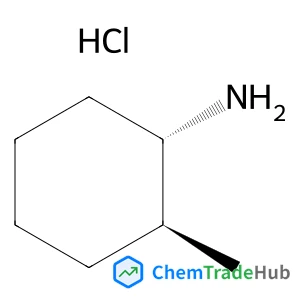
(1R,2R)-2-Methylcyclohexanamine hydrochloride (1:1)
CAS Number:
39558-31-1
Molecular Formula:
C7H16ClN
Recommended Suppliers






Disclaimer
This page provides academic journal information for reference and research purposes only. We are not affiliated with any journal publishers and do not handle publication submissions. For publication-related inquiries, please contact the respective journal publishers directly.
If you notice any inaccuracies in the information displayed, please contact us at support@chemtradehub.com. We will promptly review and address your concerns.