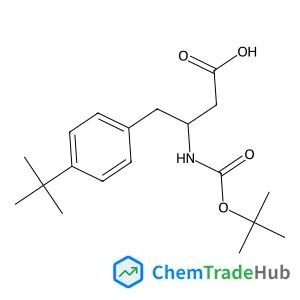
(S)-3-((tert-Butoxycarbonyl)amino)-4-(4-(tert-butyl)phenyl)butanoic acid
CAS Number:
403661-85-8
Molecular Formula:
C19H29NO4
Yupeng Shen, Fancy Qian Wang, Jie Liu, Qian Wang
Stimulated by the high thermal conductivity of diamond together with the light mass and rich resources of carbon, a great deal of effort has been devoted to the study of the thermal conductivity of carbon-based materials. In this work, we systematically study the thermal transport properties of a three dimensional (3D) C20 fullerene-assembled carbon allotrope, HSP3-C34, in which all carbon atoms are in sp3 hybridization. The stability of HSP3-C34 is confirmed and its thermal conductivity is obtained by using first principles calculations combined with solving the linearized phonon Boltzmann transport equation. At room temperature, the thermal conductivity of HSP3-C34 is 731 W m−1 K−1, which is larger than those of many 3D carbon allotropes, such as BCO-C16 (452 W m−1 K−1), 3D graphene (150 W m−1 K−1) and T-carbon (33 W m−1 K−1). A detailed analysis of its phonons reveals that three acoustic branches are the main heat carriers at room temperature, and the optical branches gradually become important with increasing temperature. A further study on the harmonic and anharmonic properties of HSP3-C34 uncovers that the main reasons for the high thermal conductivity are the weak anharmonicity and large group velocity resulting from the strong sp3 bonding. This study provides new insights on searching for carbon allotropes with high thermal conductivity.
When handling 4-Methyl-6-(trifluoromethyl)quinoline (CAS: 40716-16-3), safety go...
4-(3,5-Difluorophenyl)aniline is an aromatic organic compound with the CAS numbe...
5-{[4-(Trifluoromethyl)phenyl]sulfanyl}-1,2,3-thiadiazole-4-carboxylic acid can ...
The market for 4-Benzylaniline hydrochloride (CAS: 6317-57-3) is steadily growin...
[3-(Diethylsulfamoyl)phenyl]boronic acid is generally considered safe when handl...
3-Bromo-2,5-dimethoxyaniline is mainly used in the pharmaceutical and chemical i...
N-Methyl-1-(5-methyl-1H-indol-3-yl)methanamine (CAS: 915922-67-7) is subject to ...
This compound is primarily used in the pharmaceutical industry for the synthesis...
2-Methyl-2-propanyl [(1S,3R)-3-aminocyclohexyl]carbamate (CAS: 1298101-47-9) sho...
Ethyl 2-bromo-4,4,4-trifluorobutanoate (CAS: 367-33-9) is utilized in the pharma...

Physical Chemistry Chemical Physics (PCCP) is an international journal co-owned by 19 physical chemistry and physics societies from around the world. This journal publishes original, cutting-edge research in physical chemistry, chemical physics and biophysical chemistry. To be suitable for publication in PCCP, articles must include significant innovation and/or insight into physical chemistry; this is the most important criterion that reviewers and Editors will judge against when evaluating submissions. The journal has a broad scope and welcomes contributions spanning experiment, theory, computation and data science. Topical coverage includes spectroscopy, dynamics, kinetics, statistical mechanics, thermodynamics, electrochemistry, catalysis, surface science, quantum mechanics, quantum computing and machine learning. Interdisciplinary research areas such as polymers and soft matter, materials, nanoscience, energy, surfaces/interfaces, and biophysical chemistry are welcomed if they demonstrate significant innovation and/or insight into physical chemistry. Joined experimental/theoretical studies are particularly appreciated when complementary and based on up-to-date approaches.

![6-Bromo-3-ethyl-3H-imidazo[4,5-b]pyridine structure](https://static.chemtradehub.com/structs/103/1033202-59-3-2a8f.webp "6-Bromo-3-ethyl-3H-imidazo[4,5-b]pyridine structure")