












Pressure-dependent rate rules for cycloaddition, intramolecular H-shift, and concerted elimination reactions of alkenyl peroxy radicals at low temperature
Literature Information
Publication Date
2019-04-25
DOI
10.1039/C9CP01207A
Impact Factor
3.676
Authors
Xiaohui Sun, Wengang Zong, Jingbo Wang, Zerong Li, Xiangyuan Li
View Original
Abstract
The reactions of cycloaddition, intramolecular H-shift and concerted elimination of alkenyl peroxy radicals are three kinds of important reactions in the low temperature combustion of alkenes. In this study, the cycloaddition reactions are divided into classes considering endo-cycloaddition, exo-cycloaddition and the size of the transition states; the intramolecular H-shift reactions are divided into classes depending upon the ring size of the transition states and the type of C–H bonds from which the hydrogen atom is transferred; the concerted elimination reactions are divided into classes according to the type of H–CβCαOO bond that is broken. All geometry optimizations are performed at the B3LYP/6-31G(2df,p) level. With the electronic structure calculations being performed using the composite Gaussian-4 (G4) method, high pressure limit rate constants and pressure-dependent rate constants at pressures varying from 0.01 to 100 atm are calculated by using canonical transition state theory and the Rice–Ramsberger–Kassel–Marcus/master equation method, respectively. All rate constants are given in the form of the modified Arrhenius expression. The high pressure limit rate rules and the pressure-dependent rate rules are derived by averaging the rate constants of a representative set of reactions in each class. The results show that the rate rules for these three classes of reactions have a large uncertainty and the impact of the pressure on the rate constants increases as temperature increases.
Recommended Journals
Related Literature
The temperature dependence of the Hofmeister series: thermodynamic fingerprints of cosolute–protein interactions
Michael Senske, Diana Constantinescu-Aruxandei, Martina Havenith, Christian Herrmann, Hermann Weingärtner, Simon Ebbinghaus
2016-08-22
Paper
DOI: 10.1039/C6CP05080H
Extensive H-atom abstraction from benzoate by OH-radicals at the air–water interface
Shinichi Enami, Michael R. Hoffmann, Agustín J. Colussi
2016-11-02
Paper
DOI: 10.1039/C6CP06652F
Electrons, excitons and hydrogen bonding: electron-promoted desorption from molecular ice surfaces
Demian Marchione, Martin R. S. McCoustra
2016-10-17
Paper
DOI: 10.1039/C6CP05814K
Structure and stability of neutral Al–Mg nanoclusters up to 55 atoms
Mateus A. M. Paiva, Bárbara M. T. C. Peluzo, Jadson C. Belchior, Breno R. L. Galvão
2016-10-20
Paper
DOI: 10.1039/C6CP05605A
The mechanism of an enzymatic reaction-induced SERS transformation for the study of enzyme–molecule interfacial interactions
Lei Chen, Yeonju Park, Qian Cong, Xiaoxia Han, Bing Zhao, Young Mee Jung
2016-10-28
Paper
DOI: 10.1039/C6CP05978C
Convective heat transfer in a measurement cell for scanning electrochemical microscopy
Javor K. Novev, Richard G. Compton
2016-10-14
Paper
DOI: 10.1039/C6CP06121D
Surface reaction network of CO oxidation on CeO2/Au(110) inverse model catalysts
Liangbing Ding, Feng Xiong, Yuekang Jin, Zhengming Wang, Guanghui Sun, Weixin Huang
2016-11-09
Paper
DOI: 10.1039/C6CP05951A
A new, double-inversion mechanism of the F− + CH3Cl SN2 reaction in aqueous solution
Peng Liu, Dunyou Wang, Yulong Xu
2016-10-31
Paper
DOI: 10.1039/C6CP06195H
Salt gradient driven ion transport in solid-state nanopores: the crucial role of reservoir geometry and size
Chih-Yuan Lin, Fu Chen, Li-Hsien Yeh, Jyh-Ping Hsu
2016-10-12
Paper
DOI: 10.1039/C6CP06459K
Hydrogen abstraction from metal surfaces: when electron–hole pair excitations strongly affect hot-atom recombination
Rémi Pétuya, Fabio Busnengo
2016-10-21
Communication
DOI: 10.1039/C6CP06222A
You might also like
Compound Q&A
What precautions should be taken when handling 2-Chloro-1,2-bis(4-methylphenyl)ethanone (CAS: 71193-32-3)?
When handling 2-Chloro-1,2-bis(4-methylphenyl)ethanone (CAS: 71193-32-3), it is ...
71193-32-32-Chloro-1,2-bis(4-m...
Compound Q&A
What industries use 4-Ethoxy-3-(5-methyl-4-oxo-7-propyl-1,4-dihydroimidazo[5,1-f][1,2,4]triazin-2-yl)benzenesulfonyl chloride (CAS: 224789-26-8)?
4-Ethoxy-3-(5-methyl-4-oxo-7-propyl-1,4-dihydroimidazo[5,1-f][1,2,4]triazin-2-yl...
224789-26-84-Ethoxy-3-(5-methyl...
Compound Q&A
How should Methyl 3-Oxo-4-Androsten-17-Carboxylate (CAS: 2681-55-2) be stored?
Methyl 3-Oxo-4-Androsten-17-Carboxylate (CAS: 2681-55-2) should be stored in a c...
2681-55-2Methyl 3-Oxo-4-Andro...
Compound Q&A
What are the main uses of (R)-3-Amino-4-(3-hexylphenylamino)-4-oxobutylphosphonic acid (CAS: 909725-61-7)?
(R)-3-Amino-4-(3-hexylphenylamino)-4-oxobutylphosphonic acid is primarily used i...
909725-61-7(R)-3-Amino-4-(3-hex...
Compound Q&A
What regulatory guidelines apply to 2-Methyl-2-propanyl 3-amino-3-carbamoyl-1-azetidinecarboxylate (CAS: 1254120-14-3)?
2-Methyl-2-propanyl 3-amino-3-carbamoyl-1-azetidinecarboxylate (CAS: 1254120-14-...
1254120-14-32-Methyl-2-propanyl ...
Compound Q&A
Are there alternatives to (E)-4-(tert-Butoxy)-4-oxobut-2-enoic acid (CAS: 135355-96-3) in synthesis?
There are alternative reagents that can be used in synthesis instead of (E)-4-(t...
135355-96-3(E)-4-(tert-Butoxy)-...
Compound Q&A
What are the physical and chemical properties of [2-(3-Chlorophenyl)-1,3-thiazol-4-yl]methanol (CAS: 121202-20-8)?
[2-(3-Chlorophenyl)-1,3-thiazol-4-yl]methanol (CAS: 121202-20-8) is a crystallin...
121202-20-8[2-(3-Chlorophenyl)-...
Compound Q&A
What is the market or research trend for Methyl (2S)-[(4S)-2,2-dimethyl-1,3-dioxolan-4-yl]{[(4-methylphenyl)sulfonyl]oxy}acetate (CAS: 166249-17-8)?
The market and research trends for Methyl (2S)-[(4S)-2,2-dimethyl-1,3-dioxolan-4...
166249-17-8Methyl (2S)-[(4S)-2,...
Compound Q&A
What is the market or research trend for 1-Bromo-2-isocyanatoethane (CAS: 42865-19-0)?
The market for 1-Bromo-2-isocyanatoethane (CAS: 42865-19-0) is driven by its use...
42865-19-01-Bromo-2-isocyanato...
Compound Q&A
What are the main uses of 4-Nitro-D-phenylalanine hydrochloride (CAS: 147065-06-3)?
4-Nitro-D-phenylalanine hydrochloride (CAS: 147065-06-3) is primarily used in re...
147065-06-34-Nitro-D-phenylalan...
Source Journal
Physical Chemistry Chemical Physics

CiteScore:
5.5
Self-citation Rate:
10.3%
Articles per Year:
3036
Physical Chemistry Chemical Physics (PCCP) is an international journal co-owned by 19 physical chemistry and physics societies from around the world. This journal publishes original, cutting-edge research in physical chemistry, chemical physics and biophysical chemistry. To be suitable for publication in PCCP, articles must include significant innovation and/or insight into physical chemistry; this is the most important criterion that reviewers and Editors will judge against when evaluating submissions. The journal has a broad scope and welcomes contributions spanning experiment, theory, computation and data science. Topical coverage includes spectroscopy, dynamics, kinetics, statistical mechanics, thermodynamics, electrochemistry, catalysis, surface science, quantum mechanics, quantum computing and machine learning. Interdisciplinary research areas such as polymers and soft matter, materials, nanoscience, energy, surfaces/interfaces, and biophysical chemistry are welcomed if they demonstrate significant innovation and/or insight into physical chemistry. Joined experimental/theoretical studies are particularly appreciated when complementary and based on up-to-date approaches.
Recommended Compounds
![(1R)-3-Bromo-1,7,7-trimethylbicyclo[2.2.1]heptan-2-one structure](https://static.chemtradehub.com/structs/102/10293-06-8-dd8a.webp "(1R)-3-Bromo-1,7,7-trimethylbicyclo[2.2.1]heptan-2-one structure")
(1R)-3-Bromo-1,7,7-trimethylbicyclo[2.2.1]heptan-2-one
CAS Number:
10293-06-8
Molecular Formula:
C10H15BrO
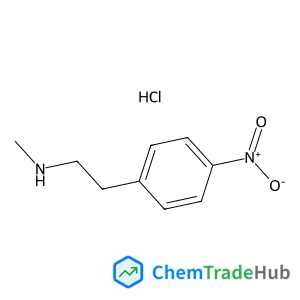
N-Methyl-2-(4-nitrophenyl)ethanamine hydrochloride (1:1)
CAS Number:
166943-39-1
Molecular Formula:
C9H13ClN2O2
Recommended Suppliers





Disclaimer
This page provides academic journal information for reference and research purposes only. We are not affiliated with any journal publishers and do not handle publication submissions. For publication-related inquiries, please contact the respective journal publishers directly.
If you notice any inaccuracies in the information displayed, please contact us at support@chemtradehub.com. We will promptly review and address your concerns.