


Interplay of exciton–excimer dynamics in 9,10-diphenylanthracene nanoaggregates and thin films revealed by time-resolved spectroscopic studies
Literature Information
Publication Date
2019-05-03
DOI
10.1039/C9CP01124B
Impact Factor
3.676
Authors
Biswajit Manna, Rajib Ghosh
View Original
Abstract
Anthracene and its derivatives are organic semiconducting materials that have prospective applications in organic solar cells and organic light emitting diodes. A thorough understanding of the photophysics and exciton dynamics is imperative for the effective utilization of these materials in optoelectronics. Herein, we have presented the exciton dynamics of a highly emissive anthracene derivative, namely, 9,10-diphenylanthracene (DPA) in nanoaggregate, thin film and crystalline forms. In contrast to the strong blue molecular emission in solution, DPA in the solid form exhibits emission from both the exciton and excimer state, covering the blue and green spectral region. In the well-ordered crystalline state, excimer emission dominates, while in the nanoaggregate form, the relative contribution of the excimer state decreases with the decrease in the size of the nanoparticle. In crystals, thin films and larger size nanoaggregates, favourable intermolecular orbital overlap by the adjacent phenyl substituents of DPA in the dominant α-phase packing allows for the fast relaxation of the exciton to excimer state in a sub-nanosecond timescale, as measured by time-resolved emission studies. Prior to trapping in the excimer state, the diffusion of singlet excitons has been revealed via the exciton–exciton annihilation kinetics measured by the excitation fluence dependent ultrafast emission decay. The singlet exciton diffusion coefficient in the DPA nanoaggregate is noted to be almost an order of magnitude slower than that in the anthracene nanoaggregate previously reported. The near perpendicular orientation of the two phenyl rings at the 9 and 10 position of anthracene causes an elongation in the intermolecular distance of the anthracene cores, which impedes the exciton diffusion rate. However, the ordered molecular packing of the DPA molecules in the thin film and crystal facilitates significantly faster singlet exciton diffusion.
Recommended Journals

Electroanalysis

Polycyclic Aromatic Compounds

Biocatalysis and Biotransformation

Topics in Catalysis

Journal of Asian Natural Products Research

Acta Metallurgica Sinica-English Letters

NDT & E International

Heteroatom Chemistry

Bioorganic & Medicinal Chemistry Letters

Journal of the Indian Institute of Science
Related Literature
Convective heat transfer in a measurement cell for scanning electrochemical microscopy
Javor K. Novev, Richard G. Compton
2016-10-14
Paper
DOI: 10.1039/C6CP06121D
An accurate multi-channel multi-reference full-dimensional global potential energy surface for the lowest triplet state of H2O2
Richard Dawes, Hua Guo
2016-10-06
Paper
DOI: 10.1039/C6CP06232F
A soft X-ray spectroscopic perspective of electron localization and transport in tungsten doped bismuth vanadate single crystals
Alexander J. E. Rettie, Vijay R. Singh, Jianshi Zhou, Bethany Lamoureux, Hendrik Bluhm
2016-11-09
Paper
DOI: 10.1039/C6CP04526J
Surface reaction network of CO oxidation on CeO2/Au(110) inverse model catalysts
Liangbing Ding, Feng Xiong, Yuekang Jin, Zhengming Wang, Guanghui Sun, Weixin Huang
2016-11-09
Paper
DOI: 10.1039/C6CP05951A
The segregation resistance of the Pt2ML/Os/Pd3Al sandwich catalyst for oxygen reduction reaction: a density functional theory study
B. B. Xiao, X. B. Jiang, X. L. Yang, Q. Jiang
2016-10-10
Paper
DOI: 10.1039/C6CP05869H
Stacking disorder in silicon carbide supported cobalt crystallites: an X-ray diffraction, electron diffraction and high resolution electron microscopy study
H. E. du Plessis, J. P. R. de Villiers, A. Tuling, E. J. Olivier
2016-10-12
Paper
DOI: 10.1039/C6CP06334A
Carbonate based ionic liquid synthesis (CBILS®): thermodynamic analysis
Roland S. Kalb, Elena N. Stepurko
2016-10-21
Paper
DOI: 10.1039/C6CP06594E
Electron acceptor of Ni decorated porous carbon nitride applied in photocatalytic hydrogen production
Lingling Bi, Dedong Meng, Qijing Bu, Yanhong Lin, Tengfeng Xie
2016-10-26
Paper
DOI: 10.1039/C6CP05618K
Planarity and multiple components promote organic photovoltaic efficiency by improving electronic transport
Matthew B. Goldey, Daniel Reid, Juan de Pablo, Giulia Galli
2016-09-09
Paper
DOI: 10.1039/C6CP04999K
You might also like
Compound Q&A
What precautions should be taken when handling 2-Chloro-1,2-bis(4-methylphenyl)ethanone (CAS: 71193-32-3)?
When handling 2-Chloro-1,2-bis(4-methylphenyl)ethanone (CAS: 71193-32-3), it is ...
71193-32-32-Chloro-1,2-bis(4-m...
Compound Q&A
What industries use 4-Ethoxy-3-(5-methyl-4-oxo-7-propyl-1,4-dihydroimidazo[5,1-f][1,2,4]triazin-2-yl)benzenesulfonyl chloride (CAS: 224789-26-8)?
4-Ethoxy-3-(5-methyl-4-oxo-7-propyl-1,4-dihydroimidazo[5,1-f][1,2,4]triazin-2-yl...
224789-26-84-Ethoxy-3-(5-methyl...
Compound Q&A
How should Methyl 3-Oxo-4-Androsten-17-Carboxylate (CAS: 2681-55-2) be stored?
Methyl 3-Oxo-4-Androsten-17-Carboxylate (CAS: 2681-55-2) should be stored in a c...
2681-55-2Methyl 3-Oxo-4-Andro...
Compound Q&A
What are the main uses of (R)-3-Amino-4-(3-hexylphenylamino)-4-oxobutylphosphonic acid (CAS: 909725-61-7)?
(R)-3-Amino-4-(3-hexylphenylamino)-4-oxobutylphosphonic acid is primarily used i...
909725-61-7(R)-3-Amino-4-(3-hex...
Compound Q&A
What regulatory guidelines apply to 2-Methyl-2-propanyl 3-amino-3-carbamoyl-1-azetidinecarboxylate (CAS: 1254120-14-3)?
2-Methyl-2-propanyl 3-amino-3-carbamoyl-1-azetidinecarboxylate (CAS: 1254120-14-...
1254120-14-32-Methyl-2-propanyl ...
Compound Q&A
Are there alternatives to (E)-4-(tert-Butoxy)-4-oxobut-2-enoic acid (CAS: 135355-96-3) in synthesis?
There are alternative reagents that can be used in synthesis instead of (E)-4-(t...
135355-96-3(E)-4-(tert-Butoxy)-...
Compound Q&A
What are the physical and chemical properties of [2-(3-Chlorophenyl)-1,3-thiazol-4-yl]methanol (CAS: 121202-20-8)?
[2-(3-Chlorophenyl)-1,3-thiazol-4-yl]methanol (CAS: 121202-20-8) is a crystallin...
121202-20-8[2-(3-Chlorophenyl)-...
Compound Q&A
What is the market or research trend for Methyl (2S)-[(4S)-2,2-dimethyl-1,3-dioxolan-4-yl]{[(4-methylphenyl)sulfonyl]oxy}acetate (CAS: 166249-17-8)?
The market and research trends for Methyl (2S)-[(4S)-2,2-dimethyl-1,3-dioxolan-4...
166249-17-8Methyl (2S)-[(4S)-2,...
Compound Q&A
What is the market or research trend for 1-Bromo-2-isocyanatoethane (CAS: 42865-19-0)?
The market for 1-Bromo-2-isocyanatoethane (CAS: 42865-19-0) is driven by its use...
42865-19-01-Bromo-2-isocyanato...
Compound Q&A
What are the main uses of 4-Nitro-D-phenylalanine hydrochloride (CAS: 147065-06-3)?
4-Nitro-D-phenylalanine hydrochloride (CAS: 147065-06-3) is primarily used in re...
147065-06-34-Nitro-D-phenylalan...
Source Journal
Physical Chemistry Chemical Physics

CiteScore:
5.5
Self-citation Rate:
10.3%
Articles per Year:
3036
Physical Chemistry Chemical Physics (PCCP) is an international journal co-owned by 19 physical chemistry and physics societies from around the world. This journal publishes original, cutting-edge research in physical chemistry, chemical physics and biophysical chemistry. To be suitable for publication in PCCP, articles must include significant innovation and/or insight into physical chemistry; this is the most important criterion that reviewers and Editors will judge against when evaluating submissions. The journal has a broad scope and welcomes contributions spanning experiment, theory, computation and data science. Topical coverage includes spectroscopy, dynamics, kinetics, statistical mechanics, thermodynamics, electrochemistry, catalysis, surface science, quantum mechanics, quantum computing and machine learning. Interdisciplinary research areas such as polymers and soft matter, materials, nanoscience, energy, surfaces/interfaces, and biophysical chemistry are welcomed if they demonstrate significant innovation and/or insight into physical chemistry. Joined experimental/theoretical studies are particularly appreciated when complementary and based on up-to-date approaches.
Recommended Compounds
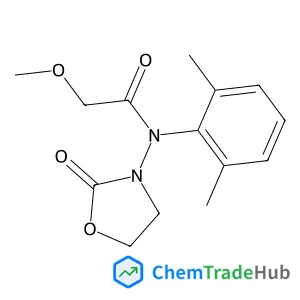
N-(2,6-Dimethylphenyl)-2-methoxy-N-(2-oxo-1,3-oxazolidin-3-yl)acetamide
CAS Number:
77732-09-3
Molecular Formula:
C14H18N2O4
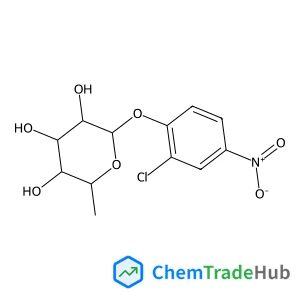
2-Chloro-4-nitrophenyl 6-deoxy-alpha-L-galactopyranoside
CAS Number:
157843-41-9
Molecular Formula:
C12H14ClNO7
Recommended Suppliers





Disclaimer
This page provides academic journal information for reference and research purposes only. We are not affiliated with any journal publishers and do not handle publication submissions. For publication-related inquiries, please contact the respective journal publishers directly.
If you notice any inaccuracies in the information displayed, please contact us at support@chemtradehub.com. We will promptly review and address your concerns.