













Thermodynamics, kinetics and electronic properties of point defects in β-FeSi2
Literature Information
Publication Date
2019-04-18
DOI
10.1039/C9CP00755E
Impact Factor
3.676
Authors
Jun Chai, Chen Ming, Xiaolong Du, Pengfei Qiu, Yi-Yang Sun, Lidong Chen
View Original
Abstract
β-FeSi2, a semiconductor material made of two of the most earth-abundant elements, has important applications in thermoelectrics, photovoltaics and optoelectronics owing to its attractive properties such as suitable band gap and air stability over a wide temperature range. While point defects always play a vital role in semiconductor materials, only sporadic studies have been dedicated to the defects in β-FeSi2. Here, using first-principles calculations we systematically investigate the intrinsic point defects in β-FeSi2. Our results reveal that the formation energies of the intrinsic defects in β-FeSi2 are high enough to prevent them from forming in a significant concentration under thermal equilibrium growth conditions. As a possible kinetic process generating intrinsic defects, we study the α-to-β phase transition of FeSi2. We find that the phase transition is a slow process occurring on the time scale of an hour. Incomplete phase transition may lead to kinetically formed intrinsic defects. We further calculate the activation energies of the intrinsic defects and show that the experimentally observed conductivity of pure β-FeSi2 should be a result of unintentional doping. Possible extrinsic impurities that may lead to n-type and p-type conductivity and their activation energies are calculated, which are in good agreement with available experiments. Our results provide guidance for optimizing the doping strategy of β-FeSi2 for device applications.
Related Literature
Microscopic investigations of site and functional selectivity of triazole for CO2 capture and catalytic applications
Reda Boulmène, Muthuramalingam Prakash, Majdi Hochlaf
2016-10-07
Paper
DOI: 10.1039/C6CP04650A
Novel metal-free organic dyes possessing fused heterocyclic structural motifs for efficient molecular photovoltaics
Ayyanar Karuppasamy, Kesavan Stalindurai, Jia-De Peng, Kuo-Chuan Ho, Chennan Ramalingan
2016-10-10
Paper
DOI: 10.1039/C6CP05722E
Formation of lamellar micelle-like oligomers and membrane disruption revealed by the study of short peptide hIAPP18–27
Ying Wei, Jun Lu, Tong Lu, Feihong Meng, Jia Xu, Li Wang, Yang Li, Liping Wang, Fei Li
2016-09-29
Paper
DOI: 10.1039/C6CP04431J
Improved electromagnetic wave absorption of Co nanoparticles decorated carbon nanotubes derived from synergistic magnetic and dielectric losses
Nannan Wu, Hailong Lv, Jiurong Liu, Yuzhen Liu, Shenyu Wang, Wei Liu
2016-10-28
Paper
DOI: 10.1039/C6CP06066H
A new, double-inversion mechanism of the F− + CH3Cl SN2 reaction in aqueous solution
Peng Liu, Dunyou Wang, Yulong Xu
2016-10-31
Paper
DOI: 10.1039/C6CP06195H
Enhanced thermoelectric properties of SnSe polycrystals via texture control
Di Wu, Yue-Xing Chen, Tingting Wu, Jiaqing He
2016-10-26
Paper
DOI: 10.1039/C6CP06466C
Stacking disorder in silicon carbide supported cobalt crystallites: an X-ray diffraction, electron diffraction and high resolution electron microscopy study
H. E. du Plessis, J. P. R. de Villiers, A. Tuling, E. J. Olivier
2016-10-12
Paper
DOI: 10.1039/C6CP06334A
The mechanism of an enzymatic reaction-induced SERS transformation for the study of enzyme–molecule interfacial interactions
Lei Chen, Yeonju Park, Qian Cong, Xiaoxia Han, Bing Zhao, Young Mee Jung
2016-10-28
Paper
DOI: 10.1039/C6CP05978C
On the origin of the great rigidity of self-assembled diphenylalanine nanotubes
Pavel Zelenovskiy, Igor Kornev, Semen Vasilev
2016-10-13
Communication
DOI: 10.1039/C6CP04337B
You might also like
Compound Q&A
What precautions should be taken when handling 2-Chloro-1,2-bis(4-methylphenyl)ethanone (CAS: 71193-32-3)?
When handling 2-Chloro-1,2-bis(4-methylphenyl)ethanone (CAS: 71193-32-3), it is ...
71193-32-32-Chloro-1,2-bis(4-m...
Compound Q&A
What industries use 4-Ethoxy-3-(5-methyl-4-oxo-7-propyl-1,4-dihydroimidazo[5,1-f][1,2,4]triazin-2-yl)benzenesulfonyl chloride (CAS: 224789-26-8)?
4-Ethoxy-3-(5-methyl-4-oxo-7-propyl-1,4-dihydroimidazo[5,1-f][1,2,4]triazin-2-yl...
224789-26-84-Ethoxy-3-(5-methyl...
Compound Q&A
How should Methyl 3-Oxo-4-Androsten-17-Carboxylate (CAS: 2681-55-2) be stored?
Methyl 3-Oxo-4-Androsten-17-Carboxylate (CAS: 2681-55-2) should be stored in a c...
2681-55-2Methyl 3-Oxo-4-Andro...
Compound Q&A
What are the main uses of (R)-3-Amino-4-(3-hexylphenylamino)-4-oxobutylphosphonic acid (CAS: 909725-61-7)?
(R)-3-Amino-4-(3-hexylphenylamino)-4-oxobutylphosphonic acid is primarily used i...
909725-61-7(R)-3-Amino-4-(3-hex...
Compound Q&A
What regulatory guidelines apply to 2-Methyl-2-propanyl 3-amino-3-carbamoyl-1-azetidinecarboxylate (CAS: 1254120-14-3)?
2-Methyl-2-propanyl 3-amino-3-carbamoyl-1-azetidinecarboxylate (CAS: 1254120-14-...
1254120-14-32-Methyl-2-propanyl ...
Compound Q&A
Are there alternatives to (E)-4-(tert-Butoxy)-4-oxobut-2-enoic acid (CAS: 135355-96-3) in synthesis?
There are alternative reagents that can be used in synthesis instead of (E)-4-(t...
135355-96-3(E)-4-(tert-Butoxy)-...
Compound Q&A
What are the physical and chemical properties of [2-(3-Chlorophenyl)-1,3-thiazol-4-yl]methanol (CAS: 121202-20-8)?
[2-(3-Chlorophenyl)-1,3-thiazol-4-yl]methanol (CAS: 121202-20-8) is a crystallin...
121202-20-8[2-(3-Chlorophenyl)-...
Compound Q&A
What is the market or research trend for Methyl (2S)-[(4S)-2,2-dimethyl-1,3-dioxolan-4-yl]{[(4-methylphenyl)sulfonyl]oxy}acetate (CAS: 166249-17-8)?
The market and research trends for Methyl (2S)-[(4S)-2,2-dimethyl-1,3-dioxolan-4...
166249-17-8Methyl (2S)-[(4S)-2,...
Compound Q&A
What is the market or research trend for 1-Bromo-2-isocyanatoethane (CAS: 42865-19-0)?
The market for 1-Bromo-2-isocyanatoethane (CAS: 42865-19-0) is driven by its use...
42865-19-01-Bromo-2-isocyanato...
Compound Q&A
What are the main uses of 4-Nitro-D-phenylalanine hydrochloride (CAS: 147065-06-3)?
4-Nitro-D-phenylalanine hydrochloride (CAS: 147065-06-3) is primarily used in re...
147065-06-34-Nitro-D-phenylalan...
Source Journal
Physical Chemistry Chemical Physics

CiteScore:
5.5
Self-citation Rate:
10.3%
Articles per Year:
3036
Physical Chemistry Chemical Physics (PCCP) is an international journal co-owned by 19 physical chemistry and physics societies from around the world. This journal publishes original, cutting-edge research in physical chemistry, chemical physics and biophysical chemistry. To be suitable for publication in PCCP, articles must include significant innovation and/or insight into physical chemistry; this is the most important criterion that reviewers and Editors will judge against when evaluating submissions. The journal has a broad scope and welcomes contributions spanning experiment, theory, computation and data science. Topical coverage includes spectroscopy, dynamics, kinetics, statistical mechanics, thermodynamics, electrochemistry, catalysis, surface science, quantum mechanics, quantum computing and machine learning. Interdisciplinary research areas such as polymers and soft matter, materials, nanoscience, energy, surfaces/interfaces, and biophysical chemistry are welcomed if they demonstrate significant innovation and/or insight into physical chemistry. Joined experimental/theoretical studies are particularly appreciated when complementary and based on up-to-date approaches.
Recommended Compounds
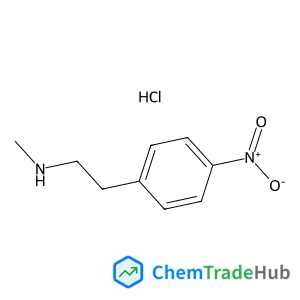
N-Methyl-2-(4-nitrophenyl)ethanamine hydrochloride (1:1)
CAS Number:
166943-39-1
Molecular Formula:
C9H13ClN2O2

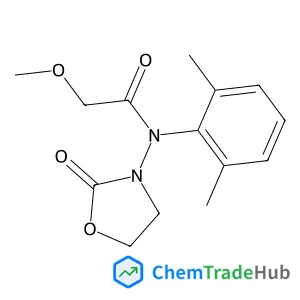
N-(2,6-Dimethylphenyl)-2-methoxy-N-(2-oxo-1,3-oxazolidin-3-yl)acetamide
CAS Number:
77732-09-3
Molecular Formula:
C14H18N2O4
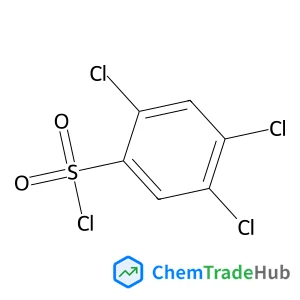
Recommended Suppliers







Disclaimer
This page provides academic journal information for reference and research purposes only. We are not affiliated with any journal publishers and do not handle publication submissions. For publication-related inquiries, please contact the respective journal publishers directly.
If you notice any inaccuracies in the information displayed, please contact us at support@chemtradehub.com. We will promptly review and address your concerns.