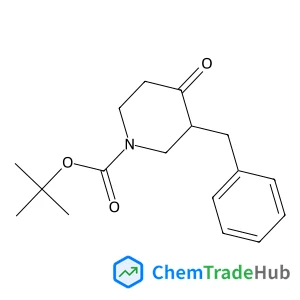
2-Methyl-2-propanyl 3-benzyl-4-oxo-1-piperidinecarboxylate
CAS Number:
193274-82-7
Molecular Formula:
C17H23NO3
The hydrodynamic characteristics of gas–liquid two-phase flow can significantly affect the performance of gas–liquid–solid microreactors. Using nitrobenzene hydrogenation as the reference heterogeneous catalytic reaction, the two-phase reacting flow behavior was visualized and characterized. Distinct differences in the length evolution, migration velocity and residence time of gas slugs were noticed for the reaction and non-reaction cases. The interface retraction of a gas slug was observed, which was mainly due to the hydrogen consumption at the gas pressure accumulation stage. Moreover, effects of the gas and liquid flow rates as well as the inlet nitrobenzene concentration on the two-phase flow behaviors and microreactor performance were also investigated. The results suggested that increasing the gas flow rate could enhance nitrobenzene conversion, but this effect was inhibited by the reduced residence time at high gas flow rates. Higher nitrobenzene concentration could enhance the interface retraction and extend the residence time, and together promote aniline production but in a trade-off with the conversion. This work reveals the intrinsic interaction between two-phase flow behaviors and catalytic reaction in microreactors, which can play a significant role in the development of microreactor technology.
Larisa V. Shvanskaya, Polina V. Krikunova, Tatyana M. Vasilchikova, Elena Y. Borovikova, Olga S. Volkova, Alexander N. Vasiliev
DOI: 10.1039/D3NJ05142K
Zhehao Sun, Kaili Liu, Ary Anggara Wibowo, Julien Langley, Chao Zhang, Sandra E. Saji, Felipe Kremer, Dmitri Golberg, Hieu T. Nguyen, Nicholas Cox
DOI: 10.1039/D3NH00348E
Tianlun Ren, Huizhen Wang, Shan Xu, Hongjie Yu, Kai Deng, Ziqiang Wang, Hongjing Wang, Liang Wang, You Xu
DOI: 10.1039/D3TA04629J
Maryam Chafiq, Abdelkarim Chaouiki, Tri Suhartono, Young Gun Ko
DOI: 10.1039/D3TA03623E
Amit Nain, Yu-Ting Tseng, Akash Gupta, Yu-Feng Lin, Sangili Arumugam, Yu-Fen Huang
DOI: 10.1039/D3NH00275F
Isaac Holmes-Gentle, Franky E. Bedoya-Lora, Lorenzo Aimone, Sophia Haussener
DOI: 10.1039/D3TA05257E
Jiawei Tang, Duo Wang, Jing Zhang, Litao Sun, Baisheng Sa, Bobby G. Sumpter, Jingsong Huang, Weiwei Sun
DOI: 10.1039/D3NH00364G
M. Alejandra Hermosilla-Palacios, Marissa Martinez, Evan A. Doud, Tobias Hertel, Alexander M. Spokoyny, Sofie Cambré, Wim Wenseleers, Yong-Hyun Kim, Andrew J. Ferguson, Jeffrey L. Blackburn
DOI: 10.1039/D3NH00480E
6-Bromo-2-methylimidazo[1,2-a]pyrimidine (CAS: 1111638-05-1) falls under various...
While there are no direct alternatives, similar compounds like 1-Pyrrolidineetha...
4-Methyl-2,6-bis(2-methyl-2-propanyl)phenyl methylcarbamate (CAS: 1918-11-2) is ...
2-(3-Bromo-4-fluorophenyl)-1,3-dioxolane (CAS: 77771-04-1) should be stored in a...
4,5,6,7-Tetrahydro-1H-indazole hydrochloride is a white crystalline solid with a...
(2R)-1-Methoxy-3-phenyl-2-propanamine is a chiral organic compound with the CAS ...
Ethyl 1-(1-phenylethyl)-1H-imidazole-5-carboxylate is used in various industries...
4-[(1E,3S)-1-(4-Hydroxyphenyl)-1,4-pentadien-3-yl]phenol (CAS: 17676-24-3) falls...
(S)-3-Amino-5-phenylpentanoic acid hydrochloride is primarily used in the pharma...
7-Methoxy-1-benzothiophene-2-carboxylic acid is typically synthesized by reactin...

Reaction Chemistry & Engineering is an interdisciplinary journal reporting cutting-edge research focused on enhancing the understanding and efficiency of reactions. Reaction engineering leverages the interface where fundamental molecular chemistry meets chemical engineering and technology. Challenges in chemistry can be overcome by the application of new technologies, while engineers may find improved solutions for process development from the latest developments in reaction chemistry. Reaction Chemistry & Engineering is a unique forum for researchers whose interests span the broad areas of chemical engineering and chemical sciences to come together in solving problems of importance to wider society. All papers should be written to be approachable by readers across the engineering and chemical sciences. Papers that consider multiple scales, from the laboratory up to and including plant scale, are particularly encouraged.
![4-Penten-1-yl 2-[(2-furylmethyl)(1H-imidazol-1-ylcarbonyl)amino]butanoate structure](https://static.chemtradehub.com/structs/101/101903-30-4-ac34.webp "4-Penten-1-yl 2-[(2-furylmethyl)(1H-imidazol-1-ylcarbonyl)amino]butanoate structure")