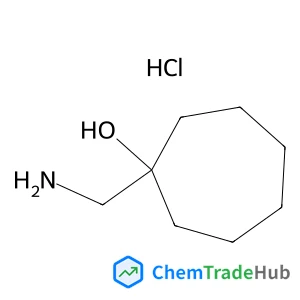
(2S)-2-(Fluoromethyl)piperidine hydrochloride (1:1)
CAS Number:
886216-73-5
Molecular Formula:
C6H13ClFN
Fulvio Grigolato, Paolo Arosio
In vitro kinetic assays of amyloid formation represent a central tool in many areas of biotechnological and biomedical sciences, including drug discovery against a variety of neurodegenerative disorders. The conversion of soluble peptides and proteins into insoluble amyloid aggregates follows macroscopic kinetic profiles that are commonly characterized by a certain degree of variability. This variability can challenge the investigation of the molecular determinants of the aggregation process, and its molecular origin remains largely elusive. Here, we analyze the aggregation profiles of four different amyloidogenic proteins that follow distinct microscopic mechanisms. We show that the variability of the kinetic traces, described by the standard deviation of the aggregation lag-phase, is linearly proportional to the duration of the aggregation process. By applying a sensitivity analysis we demonstrate that this behaviour arises from an initial fixed perturbation of one or more of the kinetic parameters of the aggregation network, and does not involve any amplification of the perturbation during the aggregation process. Moreover, our parametric sensitivity analysis shows that the experimentally measured variability is compatible with variations in the initial monomer concentration that are consistently smaller compared to all the other kinetic parameters, denoting a higher sensitivity of the amyloid aggregation process with respect to this parameter. Overall, these results show that the variability of aggregation profiles in large volumes (μl) depends on the initial conditions and not on intrinsic stochasticity. The accurate control of the initial conditions is therefore crucial to decrease this variability.
Hongde Zhu, Junlan Liang, Sanlong Wang
DOI: 10.1039/D3TA04690G
Xiao-Yu Liu, Yong Qin
DOI: 10.1039/D3NP00020F
Shuming Zeng, Qian Shen, Lina Guo, Yinchang Zhao, Hao Huang, Yusong Tu
DOI: 10.1039/D3TA04338J
Iván Sánchez-García, Richard J. M. Egberink, Willem Verboom, Hitos Galán
DOI: 10.1039/D3NJ04265K
Maria Bastianini, Michele Sisani, Annarita Petracci, Irene Di Guida, Riccardo Narducci
DOI: 10.1039/D3NJ04942F
Zhiqiang Wang, Gen Li
DOI: 10.1039/D3NJ05280J
Waste containing N-Methoxy-N-methyl-1,3-thiazole-5-carboxamide (CAS: 898825-89-3...
N-(4-Biphenylyl)dibenzo[b,d]furan-4-amine should be stored in a tightly sealed c...
The market for 3-Acetamido-5-amino-2,4,6-triiodobenzoic acid (CAS: 1713-07-1) is...
Benzyl 2-O-acetyl-3,4,6-tri-O-benzyl-beta-D-galactopyranoside (CAS: 61820-03-9) ...
2-Ethylpiperazine dihydrochloride (CAS: 438050-52-3) is regulated under the Glob...
1,1'-[1,3-Phenylenebis(methylene)]bis(3-methyl-1H-pyrrole-2,5-dione) (CAS: 11946...
Several alternatives can be used in the synthesis of 5-Fluoro-2-(1-pyrrolidinyl)...
Proper personal protective equipment (PPE) must be worn when handling this compo...
When handling 6-Bromoimidazo[1,2-a]pyridin-8-amine, it is important to wear appr...
Alternatives to (2S,4R)-4-(4-Nitrobenzyl)pyrrolidine-2-carboxylic acid hydrochlo...

Physical Chemistry Chemical Physics (PCCP) is an international journal co-owned by 19 physical chemistry and physics societies from around the world. This journal publishes original, cutting-edge research in physical chemistry, chemical physics and biophysical chemistry. To be suitable for publication in PCCP, articles must include significant innovation and/or insight into physical chemistry; this is the most important criterion that reviewers and Editors will judge against when evaluating submissions. The journal has a broad scope and welcomes contributions spanning experiment, theory, computation and data science. Topical coverage includes spectroscopy, dynamics, kinetics, statistical mechanics, thermodynamics, electrochemistry, catalysis, surface science, quantum mechanics, quantum computing and machine learning. Interdisciplinary research areas such as polymers and soft matter, materials, nanoscience, energy, surfaces/interfaces, and biophysical chemistry are welcomed if they demonstrate significant innovation and/or insight into physical chemistry. Joined experimental/theoretical studies are particularly appreciated when complementary and based on up-to-date approaches.