


Tracing feed-back driven exciton dynamics in molecular aggregates
Literature Information
Publication Date
2018-07-23
DOI
10.1039/C8CP00682B
Impact Factor
3.676
Authors
Darius Abramavicius, Vladimir Chorošajev
View Original
Abstract
Perturbative treatment of excitation dynamics in molecular systems with respect to external interactions with a dissipative environment is extensively used for the description of excitation energy transfer and relaxation. However the simulated dynamics becomes sensitive to a specific representation basis set, which makes the conclusions obscure and questionable. We revisit questions of excitation creation patterns, coherent dynamics, relaxation and detection from a theoretical viewpoint, and demonstrate that a mixture of specific requirements should be met to observe coherent phenomena and incoherent decay processes. We discuss how intermixing of coherent components in relaxation phenomena is related to a non-perturbative regime of dynamics leading to nonlinear feed-back effects where bath relaxation also affects excitation wavepackets. We also discuss how bath equilibration causes local heating effects which is often neglected in numerical simulations. The parameters reflecting the complexity of the processes are related to excitation delocalization patterns in various basis representations. While these seem to be auxiliary nonobservable features, their evaluation allows better investigation of the physical behavior of quantum relaxation processes in molecular aggregate systems.
Recommended Journals

Saudi Pharmaceutical Journal

New Journal of Chemistry

Organic Process Research & Development

Russian Chemical Bulletin

Crystallography Reports

Current Opinion in Solid State & Materials Science

Russian Journal of Organic Chemistry

Chemical Communications

Chemistry Education Research and Practice

Nature Medicine
Related Literature
Template-controlled topochemical photodimerization based on “organometallic macrocycles” through single-crystal to single-crystal transformation
Ying-Feng Han, Yue-Jian Lin, Wei-Guo Jia, Guo-Liang Wang, Guo-Xin Jin
2008-02-11
Communication
DOI: 10.1039/B717554J
Sulfate ion encapsulation in caged supramolecular structures assembled by second-sphere coordination
Jianjun Liang, Jin Yang, Chuandong Jia, Hongrui Zhang, Ning Tang, Christoph Janiak
2008-02-11
Communication
DOI: 10.1039/B719019K
High-level QM/MM modelling predicts an arginine as the acid in the condensation reaction catalysed by citrate synthase
Marc W. van der Kamp, Adrian J. Mulholland
2008-03-11
Communication
DOI: 10.1039/B800496J
A practical demonstration of electronic promotion in the reduction of ceria coated PGM catalysts
Shik Chi Tsang, Stan Golunski, Paul Collier
2008-02-18
Communication
DOI: 10.1039/B718956G
Unique intermolecular reaction of simple porphyrins at a metal surface gives covalent nanostructures
Mendel In’t Veld, Patrizia Iavicoli, Sam Haq, David B. Amabilino, Rasmita Raval
2008-02-20
Communication
DOI: 10.1039/B718865J
One-step solid-state thermolysis of a metal–organic framework: a simple and facile route to large-scale of multiwalled carbon nanotubes
Linyun Chen, Junfeng Bai, Chunzhao Wang, Yi Pan, Manfred Scheer, Xiaozeng You
2008-01-31
Communication
DOI: 10.1039/B718476J
You might also like
Compound Q&A
What precautions should be taken when handling 4-Methyl-6-(trifluoromethyl)quinoline (CAS: 40716-16-3)?
When handling 4-Methyl-6-(trifluoromethyl)quinoline (CAS: 40716-16-3), safety go...
40716-16-34-Methyl-6-(trifluor...
Compound Q&A
What is 4-(3,5-Difluorophenyl)aniline (CAS: 405058-00-6)?
4-(3,5-Difluorophenyl)aniline is an aromatic organic compound with the CAS numbe...
405058-00-64-(3,5-Difluoropheny...
Compound Q&A
How is 5-{[4-(Trifluoromethyl)phenyl]sulfanyl}-1,2,3-thiadiazole-4-carboxylic acid (CAS: 338982-07-3) typically synthesized?
5-{[4-(Trifluoromethyl)phenyl]sulfanyl}-1,2,3-thiadiazole-4-carboxylic acid can ...
338982-07-35-{[4-(Trifluorometh...
Compound Q&A
What is the market or research trend for 4-Benzylaniline hydrochloride (CAS: 6317-57-3)?
The market for 4-Benzylaniline hydrochloride (CAS: 6317-57-3) is steadily growin...
6317-57-34-Benzylaniline hydr...
Compound Q&A
Is [3-(Diethylsulfamoyl)phenyl]boronic acid (CAS: 871329-58-7) safe?
[3-(Diethylsulfamoyl)phenyl]boronic acid is generally considered safe when handl...
871329-58-7[3-(Diethylsulfamoyl...
Compound Q&A
What are the main uses of 3-Bromo-2,5-dimethoxyaniline (CAS: 115929-62-9)?
3-Bromo-2,5-dimethoxyaniline is mainly used in the pharmaceutical and chemical i...
115929-62-93-Bromo-2,5-dimethox...
Compound Q&A
What regulatory guidelines apply to N-Methyl-1-(5-methyl-1H-indol-3-yl)methanamine (CAS: 915922-67-7)?
N-Methyl-1-(5-methyl-1H-indol-3-yl)methanamine (CAS: 915922-67-7) is subject to ...
915922-67-7N-Methyl-1-(5-methyl...
Compound Q&A
What industries use Carbamic acid, N-[(5S)-5,6-diamino-6-oxohexyl]-, 1,1-dimethylethyl ester (CAS: 24828-96-4)?
This compound is primarily used in the pharmaceutical industry for the synthesis...
24828-96-4Carbamic acid, N-[(5...
Compound Q&A
How should 2-Methyl-2-propanyl [(1S,3R)-3-aminocyclohexyl]carbamate (CAS: 1298101-47-9) be stored?
2-Methyl-2-propanyl [(1S,3R)-3-aminocyclohexyl]carbamate (CAS: 1298101-47-9) sho...
1298101-47-92-Methyl-2-propanyl ...
Compound Q&A
What industries use Ethyl 2-bromo-4,4,4-trifluorobutanoate (CAS: 367-33-9)?
Ethyl 2-bromo-4,4,4-trifluorobutanoate (CAS: 367-33-9) is utilized in the pharma...
367-33-9Ethyl 2-bromo-4,4,4-...
Source Journal
Physical Chemistry Chemical Physics

CiteScore:
5.5
Self-citation Rate:
10.3%
Articles per Year:
3036
Physical Chemistry Chemical Physics (PCCP) is an international journal co-owned by 19 physical chemistry and physics societies from around the world. This journal publishes original, cutting-edge research in physical chemistry, chemical physics and biophysical chemistry. To be suitable for publication in PCCP, articles must include significant innovation and/or insight into physical chemistry; this is the most important criterion that reviewers and Editors will judge against when evaluating submissions. The journal has a broad scope and welcomes contributions spanning experiment, theory, computation and data science. Topical coverage includes spectroscopy, dynamics, kinetics, statistical mechanics, thermodynamics, electrochemistry, catalysis, surface science, quantum mechanics, quantum computing and machine learning. Interdisciplinary research areas such as polymers and soft matter, materials, nanoscience, energy, surfaces/interfaces, and biophysical chemistry are welcomed if they demonstrate significant innovation and/or insight into physical chemistry. Joined experimental/theoretical studies are particularly appreciated when complementary and based on up-to-date approaches.
Recommended Compounds
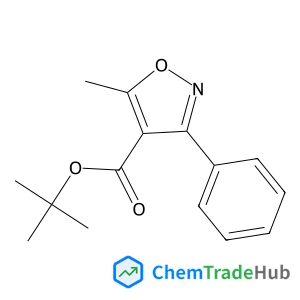
2-Methyl-2-propanyl 5-methyl-3-phenyl-1,2-oxazole-4-carboxylate
CAS Number:
211429-79-7
Molecular Formula:
C15H17NO3
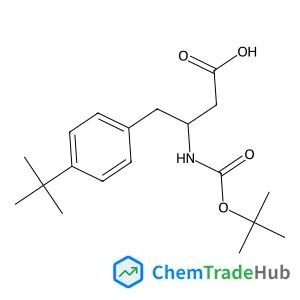
(S)-3-((tert-Butoxycarbonyl)amino)-4-(4-(tert-butyl)phenyl)butanoic acid
CAS Number:
403661-85-8
Molecular Formula:
C19H29NO4
Recommended Suppliers





Disclaimer
This page provides academic journal information for reference and research purposes only. We are not affiliated with any journal publishers and do not handle publication submissions. For publication-related inquiries, please contact the respective journal publishers directly.
If you notice any inaccuracies in the information displayed, please contact us at support@chemtradehub.com. We will promptly review and address your concerns.