



Virtually imprinted polymers (VIPs): understanding molecularly templated materials via molecular dynamics simulations
Literature Information
Publication Date
2018-02-19
DOI
10.1039/C7CP08284C
Impact Factor
3.676
Authors
F. A. Moura, P. Alves da Silva Autreto, D. S. Galvão
View Original
Abstract
Molecularly imprinted polymers are advanced recognition materials selectively rebinding a target molecule present during the synthesis of the polymer matrix. It is commonly understood that the templating process is based on embedding the complex formed between a template and functional monomers into a co-polymer matrix. This happens by a polymerization of the complex with a cross-linker while maintaining their spatial arrangement forming a molecular imprint. Template removal then leads to synthetic recognition sites ready to selectively rebind their targets, which are complementary in functionality, size and shape to the target. In this study, an innovative theoretical concept using fully atomistic molecular dynamics simulations for modeling molecular templating processes is introduced yielding virtually imprinted polymers (VIPs). VIPs created for the template 17-β-estradiol and applied in modeled chromatography experiments demonstrated selectivity for their template. This evidenced the creation of virtual imprints as a result of a templated synthesis protocol, which represents a theoretical confirmation of the governing imprinting theory.
Recommended Journals

Anti-Corrosion Methods and Materials

Chemistry of Natural Compounds

Corrosion Science

Chemical Reviews

Australian Journal of Chemistry

Advances in Colloid and Interface Science

Doklady Chemistry

Journal of the American Chemical Society

Journal of the Chinese Chemical Society

Chemical & Pharmaceutical Bulletin
Related Literature
Direct immobilization of glucose oxidase in magnetic mesoporous bioactive glasses
Dandan Min, Xudong Zhang, Wen He, Yang Zhang, Piwu Li, Meimei Zhang, Jianan Liu, Shujiang Liu, Fengxiu Xu, Yi Du, Zhilong Zhang
2013-05-13
Paper
DOI: 10.1039/C3TB20480D
Performance and application of carbon-based electrocatalysts in direct methanol fuel cell
Pritam Deb
2021-07-12
Perspective
DOI: 10.1039/D1MA00503K
Azobenzene isomerization in condensed matter: lessons for the design of efficient light-responsive soft-matter systems
Luke W. Giles, Charl F. J. Faul, Rico F. Tabor
2021-06-03
Review Article
DOI: 10.1039/D1MA00340B
Silver quasi-nanoparticles: bridging the gap between molecule-like clusters and plasmonic nanoparticles
Fatima Douma, Louwanda Lakiss, Oleg I. Lebedev, Julien Cardin, Krassimir L. Kostov, Jaafar El Fallah, Valentin Valtchev, Mohamad El-Roz
2021-06-30
Paper
DOI: 10.1039/D1MA00382H
“Comment on analysis of Fe isotopes in sulfides and iron meteorites by laser ablation high-mass resolution multi-collector ICP mass spectrometry”—a reply
Paul Sylvester
2005-12-22
Comment
DOI: 10.1039/B512647A
A ruthenium-inserted hydrotalcite (Ru-HT) heterogeneous catalyst: kinetic studies on the selective hydrogenation of carbon dioxide to formic acid
2021-07-03
Paper
DOI: 10.1039/D1MA00431J
Duplicate publication of "Cloud point extraction for speciation analysis of inorganic tin in water samples by graphite furnace atomic absorption spectrometry"
2007-09-10
Front/Back Matter
DOI: 10.1039/B713875J
What is special about silicon in functionalised organic semiconductors?
Micai Benford, Yang Song, Sean R. Parkin
2021-07-13
Paper
DOI: 10.1039/D1MA00447F
Plastic strain relaxation and alloy instability in epitaxial corundum-phase (Al,Ga)2O3 thin films on r-plane Al2O3
Marius Grundmann, Tillmann Stralka, Michael Lorenz, Susanne Selle, Christian Patzig, Thomas Höche
2021-05-11
Paper
DOI: 10.1039/D1MA00204J
You might also like
Compound Q&A
What precautions should be taken when handling 4-Methyl-6-(trifluoromethyl)quinoline (CAS: 40716-16-3)?
When handling 4-Methyl-6-(trifluoromethyl)quinoline (CAS: 40716-16-3), safety go...
40716-16-34-Methyl-6-(trifluor...
Compound Q&A
What is 4-(3,5-Difluorophenyl)aniline (CAS: 405058-00-6)?
4-(3,5-Difluorophenyl)aniline is an aromatic organic compound with the CAS numbe...
405058-00-64-(3,5-Difluoropheny...
Compound Q&A
How is 5-{[4-(Trifluoromethyl)phenyl]sulfanyl}-1,2,3-thiadiazole-4-carboxylic acid (CAS: 338982-07-3) typically synthesized?
5-{[4-(Trifluoromethyl)phenyl]sulfanyl}-1,2,3-thiadiazole-4-carboxylic acid can ...
338982-07-35-{[4-(Trifluorometh...
Compound Q&A
What is the market or research trend for 4-Benzylaniline hydrochloride (CAS: 6317-57-3)?
The market for 4-Benzylaniline hydrochloride (CAS: 6317-57-3) is steadily growin...
6317-57-34-Benzylaniline hydr...
Compound Q&A
Is [3-(Diethylsulfamoyl)phenyl]boronic acid (CAS: 871329-58-7) safe?
[3-(Diethylsulfamoyl)phenyl]boronic acid is generally considered safe when handl...
871329-58-7[3-(Diethylsulfamoyl...
Compound Q&A
What are the main uses of 3-Bromo-2,5-dimethoxyaniline (CAS: 115929-62-9)?
3-Bromo-2,5-dimethoxyaniline is mainly used in the pharmaceutical and chemical i...
115929-62-93-Bromo-2,5-dimethox...
Compound Q&A
What regulatory guidelines apply to N-Methyl-1-(5-methyl-1H-indol-3-yl)methanamine (CAS: 915922-67-7)?
N-Methyl-1-(5-methyl-1H-indol-3-yl)methanamine (CAS: 915922-67-7) is subject to ...
915922-67-7N-Methyl-1-(5-methyl...
Compound Q&A
What industries use Carbamic acid, N-[(5S)-5,6-diamino-6-oxohexyl]-, 1,1-dimethylethyl ester (CAS: 24828-96-4)?
This compound is primarily used in the pharmaceutical industry for the synthesis...
24828-96-4Carbamic acid, N-[(5...
Compound Q&A
How should 2-Methyl-2-propanyl [(1S,3R)-3-aminocyclohexyl]carbamate (CAS: 1298101-47-9) be stored?
2-Methyl-2-propanyl [(1S,3R)-3-aminocyclohexyl]carbamate (CAS: 1298101-47-9) sho...
1298101-47-92-Methyl-2-propanyl ...
Compound Q&A
What industries use Ethyl 2-bromo-4,4,4-trifluorobutanoate (CAS: 367-33-9)?
Ethyl 2-bromo-4,4,4-trifluorobutanoate (CAS: 367-33-9) is utilized in the pharma...
367-33-9Ethyl 2-bromo-4,4,4-...
Source Journal
Physical Chemistry Chemical Physics

CiteScore:
5.5
Self-citation Rate:
10.3%
Articles per Year:
3036
Physical Chemistry Chemical Physics (PCCP) is an international journal co-owned by 19 physical chemistry and physics societies from around the world. This journal publishes original, cutting-edge research in physical chemistry, chemical physics and biophysical chemistry. To be suitable for publication in PCCP, articles must include significant innovation and/or insight into physical chemistry; this is the most important criterion that reviewers and Editors will judge against when evaluating submissions. The journal has a broad scope and welcomes contributions spanning experiment, theory, computation and data science. Topical coverage includes spectroscopy, dynamics, kinetics, statistical mechanics, thermodynamics, electrochemistry, catalysis, surface science, quantum mechanics, quantum computing and machine learning. Interdisciplinary research areas such as polymers and soft matter, materials, nanoscience, energy, surfaces/interfaces, and biophysical chemistry are welcomed if they demonstrate significant innovation and/or insight into physical chemistry. Joined experimental/theoretical studies are particularly appreciated when complementary and based on up-to-date approaches.
Recommended Compounds
![[3-(2,6-Dichlorophenyl)-5-isopropyl-1,2-oxazol-4-yl]methanol structure](https://static.chemtradehub.com/structs/278/278597-30-1-5c79.webp "[3-(2,6-Dichlorophenyl)-5-isopropyl-1,2-oxazol-4-yl]methanol structure")
[3-(2,6-Dichlorophenyl)-5-isopropyl-1,2-oxazol-4-yl]methanol
CAS Number:
278597-30-1
Molecular Formula:
C13H13Cl2NO2
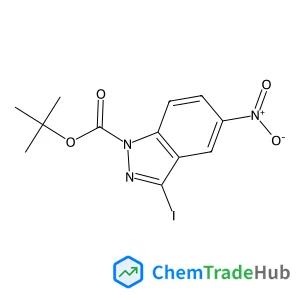
Tert-butyl 3-iodo-5-nitro-1H-indazole-1-carboxylate
CAS Number:
459133-69-8
Molecular Formula:
C12H12IN3O4
![Imidazo[1,2-c]pyrimidine structure](https://static.chemtradehub.com/structs/274/274-78-2-8b4c.webp "Imidazo[1,2-c]pyrimidine structure")
Recommended Suppliers






Disclaimer
This page provides academic journal information for reference and research purposes only. We are not affiliated with any journal publishers and do not handle publication submissions. For publication-related inquiries, please contact the respective journal publishers directly.
If you notice any inaccuracies in the information displayed, please contact us at support@chemtradehub.com. We will promptly review and address your concerns.