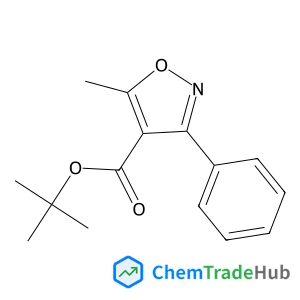
2-Methyl-2-propanyl 5-methyl-3-phenyl-1,2-oxazole-4-carboxylate
CAS Number:
211429-79-7
Molecular Formula:
C15H17NO3
Xin Wei, Chaofang Dong, Aoni Xu, Xiaogang Li, Digby D. Macdonald
Thin-layer indium selenide (InSe) compounds, as two-dimensional (2D) semiconductors, have been widely and intensively studied due to their high electron mobility and environmental stability. Here, we report a study demonstrating the oxygen-induced degradation of monolayer and bilayer InSe nanosheets using first-principles calculations and deformation potential theory. It is evident that O atoms prefer to substitute Se atoms instead of undergoing adsorption onto surfaces, while interstitial sites are the most stable adsorption sites of O atoms in the interior for both monolayer and bilayer InSe. Using the Heyd–Scuseria–Ernzerhof (HSE) hybrid functional, we calculated band structures and carrier mobility. The band gaps of a monolayer or bilayer InSe nanosheet with O atoms remained unchanged and corresponded to the pristine structure except for a slight decrease in the substituted cases. Additionally, no impurity levels are observed, indicating that the addition of O atoms has little effect on carrier concentrations. With the calculated mobility of monolayer InSe with and without O atoms, we show that the degradation is governed by the interstitial impurity of O atoms, whose electron mobility can decrease by 3–4 orders of magnitude. As for bilayer InSe, there is a one order of magnitude decrease at most, which indicates a stronger resistance to oxidation than that of the monolayer structure. Our calculations provide a detailed understanding of the degradation induced by O atoms from the aspects of structures and electronic properties, which is a foundation for the application and modification of thin-layer InSe.
Ying-Feng Han, Yue-Jian Lin, Wei-Guo Jia, Guo-Liang Wang, Guo-Xin Jin
DOI: 10.1039/B717554J
Shik Chi Tsang, Stan Golunski, Paul Collier
DOI: 10.1039/B718956G
Hideyuki Yoshiyama, Norio Shibata, Takefumi Sato, Shuichi Nakamura, Takeshi Toru
DOI: 10.1039/B800918J
Stuart W. Haynes, Paulina K. Sydor, Anna E. Stanley, Lijiang Song, Gregory L. Challis
DOI: 10.1039/B801677A
Zheming Wang
DOI: 10.1039/B800722E
Mendel In’t Veld, Patrizia Iavicoli, Sam Haq, David B. Amabilino, Rasmita Raval
DOI: 10.1039/B718865J
Davide Pantarotto, Wesley R. Browne, Ben L. Feringa
DOI: 10.1039/B715310D
Ali Abou Hassan, Olivier Sandre, Valérie Cabuil, Patrick Tabeling
DOI: 10.1039/B719550H
Meiyan Fu, Yi Xiao, Xuhong Qian, Defeng Zhao, Yufang Xu
DOI: 10.1039/B718544H
When handling 4-Methyl-6-(trifluoromethyl)quinoline (CAS: 40716-16-3), safety go...
4-(3,5-Difluorophenyl)aniline is an aromatic organic compound with the CAS numbe...
5-{[4-(Trifluoromethyl)phenyl]sulfanyl}-1,2,3-thiadiazole-4-carboxylic acid can ...
The market for 4-Benzylaniline hydrochloride (CAS: 6317-57-3) is steadily growin...
[3-(Diethylsulfamoyl)phenyl]boronic acid is generally considered safe when handl...
3-Bromo-2,5-dimethoxyaniline is mainly used in the pharmaceutical and chemical i...
N-Methyl-1-(5-methyl-1H-indol-3-yl)methanamine (CAS: 915922-67-7) is subject to ...
This compound is primarily used in the pharmaceutical industry for the synthesis...
2-Methyl-2-propanyl [(1S,3R)-3-aminocyclohexyl]carbamate (CAS: 1298101-47-9) sho...
Ethyl 2-bromo-4,4,4-trifluorobutanoate (CAS: 367-33-9) is utilized in the pharma...

Physical Chemistry Chemical Physics (PCCP) is an international journal co-owned by 19 physical chemistry and physics societies from around the world. This journal publishes original, cutting-edge research in physical chemistry, chemical physics and biophysical chemistry. To be suitable for publication in PCCP, articles must include significant innovation and/or insight into physical chemistry; this is the most important criterion that reviewers and Editors will judge against when evaluating submissions. The journal has a broad scope and welcomes contributions spanning experiment, theory, computation and data science. Topical coverage includes spectroscopy, dynamics, kinetics, statistical mechanics, thermodynamics, electrochemistry, catalysis, surface science, quantum mechanics, quantum computing and machine learning. Interdisciplinary research areas such as polymers and soft matter, materials, nanoscience, energy, surfaces/interfaces, and biophysical chemistry are welcomed if they demonstrate significant innovation and/or insight into physical chemistry. Joined experimental/theoretical studies are particularly appreciated when complementary and based on up-to-date approaches.
![2,4-Dichloro-6-isopropyl-5H-pyrrolo[3,4-d]pyrimidin-7(6H)-one structure](https://static.chemtradehub.com/structs/107/1079649-94-7-ad4a.webp "2,4-Dichloro-6-isopropyl-5H-pyrrolo[3,4-d]pyrimidin-7(6H)-one structure")