












Wormlike micelles versus water-soluble polymers as rheology-modifiers: similarities and differences
Literature Information
Publication Date
2017-09-04
DOI
10.1039/C7CP04962E
Impact Factor
3.676
Authors
Niti R. Agrawal, Srinivasa R. Raghavan
View Original
Abstract
Wormlike micelles (WLMs) formed from surfactants have attracted much attention for their ability to thicken water in a manner similar to water-soluble polymers. It is known that WLMs are cylindrical filaments that can attain very long contour lengths (∼few μm), akin to chains of polymers with ultra-high molecular weights (UHMWs). In this study, we aim to make a direct comparison between the thickening capabilities of WLMs and UHMW polymers. The chosen surfactant is erucyl dimethyl amidopropyl betaine (EDAB), a C22-tailed zwitterionic surfactant known to form particularly long WLMs independent of salt. The chosen polymer is nonionic polyacrylamide (PAM) having an UHMW of 12 MDa. Both EDAB WLMs and the PAM show strong thickening capability in saline water at 25 °C, but the WLMs are more efficient. For example, a 1.0 wt% EDAB WLM sample has a similar zero-shear viscosity η0 (∼40 000 mPa s) to a 2.5 wt% PAM solution. When temperature is increased, both samples show an exponential reduction in viscosity, but the WLMs are more sensitive to temperature. Microstructural differences between the two systems are confirmed by data from small-angle neutron scattering (SANS) and cryo-transmission electron microscopy (cryo-TEM). As expected, the key differences are that the WLM chains have a larger core radius (Rcore) and in turn, a longer persistence length (lp) than the PAM chains.
Related Literature
Immunoaffinity monoliths for multiplexed extraction of preterm birth biomarkers from human blood serum in 3D printed microfluidic devices
Haifa M. Almughamsi, Makella K. Howell, Samuel R. Parry, Joule E. Esene, Jacob B. Nielsen, Gregory P. Nordin, Adam T. Woolley
2022-01-20
Paper
DOI: 10.1039/D1AN01365C
Synthesis of silver nanoparticlesvia electrochemical reduction on compact zeolite film modified electrodes
Yahong Zhang, Fei Chen, Jihua Zhuang, Yi Tang, Deju Wang, Yajun Wang, Angang Dong, Nan Ren
2002-10-25
Communication
DOI: 10.1039/B208222E
Osmium tetroxide–(QN)2PHAL in an ionic liquid: a highly efficient and recyclable catalyst system for asymmetric dihydroxylation of olefins
Choong Eui Song, Da-un Jung, Eun Joo Roh, Sang-gi Lee, Dae Yoon Chi
2002-11-15
Communication
DOI: 10.1039/B210104C
A combined flow injection/reversed-phase chromatography–high-resolution mass spectrometry workflow for accurate absolute lipid quantification with 13C internal standards‡
Harald Schoeny, Yasin El Abiead, Felina Hildebrand, Olivia Zach
2021-03-01
Paper
DOI: 10.1039/D0AN02443K
17O MQMAS NMR studies of Na-A and Ca-A
Jennifer E. Readman, Namjun Kim, Martine Ziliox, Clare P. Grey
2002-10-25
Communication
DOI: 10.1039/B208356F
Characterization of mixed-ligand shells on gold nanoparticles by transition metal and supramolecular surface probes
Mohamed Nilam, Mohammad A. Alnajjar, Andreas Hennig
2018-10-22
Paper
DOI: 10.1039/C8AN01181H
Multimodal imaging of drug and excipients in rat lungs following an inhaled administration of controlled-release drug laden PLGA microparticles
Eve Robinson, Paul Giffen, Dave Hassall, Doug Ball, Heather Reid, Diane Coe, Simon Teague, Rebecca Terry, Meredith Earl, Joseph Marchand, Brian Farrer, Rasmus Havelund, Ian S. Gilmore, Peter S. Marshall
2021-04-09
Paper
DOI: 10.1039/D0AN02333G
A one-pot fluorogenic cascade cyclization reaction via BF3-sensing
Moumi Mandal, Ajit Kumar Mahapatra, Arik Kar
2021-03-04
Paper
DOI: 10.1039/D1AN00298H
Detection of low glucose levels in sweat with colorimetric wearable biosensors
Andreu Vaquer, Enrique Barón, Roberto de la Rica
2021-04-13
Paper
DOI: 10.1039/D1AN00283J
You might also like
Compound Q&A
How should 2-Methylbenzene-1,4-diamine dihydrochloride (CAS: 615-45-2) be stored?
2-Methylbenzene-1,4-diamine dihydrochloride (CAS: 615-45-2) should be stored in ...
615-45-22-Methylbenzene-1,4-...
Compound Q&A
Is (1S,4S)-2,5-Diazabicyclo[2.2.1]heptane dihydrobromide (CAS: 132747-20-7) safe?
(1S,4S)-2,5-Diazabicyclo[2.2.1]heptane dihydrobromide is generally considered sa...
132747-20-7(1S,4S)-2,5-Diazabic...
Compound Q&A
What industries use (6-Chloropyridazin-3-YL)methanamine (CAS: 871826-15-2)?
(6-Chloropyridazin-3-YL)methanamine finds applications in the pharmaceutical ind...
871826-15-2(6-Chloropyridazin-3...
Compound Q&A
What are the main uses of 2-Fluoro-3-methylphenol (CAS: 77772-72-6)?
2-Fluoro-3-methylphenol is primarily used in the synthesis of pharmaceuticals, p...
77772-72-62-Fluoro-3-methylphe...
Compound Q&A
What precautions should be taken when handling 3-Methoxy-4-nitrobenzonitrile (CAS: 177476-75-4)?
When handling 3-Methoxy-4-nitrobenzonitrile, it is important to wear appropriate...
177476-75-43-Methoxy-4-nitroben...
Compound Q&A
What precautions should be taken when handling 1,3-Oxazolo[4,5-b]pyridine-2(3H)-thione (CAS: 211949-57-4)?
When handling 1,3-Oxazolo[4,5-b]pyridine-2(3H)-thione (CAS: 211949-57-4), it is ...
211949-57-4[1,3]Oxazolo[4,5-b]p...
Compound Q&A
What regulatory guidelines apply to 4-Ethynylbenzamide (CAS: 90347-86-7)?
4-Ethynylbenzamide (CAS: 90347-86-7) falls under various regulatory guidelines i...
90347-86-74-Ethynylbenzamide
Compound Q&A
What are the main uses of 3-(2-Ethylphenyl)-2-thioxo-4-imidazolidinone (CAS: 186822-57-1)?
3-(2-Ethylphenyl)-2-thioxo-4-imidazolidinone is primarily used as an intermediat...
186822-57-13-(2-Ethylphenyl)-2-...
Compound Q&A
What is (2-Fluoro-6-methoxyphenyl)acetic acid (CAS: 500912-19-6)?
(2-Fluoro-6-methoxyphenyl)acetic acid, also known as 4-fluoro-3-methoxybenzoic a...
500912-19-6(2-Fluoro-6-methoxyp...
Compound Q&A
What is the market or research trend for 2-[4-(Hydroxymethyl)phenoxy]ethanol (CAS: 102196-18-9)?
Market trends for 2-[4-(Hydroxymethyl)phenoxy]ethanol (CAS: 102196-18-9) indicat...
102196-18-92-[4-(Hydroxymethyl)...
Source Journal
Physical Chemistry Chemical Physics

CiteScore:
5.5
Self-citation Rate:
10.3%
Articles per Year:
3036
Physical Chemistry Chemical Physics (PCCP) is an international journal co-owned by 19 physical chemistry and physics societies from around the world. This journal publishes original, cutting-edge research in physical chemistry, chemical physics and biophysical chemistry. To be suitable for publication in PCCP, articles must include significant innovation and/or insight into physical chemistry; this is the most important criterion that reviewers and Editors will judge against when evaluating submissions. The journal has a broad scope and welcomes contributions spanning experiment, theory, computation and data science. Topical coverage includes spectroscopy, dynamics, kinetics, statistical mechanics, thermodynamics, electrochemistry, catalysis, surface science, quantum mechanics, quantum computing and machine learning. Interdisciplinary research areas such as polymers and soft matter, materials, nanoscience, energy, surfaces/interfaces, and biophysical chemistry are welcomed if they demonstrate significant innovation and/or insight into physical chemistry. Joined experimental/theoretical studies are particularly appreciated when complementary and based on up-to-date approaches.
Recommended Compounds
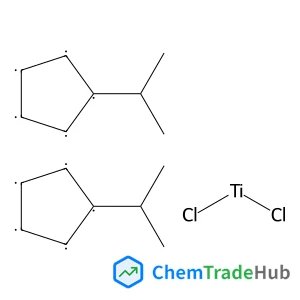
BIS(I-PROPYLCYCLOPENTADIENYL)TITANIUM DICHLORIDE
CAS Number:
12130-65-3
Molecular Formula:
C16H22Cl2Ti
![5-Bromo-3-isopropyl-1H-pyrrolo[2,3-b]pyridine structure](https://static.chemtradehub.com/structs/125/1256819-54-1-8620.webp "5-Bromo-3-isopropyl-1H-pyrrolo[2,3-b]pyridine structure")

![Methyl 2-[5-(3-Phenoxyphenyl)-2H-tetrazol-2-yl]acetate structure](https://static.chemtradehub.com/structs/130/1305320-60-8-84b4.webp "Methyl 2-[5-(3-Phenoxyphenyl)-2H-tetrazol-2-yl]acetate structure")
Methyl 2-[5-(3-Phenoxyphenyl)-2H-tetrazol-2-yl]acetate
CAS Number:
1305320-60-8
Molecular Formula:
C16H14N4O3
Recommended Suppliers






Disclaimer
This page provides academic journal information for reference and research purposes only. We are not affiliated with any journal publishers and do not handle publication submissions. For publication-related inquiries, please contact the respective journal publishers directly.
If you notice any inaccuracies in the information displayed, please contact us at support@chemtradehub.com. We will promptly review and address your concerns.