












Theoretical insights into the effect of terrace width and step edge coverage on CO adsorption and dissociation over stepped Ni surfaces
Literature Information
Publication Date
2017-06-14
DOI
10.1039/C7CP03050A
Impact Factor
3.676
Authors
Yingzhe Yu
View Original
Abstract
Vicinal surfaces of Ni are model catalysts of general interest and great importance in computational catalysis. Here we report a comprehensive study conducted with density functional theory on Ni[n(111) × (100)] (n = 2, 3 and 4) surfaces to explore the effect of terrace width and step edge coverage on CO adsorption and dissociation, a probe reaction relevant to many industrial processes. The coordination numbers (CN), the generalized coordination numbers and the d band partial density of states (d-PDOS) of Ni are identified as descriptors to faithfully reflect the difference of the step edge region for Ni[n(111) × (100)]. Based on analysis of the energy diagrams for CO activation and dissociation as well as the structural features of the Ni(311), Ni(211) and Ni(533) surfaces, Ni(211) (n = 3) is proposed as a model of adequate representativeness for Ni[n(111) × (100)] (n ≥ 3) surface groups in investigating small molecule activation over such stepped structures. Further, a series of Ni(211) surfaces with the step edge coverage ranging from 1/4 to 1 monolayer (ML) were utilized to assess their effect on CO activation. The results show that CO adsorption is not sensitive to the step edge coverage, which could readily approach 1 ML under a CO-rich atmosphere. In contrast, CO dissociation manifests strong coverage dependence when the coverage exceeds 1/2 ML, indicating that significant adsorbate–adsorbate interactions emerge. These results are conducive to theoretical studies of metal-catalyzed surface processes where the defects play a vital role.
Related Literature
Network formation in polyethyleneglycol solutions. An intradiffusion study
Paper
DOI: 10.1039/A905035C
Tannin polymerization: an overview
Myleidi Vera, Bruno F. Urbano
2021-07-14
Review Article
DOI: 10.1039/D1PY00542A
Characterisation of cation exchange membrane in hydro-organic media by electrochemistry and Raman spectroscopy
Christophe Innocent, Patrice Huguet, Jean Luc Bribes, Gérald Pourcelly, Mostefa Kameche
2001-03-19
Paper
DOI: 10.1039/B008318F
Molecular motions and phase transitions in halogen-bridged one-dimensional complexes [Pt(en)2][PtX2(en)2](ClO4)4 (X: I, Br)
Noriyoshi Kimura, Toru Hachisuka, Yukitaka Nakano, Ryuichi Ikeda
2001-04-03
Paper
DOI: 10.1039/B009646F
Redox behaviour of SnO2 nanoparticles encapsulated in the pores of zeolites towards reductive gas atmospheres studied by in situ diffuse reflectance UV/Vis and Mössbauer spectroscopy
Meike Warnken, Karoly Lázár, Michael Wark
2001-04-10
Paper
DOI: 10.1039/B009045J
Orientational disorder in 1,2,3-trichloro-4,5,6-trimethylbenzene. A single crystal deuterium NMR study of the site populations and dynamics
Thomas Bräuniger, Raphy Poupko, Zeev Luz, Detlef Reichert, Herbert Zimmermann, Heike Schmitt, Ulrich Haeberlen
2001-04-11
Paper
DOI: 10.1039/B008999K
A new type of neutral–ionic interface in mixed stack organic charge transfer crystals: Temperature induced ionicity change in ClMePD–DMeDCNQI
M. Masino, A. Girlando, L. Farina, A. Brillante
2001-04-06
Paper
DOI: 10.1039/B100243K
Sulfur uptake and exchange, HDS activity and structure of sulfided, Al2O3 supported MoOx, PdMoOx and PtMoOx catalysts
Zoltán Paál, Tamás Koltai, (the late) Károly Matusek, Jean-Marie Manoli, Claude Potvin, Martin Muhler, Ute Wild, Pál Tétényi
2001-03-19
Paper
DOI: 10.1039/B009047F
You might also like
Compound Q&A
What are the main uses of (3.beta.)-3-Hydroxy-N,N-dimethyl-chol-5-en-24-amide (CAS: 79066-03-8)?
(3.beta.)-3-Hydroxy-N,N-dimethyl-chol-5-en-24-amide (CAS: 79066-03-8) is primari...
79066-03-8(3.beta.)-3-Hydroxy-...
Compound Q&A
What regulatory guidelines apply to 5-(aminomethyl)-2-methoxyphenol (CAS: 89702-89-6)?
5-(Aminomethyl)-2-methoxyphenol (CAS: 89702-89-6) is classified under GHS as a s...
89702-89-65-(aminomethyl)-2-me...
Compound Q&A
What is Thieno[2,3-c]pyridin-7(6H)-one (CAS: 28981-13-7)?
Thieno[2,3-c]pyridin-7(6H)-one (CAS: 28981-13-7) is a heterocyclic organic compo...
28981-13-7Thieno[2,3-c]pyridin...
Compound Q&A
Is 1-[(6-Methoxy-3-pyridinyl)methyl]-4-piperidinamine dihydrochloride (CAS: 1185311-28-7) safe?
1-[(6-Methoxy-3-pyridinyl)methyl]-4-piperidinamine dihydrochloride is generally ...
1185311-28-71-[(6-Methoxy-3-pyri...
Compound Q&A
What regulatory guidelines apply to [(2E)-3-Phenyl-2-propen-1-yl]phosphonic acid (CAS: 146404-58-2)?
[(2E)-3-Phenyl-2-propen-1-yl]phosphonic acid (CAS: 146404-58-2) is regulated und...
146404-58-2[(2E)-3-Phenyl-2-pro...
Compound Q&A
What regulatory guidelines apply to 6-Bromo-7-methoxyquinoline (CAS: 1620515-86-7)?
6-Bromo-7-methoxyquinoline (CAS: 1620515-86-7) falls under the scope of the Glob...
1620515-86-76-Bromo-7-methoxyqui...
Compound Q&A
What industries use (2R)-1-(1-Benzofuran-2-yl)-N-propyl-2-pentanamine (CAS: 260550-89-8)?
This compound is primarily used in the pharmaceutical industry for the developme...
260550-89-8(2R)-1-(1-Benzofuran...
Compound Q&A
What are the main uses of 1-Ethyl-7-[2-methyl-6-(4H-1,2,4-triazol-3-yl)-3-pyridinyl]-3,5-dihydropyrazino[2,3-b]pyrazin-2(1H)-one (CAS: 1228013-15-7)?
1-Ethyl-7-[2-methyl-6-(4H-1,2,4-triazol-3-yl)-3-pyridinyl]-3,5-dihydropyrazino[2...
1228013-15-71-Ethyl-7-[2-methyl-...
Compound Q&A
Are there alternatives to {5-(Acryloylamino)-2-[(dimethylamino)methyl]phenyl}boronic acid (CAS: 1217500-78-1) in synthesis?
Alternative reagents such as 2-[(dimethylamino)methyl]phenylboronic acid or rela...
1217500-78-1{5-(Acryloylamino)-2...
Compound Q&A
What is 3-(Piperidin-4-yloxy)pyridine (CAS: 310881-48-2)?
3-(Piperidin-4-yloxy)pyridine (CAS: 310881-48-2) is an organic compound with the...
310881-48-23-(Piperidin-4-yloxy...
Source Journal
Physical Chemistry Chemical Physics

CiteScore:
5.5
Self-citation Rate:
10.3%
Articles per Year:
3036
Physical Chemistry Chemical Physics (PCCP) is an international journal co-owned by 19 physical chemistry and physics societies from around the world. This journal publishes original, cutting-edge research in physical chemistry, chemical physics and biophysical chemistry. To be suitable for publication in PCCP, articles must include significant innovation and/or insight into physical chemistry; this is the most important criterion that reviewers and Editors will judge against when evaluating submissions. The journal has a broad scope and welcomes contributions spanning experiment, theory, computation and data science. Topical coverage includes spectroscopy, dynamics, kinetics, statistical mechanics, thermodynamics, electrochemistry, catalysis, surface science, quantum mechanics, quantum computing and machine learning. Interdisciplinary research areas such as polymers and soft matter, materials, nanoscience, energy, surfaces/interfaces, and biophysical chemistry are welcomed if they demonstrate significant innovation and/or insight into physical chemistry. Joined experimental/theoretical studies are particularly appreciated when complementary and based on up-to-date approaches.
Recommended Compounds


(4aS,10aS)-7-Isopropyl-1,4a-dimethyl-5,8-dioxo-3,4,4a,5,8,9,10,10a-octahydro-2-phenanthrenecarboxylic acid
CAS Number:
142950-86-5
Molecular Formula:
C20H24O4
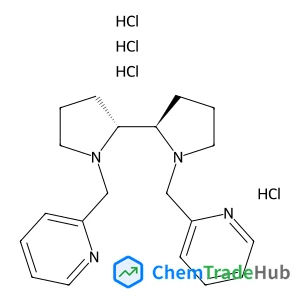
(2R,2'R)-1,1'-Bis(2-pyridinylmethyl)-2,2'-bipyrrolidine tetrahydrochloride
CAS Number:
1228077-88-0
Molecular Formula:
C20H30Cl4N4
Recommended Suppliers



Disclaimer
This page provides academic journal information for reference and research purposes only. We are not affiliated with any journal publishers and do not handle publication submissions. For publication-related inquiries, please contact the respective journal publishers directly.
If you notice any inaccuracies in the information displayed, please contact us at support@chemtradehub.com. We will promptly review and address your concerns.