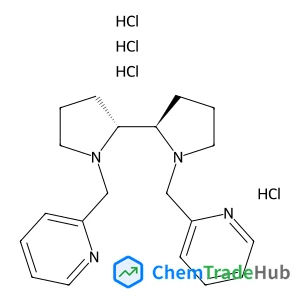
(2R,2'R)-1,1'-Bis(2-pyridinylmethyl)-2,2'-bipyrrolidine tetrahydrochloride
CAS Number:
1228077-88-0
Molecular Formula:
C20H30Cl4N4
Hua Li
In this study, a model was multiphysically developed for the simulation of the phase transition of physical hydrogels between liquid solution and solid gel states, subject to an electro-chemo-mechanically coupled field, with the effect of the mobile ionic species in the solution. The present model consists of the governing equations for the equilibrium of forces and the conservation of mass, Maxwell's equations, and an evolution equation for the interface. Based on the second law of thermodynamics, the constitutive equations are formulated from the energy viewpoint, including a novel formulation of free energy with the effect of crosslink density. The present model may be reduced to Suo's non-equilibrium thermodynamic theory if the interface is ignored when only a single phase exists. It may also be reduced to Dolbow's model for gel–gel phase transition when the electric field is ignored. Therefore, the present model becomes more generalized since it is able to represent both the bulk phase and the interface behaviors, and the mechanical field is simultaneously coupled with both the electric and chemical fields. In the first case study, the system at equilibrium state was numerically investigated for analysis of the influences of the electrical and chemical potentials as well as the mechanical pressure externally imposed on the boundary of the system domain. The second case study presents a spherically symmetrical solution–gel phase transition at non-equilibrium states, with the emphasis on the evolution of both the interface and electrochemical potentials.

Polycyclic Aromatic Compounds

Atomization and Sprays

Journal of Chemical Sciences

Critical Reviews in Solid State and Materials Sciences

Herald of the Russian Academy of Sciences

Bioorganic & Medicinal Chemistry

Colloid Journal

Bioorganic & Medicinal Chemistry Letters

Biocatalysis and Biotransformation

Electroanalysis
Andreas Philippou, Anabela Valente, João Rocha, Michael Anderson
DOI: 10.1039/B006828O
Jaroslaw Sadlo, Marek Danilczuk, Jacek Michalik
DOI: 10.1039/B008246P
DOI: 10.1039/B100238O
Yichao Zheng, Jit Sarkar, Hiroshi Niino, Shunsuke Chatani, Shu Yao Hsu, Atsushi Goto
DOI: 10.1039/D1PY00663K
Meike Warnken, Karoly Lázár, Michael Wark
DOI: 10.1039/B009045J
Francesca Benevelli, Waclaw Kolodziejski, Krzysztof Wozniak, Jacek Klinowski
DOI: 10.1039/B100894N
Thomas Bräuniger, Raphy Poupko, Zeev Luz, Detlef Reichert, Herbert Zimmermann, Heike Schmitt, Ulrich Haeberlen
DOI: 10.1039/B008999K
(3.beta.)-3-Hydroxy-N,N-dimethyl-chol-5-en-24-amide (CAS: 79066-03-8) is primari...
5-(Aminomethyl)-2-methoxyphenol (CAS: 89702-89-6) is classified under GHS as a s...
Thieno[2,3-c]pyridin-7(6H)-one (CAS: 28981-13-7) is a heterocyclic organic compo...
1-[(6-Methoxy-3-pyridinyl)methyl]-4-piperidinamine dihydrochloride is generally ...
[(2E)-3-Phenyl-2-propen-1-yl]phosphonic acid (CAS: 146404-58-2) is regulated und...
6-Bromo-7-methoxyquinoline (CAS: 1620515-86-7) falls under the scope of the Glob...
This compound is primarily used in the pharmaceutical industry for the developme...
1-Ethyl-7-[2-methyl-6-(4H-1,2,4-triazol-3-yl)-3-pyridinyl]-3,5-dihydropyrazino[2...
Alternative reagents such as 2-[(dimethylamino)methyl]phenylboronic acid or rela...
3-(Piperidin-4-yloxy)pyridine (CAS: 310881-48-2) is an organic compound with the...

Physical Chemistry Chemical Physics (PCCP) is an international journal co-owned by 19 physical chemistry and physics societies from around the world. This journal publishes original, cutting-edge research in physical chemistry, chemical physics and biophysical chemistry. To be suitable for publication in PCCP, articles must include significant innovation and/or insight into physical chemistry; this is the most important criterion that reviewers and Editors will judge against when evaluating submissions. The journal has a broad scope and welcomes contributions spanning experiment, theory, computation and data science. Topical coverage includes spectroscopy, dynamics, kinetics, statistical mechanics, thermodynamics, electrochemistry, catalysis, surface science, quantum mechanics, quantum computing and machine learning. Interdisciplinary research areas such as polymers and soft matter, materials, nanoscience, energy, surfaces/interfaces, and biophysical chemistry are welcomed if they demonstrate significant innovation and/or insight into physical chemistry. Joined experimental/theoretical studies are particularly appreciated when complementary and based on up-to-date approaches.
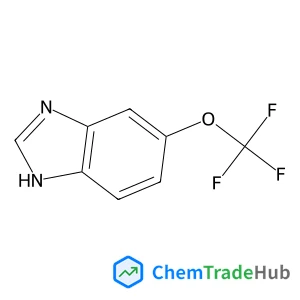
![N-[(6-Bromo-3-pyridinyl)methyl]ethanamine structure](https://static.chemtradehub.com/structs/120/120740-05-8-ca55.webp "N-[(6-Bromo-3-pyridinyl)methyl]ethanamine structure")