













Facile carbohydrate-mimetic modifications of poly(ethylene imine) carriers for gene delivery applications
Literature Information
Publication Date
2016-09-08
DOI
10.1039/C6PY00940A
Impact Factor
5.582
Authors
Mareva Fevre, Rudy J. Wojtecki, Wei Cheng, Qingxing Xu, Chuan Yang, Xiyu Ke, Jeannette M. García, Robert J. Ono, Yi Yan Yang, James L. Hedrick
View Original
Abstract
Commercially-available linear and branched PEIs (LPEI and BPEI) were chemically-modified with carbohydrates and carbohydrate-mimetics to improve biocompatibility. Hydroxyl moieties were installed in a close proximity via reaction of PEI's amines with paraformaldehyde (pF) or glycidol. Mixing PEI with pF led to the formation of hemiaminal moieties as well as N-methylation of the backbone through an Eschweiler–Clarke-type rearrangement. The amount of attached hydroxyl groups depended on the initial amount of pF and the results were in agreement with NMR studies on model reactions with primary and secondary amines. The primary amines of BPEI triggered the ring-opening of glycidol and sugar-containing epoxides, in methanol and at room temperature. PEI chains modified with pF displayed the same cytotoxicity as the parent polymer, unless a sufficient amount of pF was added to trigger N-methylation of the backbone. In contrast, glycidol and sugar-functionalized BPEIs exhibited lower toxicity but similar (if not higher) transfection efficiency as compared to unmodified BPEI.
Related Literature
C–C bond formation through oxidatively induced elimination of platinum complexes—A novel approach towards conjugated macrocycles
Gerda Fuhrmann, Tony Debaerdemaeker, Peter Bäuerle
2003-03-14
Communication
DOI: 10.1039/B300542A
Silicon, germanium, tin and lead analogues of acetylenes
2003-07-18
Feature Article
DOI: 10.1039/B212224C
A novel type of phosphide: synthesis and X-ray crystal structure analysis of (tBu3Si)3P4Li3
Hans-Wolfram Lerner, Matthias Wagner, Michael Bolte
2003-03-21
Communication
DOI: 10.1039/B210984K
Solvent-dependent 44 square grid and 64.82 NbO frameworks formed by Cu(Pyac)2 (bis[3-(4-pyridyl)pentane-2,4-dionato]copper(ii))
Banglin Chen, Frank R. Fronczek, Andrew W. Maverick
2003-07-28
Communication
DOI: 10.1039/B305457H
Strong optical limiting capability of a triosmium cluster bonded indium porphyrin complex [(TPP)InOs3(μ-H)2(CO)9(μ-η2-C5H4N)]
Xinhua Zhong, Yaoyu Feng, Say-Leong Ong, Jiangyong Hu, Wun-Jern Ng, Zheming Wang
2003-07-03
Communication
DOI: 10.1039/B304349E
Thermolysis of fluorinated cycloalkylidene fulgides yields a new class of photochromic compounds
Mason A. Wolak, Nathan B. Gillespie, Robert R. Birge, Watson J. Lees
2003-03-27
Communication
DOI: 10.1039/B300010A
Octanuclearity and tetradecanuclearity in manganese chemistry: an octanuclear manganese(ii)/(iii) complex featuring the novel [Mn8(μ4- O)2(μ3-OH)2]14+ core and [Mn10IIMn4IIIO4(O2CMe)20{(2-py)2C(OH)O}4] (2-py = 2-pyridyl)
Constantinos J. Milios, Elena Kefalloniti, Catherine P. Raptopoulou, Aris Terzis, Ramon Vicente, Nikolia Lalioti, Albert Escuer, Spyros P. Perlepes
2003-03-05
Communication
DOI: 10.1039/B300986F
Decomposition of Pt-intercalated hydrotalcite-like nanocomposites to produce micro/mesoporous catalysts
Masato Machida, Shin Hamada
2003-06-20
Communication
DOI: 10.1039/B304352E
Chemical modification of diamond powder using photolysis of perfluoroazooctane
Takako Nakamura, Masatou Ishihara, Tsuguyori Ohana, Yoshinori Koga
2003-03-10
Communication
DOI: 10.1039/B211807F
Synthesis of protein–nucleic acid conjugates by expressed protein ligation
Marina Lovrinovic, Ralf Seidel, Hendrik Schroeder, Oliver Seitz, Martin Engelhard, Roger S. Goody, Christof M. Niemeyer
2003-03-10
Communication
DOI: 10.1039/B212294D
You might also like
Compound Q&A
What precautions should be taken when handling 2-Methyl-2-propanyl 5-amino-2-thiophenecarboxylate (CAS: 1498311-57-1)?
When handling 2-Methyl-2-propanyl 5-amino-2-thiophenecarboxylate (CAS: 1498311-5...
1498311-57-12-Methyl-2-propanyl ...
Compound Q&A
What are the physical and chemical properties of 5-Bromo-1,2-dichloro-3-fluorobenzene (CAS: 1000572-93-9)?
5-Bromo-1,2-dichloro-3-fluorobenzene (CAS: 1000572-93-9) is a crystalline solid ...
1000572-93-95-Bromo-1,2-dichloro...
Compound Q&A
How should (2R)-2-Amino-2-(4-bromophenyl)ethanol (CAS: 354153-64-3) be stored?
(2R)-2-Amino-2-(4-bromophenyl)ethanol (CAS: 354153-64-3) should be stored in a c...
354153-64-3(2R)-2-Amino-2-(4-br...
Compound Q&A
What regulatory guidelines apply to Methyl 4-(aminomethyl)tetrahydro-2H-pyran-4-carboxylate hydrochloride (CAS: 362707-24-2)?
Methyl 4-(aminomethyl)tetrahydro-2H-pyran-4-carboxylate hydrochloride (CAS: 3627...
362707-24-2Methyl 4-(aminomethy...
Compound Q&A
What are the main uses of 1,4-dimethyl-1H-pyrazole-5-sulfonyl chloride (CAS: 1174834-52-6)?
1,4-Dimethyl-1H-pyrazole-5-sulfonyl chloride is primarily used as an intermediat...
1174834-52-61,4-dimethyl-1H-pyra...
Compound Q&A
Is Dinaphtho[1,2-b:2',1'-d]furan (CAS: 239-69-0) safe?
Dinaphtho[1,2-b:2',1'-d]furan is generally safe when handled with appropriate pe...
239-69-0Dinaphtho[1,2-b:2',1...
Compound Q&A
What is the market or research trend for 7-Methyl-7,9-dihydro-1H-purine-2,6,8(3H)-trione (CAS: 612-37-3)?
The market for 7-Methyl-7,9-dihydro-1H-purine-2,6,8(3H)-trione (CAS: 612-37-3) i...
612-37-37-Methyl-7,9-dihydro...
Compound Q&A
What are the physical and chemical properties of 2-(4-Chlorophenyl)malonaldehyde (CAS: 205676-17-1)?
2-(4-Chlorophenyl)malonaldehyde (CAS: 205676-17-1) is a colorless or light yello...
205676-17-12-(4-Chlorophenyl)ma...
Compound Q&A
How is 2-Methylchrysene (CAS: 3351-32-4) typically synthesized?
2-Methylchrysene (CAS: 3351-32-4) is typically synthesized via the reaction of c...
3351-32-42-Methylchrysene
Compound Q&A
Is N-(6-aminopyrimidin-4-yl)acetamide (CAS: 89533-23-3) safe?
N-(6-aminopyrimidin-4-yl)acetamide (CAS: 89533-23-3) is generally considered saf...
89533-23-3N-(6-aminopyrimidin-...
Source Journal
Polymer Chemistry

CiteScore:
8.6
Self-citation Rate:
7.3%
Articles per Year:
457
Polymer Chemistry welcomes submissions in all areas of polymer science that have a strong focus on macromolecular chemistry. Manuscripts may cover a broad range of fields, yet no direct application focus is required.
Recommended Compounds
![2-[2-(2-Methoxyethoxy)ethoxy]-2-methylpropane structure](https://static.chemtradehub.com/structs/527/52788-79-1-71c1.webp "2-[2-(2-Methoxyethoxy)ethoxy]-2-methylpropane structure")
![1-{[5-(4,4,5,5-Tetramethyl-1,3,2-dioxaborolan-2-yl)-2-thienyl]methyl}piperidine structure](https://static.chemtradehub.com/structs/121/1218790-44-3-baef.webp "1-{[5-(4,4,5,5-Tetramethyl-1,3,2-dioxaborolan-2-yl)-2-thienyl]methyl}piperidine structure")
1-{[5-(4,4,5,5-Tetramethyl-1,3,2-dioxaborolan-2-yl)-2-thienyl]methyl}piperidine
CAS Number:
1218790-44-3
Molecular Formula:
C16H26BNO2S
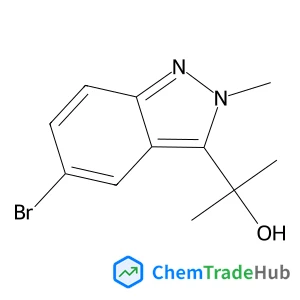
2-(5-Bromo-2-methyl-2H-indazol-3-yl)-2-propanol
CAS Number:
1823787-20-7
Molecular Formula:
C11H13BrN2O
Recommended Suppliers





Disclaimer
This page provides academic journal information for reference and research purposes only. We are not affiliated with any journal publishers and do not handle publication submissions. For publication-related inquiries, please contact the respective journal publishers directly.
If you notice any inaccuracies in the information displayed, please contact us at support@chemtradehub.com. We will promptly review and address your concerns.