













Energy transfer and tunable multicolor emission and paramagnetic properties of GdF3:Dy3+,Tb3+,Eu3+ phosphors
Literature Information
Publication Date
2016-06-24
DOI
10.1039/C6CP03989H
Impact Factor
3.676
Authors
Hongxia Guan, Ye Sheng, Chengyi Xu, Yunzhi Dai, Xiaoming Xie, Haifeng Zou
View Original
Abstract
A series of Dy3+, Tb3+, Eu3+ singly or doubly or triply doped GdF3 phosphors were synthesized by a glutamic acid assisted one-step hydrothermal method. The samples were characterized by X-ray diffraction (XRD), field-emission scanning electron microscopy (FE-SEM) and photoluminescence (PL) spectroscopy. The results show that the synthesized samples are all pure GdF3. The obtained samples have a peanut-like morphology with a diameter of about 270 nm and a length of about 600 nm. Under UV excitation, GdF3:Dy3+, GdF3:Tb3+ and GdF3:Eu3+ samples exhibit strong blue, green and red emissions, respectively. By adjusting their relative doping concentrations in the GdF3 host, the different color hues of green and red light are obtained by co-doped Dy3+, Tb3+ and Tb3+, Eu3+ ions in the GdF3 host, respectively. Besides, there exist two energy transfer pairs in the GdF3 host: (1) Dy3+ → Tb3+ and (2) Tb3+ → Eu3+. More significantly, in the Dy3+, Tb3+, and Eu3+ tri-doped GdF3 phosphors, white light can also be achieved upon excitation of UV light by adjusting the doping concentration of Eu3+. In addition, the obtained samples also exhibit paramagnetic properties at room temperature (300 K) and low temperature (2 K). It is obvious that multifunctional Dy3+, Tb3+, Eu3+ tri-doped GdF3 materials including tunable multicolors and intrinsic paramagnetic properties may have potential applications in the field of full-color displays.
Related Literature
Temperature dependent molecular fluorescence of [Agm]n+ quantum clusters stabilized by phosphate glass networks
Kai Ren, Xiuxia Xu, Zeyu Yao, Xiaotong Chen, Tian Hu, Pengcheng Li, Xianping Fan, Jincheng Du, Xvsheng Qiao, Guodong Qian
2020-08-24
Paper
DOI: 10.1039/D0CP03828H
Sodium diffusion in ionic liquid-based electrolytes for Na-ion batteries: the effect of polarizable force fields
Jocasta Avila, Kateryna Goloviznina, Claudio Gerbaldi, Michele Pavone, Margarida F. Costa Gomes, Agilio A. H. Padua
2020-08-14
Paper
DOI: 10.1039/D0CP02760J
Intrinsic electronic spectra of cryogenically prepared protoporphyrin IX ions in vacuo – deprotonation-induced Stark shifts
James E. T. Smith, Sandeep Sharma
2020-09-01
Paper
DOI: 10.1039/D0CP03614E
The physisorption mechanism of SO2 on graphitized carbon
Shiliang Johnathan Tan, D. D. Do
2020-08-28
Paper
DOI: 10.1039/D0CP03860A
Bulk (in)stability as a possible source of surface reconstruction
Marc Figueras, Anabel Jurado, Ángel Morales-García, Francesc Viñes, Francesc Illas
2020-07-31
Paper
DOI: 10.1039/D0CP03819A
Cooperative protein–solvent tuning of proton transfer energetics: carbonic anhydrase as a case study
Laura Zanetti-Polzi, Massimiliano Aschi, Isabella Daidone
2020-08-12
Paper
DOI: 10.1039/D0CP03652H
A folded ice monolayer
Ying Xu, Xiaoyu Xuan, Zhuhua Zhang, Wanlin Guo
2020-08-19
Paper
DOI: 10.1039/D0CP03112G
How Parkinson's disease-related mutations disrupt the dimerization of WD40 domain in LRRK2: a comparative molecular dynamics simulation study
Xinyi Li, Mingyu Ye, Yue Wang, Ming Qiu, Tingting Fu, Jian Zhang, Bin Zhou, Shaoyong Lu
2020-08-25
Paper
DOI: 10.1039/D0CP03171B
Charge pattern affects the structure and dynamics of polyampholyte condensates
Milan Kumar Hazra, Yaakov Levy
2020-08-18
Paper
DOI: 10.1039/D0CP02764B
Heterogeneous dynamics in partially disordered proteins
Salla I. Virtanen, Anne M. Kiirikki, Kornelia M. Mikula, Hideo Iwaï, O. H. Samuli Ollila
2020-09-04
Paper
DOI: 10.1039/D0CP03473H
You might also like
Compound Q&A
How should waste containing N-Methoxy-N-methyl-1,3-thiazole-5-carboxamide (CAS: 898825-89-3) be handled?
Waste containing N-Methoxy-N-methyl-1,3-thiazole-5-carboxamide (CAS: 898825-89-3...
898825-89-3N-Methoxy-N-methyl-1...
Compound Q&A
How should N-(4-Biphenylyl)dibenzo[b,d]furan-4-amine (CAS: 1318338-47-4) be stored?
N-(4-Biphenylyl)dibenzo[b,d]furan-4-amine should be stored in a tightly sealed c...
1318338-47-4N-(4-Biphenylyl)dibe...
Compound Q&A
What is the market or research trend for 3-Acetamido-5-amino-2,4,6-triiodobenzoic acid (CAS: 1713-07-1)?
The market for 3-Acetamido-5-amino-2,4,6-triiodobenzoic acid (CAS: 1713-07-1) is...
1713-07-13-Acetamido-5-amino-...
Compound Q&A
How should Benzyl 2-O-acetyl-3,4,6-tri-O-benzyl-beta-D-galactopyranoside (CAS: 61820-03-9) be stored?
Benzyl 2-O-acetyl-3,4,6-tri-O-benzyl-beta-D-galactopyranoside (CAS: 61820-03-9) ...
61820-03-9Benzyl 2-O-acetyl-3,...
Compound Q&A
What regulatory guidelines apply to 2-Ethylpiperazine dihydrochloride (CAS: 438050-52-3)?
2-Ethylpiperazine dihydrochloride (CAS: 438050-52-3) is regulated under the Glob...
438050-52-32-Ethylpiperazine di...
Compound Q&A
What regulatory guidelines apply to 1,1'-[1,3-Phenylenebis(methylene)]bis(3-methyl-1H-pyrrole-2,5-dione) (CAS: 119462-56-5)?
1,1'-[1,3-Phenylenebis(methylene)]bis(3-methyl-1H-pyrrole-2,5-dione) (CAS: 11946...
119462-56-51,1'-[1,3-Phenyleneb...
Compound Q&A
Are there alternatives to 5-Fluoro-2-(1-pyrrolidinyl)pyridine (CAS: 1287217-79-1) in synthesis?
Several alternatives can be used in the synthesis of 5-Fluoro-2-(1-pyrrolidinyl)...
1287217-79-15-Fluoro-2-(1-pyrrol...
Compound Q&A
What precautions should be taken when handling 1-((2R,3R,4R,5R)-5-((bis(4-methoxyphenyl)(phenyl)methoxy)methyl)-4-hydroxy-3-methoxytetrahydrofuran-2-yl)-5-methylpyrimidine-2,4(1H,3H)-dione (CAS: 153631-19-7)?
Proper personal protective equipment (PPE) must be worn when handling this compo...
153631-19-71-((2R,3R,4R,5R)-5-(...
Compound Q&A
What precautions should be taken when handling 6-Bromoimidazo[1,2-a]pyridin-8-amine (CAS: 676371-00-9)?
When handling 6-Bromoimidazo[1,2-a]pyridin-8-amine, it is important to wear appr...
676371-00-96-Bromoimidazo[1,2-a...
Compound Q&A
Are there alternatives to (2S,4R)-4-(4-Nitrobenzyl)pyrrolidine-2-carboxylic acid hydrochloride (CAS: 1049740-22-8) in synthesis?
Alternatives to (2S,4R)-4-(4-Nitrobenzyl)pyrrolidine-2-carboxylic acid hydrochlo...
1049740-22-8(2S,4R)-4-(4-Nitrobe...
Source Journal
Physical Chemistry Chemical Physics

CiteScore:
5.5
Self-citation Rate:
10.3%
Articles per Year:
3036
Physical Chemistry Chemical Physics (PCCP) is an international journal co-owned by 19 physical chemistry and physics societies from around the world. This journal publishes original, cutting-edge research in physical chemistry, chemical physics and biophysical chemistry. To be suitable for publication in PCCP, articles must include significant innovation and/or insight into physical chemistry; this is the most important criterion that reviewers and Editors will judge against when evaluating submissions. The journal has a broad scope and welcomes contributions spanning experiment, theory, computation and data science. Topical coverage includes spectroscopy, dynamics, kinetics, statistical mechanics, thermodynamics, electrochemistry, catalysis, surface science, quantum mechanics, quantum computing and machine learning. Interdisciplinary research areas such as polymers and soft matter, materials, nanoscience, energy, surfaces/interfaces, and biophysical chemistry are welcomed if they demonstrate significant innovation and/or insight into physical chemistry. Joined experimental/theoretical studies are particularly appreciated when complementary and based on up-to-date approaches.
Recommended Compounds
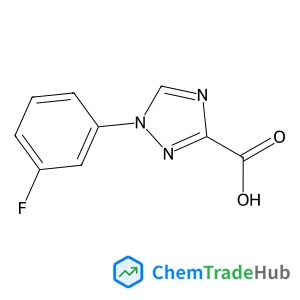
1-(3-Fluorophenyl)-1H-1,2,4-triazole-3-carboxylic acid
CAS Number:
1292369-51-7
Molecular Formula:
C9H6FN3O2


![2-(7,7-Difluorobicyclo[4.1.0]hept-1-yl)ethanamine structure](https://static.chemtradehub.com/structs/209/2098065-08-6-ff24.webp "2-(7,7-Difluorobicyclo[4.1.0]hept-1-yl)ethanamine structure")
2-(7,7-Difluorobicyclo[4.1.0]hept-1-yl)ethanamine
CAS Number:
2098065-08-6
Molecular Formula:
C9H15F2N
Recommended Suppliers






Disclaimer
This page provides academic journal information for reference and research purposes only. We are not affiliated with any journal publishers and do not handle publication submissions. For publication-related inquiries, please contact the respective journal publishers directly.
If you notice any inaccuracies in the information displayed, please contact us at support@chemtradehub.com. We will promptly review and address your concerns.