













The use of multiple pseudo-physiological solutions to simulate the degradation behavior of pure iron as a metallic resorbable implant: a surface-characterization study
Literature Information
Publication Date
2016-06-24
DOI
10.1039/C6CP02451C
Impact Factor
3.676
Authors
Ranna Tolouei, Jerome Harrison, Carlo Paternoster, Stephane Turgeon, Pascale Chevallier, Diego Mantovani
View Original
Abstract
Understanding the interactions of a pure iron surface with biological elements, such as ions and proteins in an aqueous medium, is essential for an accurate in vitro assessment of corrosion patterns. In fact, the synergy of chlorides, carbonates, phosphates and complex organic molecules present in the body environment is a key factor affecting both in vivo and in vitro degradation of materials, especially iron and its alloys. The aim of this work was the assessment of degradation patterns of pure iron in 5 commercial pseudo-physiological solutions by a thorough study of degraded surface chemistry and morphology. It also provides a methodological basis to understand the short-term degradation mechanism of degradable iron depending on the surrounding physiological media. The standard static immersion corrosion test was modified to adapt the procedure to pseudo-physiological solutions. After a 14-day static immersion test, the surfaces of samples were investigated by scanning electron microscopy, stylus profilometry and atomic force microscopy techniques. The chemistry and phase composition of the degraded layers were evaluated, respectively, by X-ray photoelectron spectrometry and X-ray diffractometry. The morphology and composition of the degradation layers were found to be different for the test-solutions: for phosphate-rich solutions, the formation of an adherent passive layer was found; degradation mechanisms related to general corrosion were predominant for all the other solutions. In conclusion, the chemical composition of the used medium plays a fundamental role in the degradation pattern of pure iron, so that direct comparisons of solutions with different ion concentrations, as reported in the literature, need to be carefully assessed.
Related Literature
Pt nanocluster size effects in the hydrogen evolution reaction: approaching the theoretical maximum activity
Jens Klein, Albert K. Engstfeld, Sylvain Brimaud, R. Jürgen Behm
2020-07-28
Paper
DOI: 10.1039/D0CP02793F
Dielectric relaxation of deep eutectic solvent + water mixtures: structural implications and application to microwave heating
Vira Agieienko, Richard Buchner
2020-08-28
Paper
DOI: 10.1039/D0CP03334K
Chemophysical acetylene-sensing mechanisms of Sb2O3/NaWO4-doped WO3 heterointerfaces
Sukon Phanichphant, Duangdao Channei, Visittapong Yordsri
2020-08-06
Paper
DOI: 10.1039/D0CP01444C
Theoretical study on the absorption of carbon dioxide by DBU-based ionic liquids
Mohammad Izadyar, Mojtaba Rezaeian, Alexey Victorov
2020-08-15
Paper
DOI: 10.1039/D0CP03612A
The electronic structure of the aqueous permanganate ion: aqueous-phase energetics and molecular bonding studied using liquid jet photoelectron spectroscopy
Bernd Winter, Iain Wilkinson
2020-09-08
Paper
DOI: 10.1039/D0CP04033A
An in situ XAS study of high surface-area IrO2 produced by the polymeric precursor synthesis
Anita Hamar Reksten, Andrea E. Russell, Peter W. Richardson, Stephen J. Thompson, Karina Mathisen, Frode Seland, Svein Sunde
2020-03-30
Paper
DOI: 10.1039/D0CP00217H
Infrared spectroscopic observation of the McLafferty rearrangement in ionized 2-pentanone
Ryo Yasumoto, Yoshiyuki Matsuda, Asuka Fujii
2020-08-12
Paper
DOI: 10.1039/D0CP02602F
Theoretical model for predicting thermoelectric properties of tin chalcogenides
Naveen Kumar, Prabhjot Kaur, Chandan Bera
2020-07-27
Perspective
DOI: 10.1039/D0CP03117H
You might also like
Compound Q&A
How should waste containing N-Methoxy-N-methyl-1,3-thiazole-5-carboxamide (CAS: 898825-89-3) be handled?
Waste containing N-Methoxy-N-methyl-1,3-thiazole-5-carboxamide (CAS: 898825-89-3...
898825-89-3N-Methoxy-N-methyl-1...
Compound Q&A
How should N-(4-Biphenylyl)dibenzo[b,d]furan-4-amine (CAS: 1318338-47-4) be stored?
N-(4-Biphenylyl)dibenzo[b,d]furan-4-amine should be stored in a tightly sealed c...
1318338-47-4N-(4-Biphenylyl)dibe...
Compound Q&A
What is the market or research trend for 3-Acetamido-5-amino-2,4,6-triiodobenzoic acid (CAS: 1713-07-1)?
The market for 3-Acetamido-5-amino-2,4,6-triiodobenzoic acid (CAS: 1713-07-1) is...
1713-07-13-Acetamido-5-amino-...
Compound Q&A
How should Benzyl 2-O-acetyl-3,4,6-tri-O-benzyl-beta-D-galactopyranoside (CAS: 61820-03-9) be stored?
Benzyl 2-O-acetyl-3,4,6-tri-O-benzyl-beta-D-galactopyranoside (CAS: 61820-03-9) ...
61820-03-9Benzyl 2-O-acetyl-3,...
Compound Q&A
What regulatory guidelines apply to 2-Ethylpiperazine dihydrochloride (CAS: 438050-52-3)?
2-Ethylpiperazine dihydrochloride (CAS: 438050-52-3) is regulated under the Glob...
438050-52-32-Ethylpiperazine di...
Compound Q&A
What regulatory guidelines apply to 1,1'-[1,3-Phenylenebis(methylene)]bis(3-methyl-1H-pyrrole-2,5-dione) (CAS: 119462-56-5)?
1,1'-[1,3-Phenylenebis(methylene)]bis(3-methyl-1H-pyrrole-2,5-dione) (CAS: 11946...
119462-56-51,1'-[1,3-Phenyleneb...
Compound Q&A
Are there alternatives to 5-Fluoro-2-(1-pyrrolidinyl)pyridine (CAS: 1287217-79-1) in synthesis?
Several alternatives can be used in the synthesis of 5-Fluoro-2-(1-pyrrolidinyl)...
1287217-79-15-Fluoro-2-(1-pyrrol...
Compound Q&A
What precautions should be taken when handling 1-((2R,3R,4R,5R)-5-((bis(4-methoxyphenyl)(phenyl)methoxy)methyl)-4-hydroxy-3-methoxytetrahydrofuran-2-yl)-5-methylpyrimidine-2,4(1H,3H)-dione (CAS: 153631-19-7)?
Proper personal protective equipment (PPE) must be worn when handling this compo...
153631-19-71-((2R,3R,4R,5R)-5-(...
Compound Q&A
What precautions should be taken when handling 6-Bromoimidazo[1,2-a]pyridin-8-amine (CAS: 676371-00-9)?
When handling 6-Bromoimidazo[1,2-a]pyridin-8-amine, it is important to wear appr...
676371-00-96-Bromoimidazo[1,2-a...
Compound Q&A
Are there alternatives to (2S,4R)-4-(4-Nitrobenzyl)pyrrolidine-2-carboxylic acid hydrochloride (CAS: 1049740-22-8) in synthesis?
Alternatives to (2S,4R)-4-(4-Nitrobenzyl)pyrrolidine-2-carboxylic acid hydrochlo...
1049740-22-8(2S,4R)-4-(4-Nitrobe...
Source Journal
Physical Chemistry Chemical Physics

CiteScore:
5.5
Self-citation Rate:
10.3%
Articles per Year:
3036
Physical Chemistry Chemical Physics (PCCP) is an international journal co-owned by 19 physical chemistry and physics societies from around the world. This journal publishes original, cutting-edge research in physical chemistry, chemical physics and biophysical chemistry. To be suitable for publication in PCCP, articles must include significant innovation and/or insight into physical chemistry; this is the most important criterion that reviewers and Editors will judge against when evaluating submissions. The journal has a broad scope and welcomes contributions spanning experiment, theory, computation and data science. Topical coverage includes spectroscopy, dynamics, kinetics, statistical mechanics, thermodynamics, electrochemistry, catalysis, surface science, quantum mechanics, quantum computing and machine learning. Interdisciplinary research areas such as polymers and soft matter, materials, nanoscience, energy, surfaces/interfaces, and biophysical chemistry are welcomed if they demonstrate significant innovation and/or insight into physical chemistry. Joined experimental/theoretical studies are particularly appreciated when complementary and based on up-to-date approaches.
Recommended Compounds


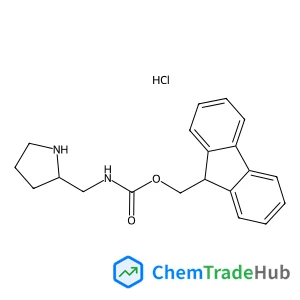
(S)-(9H-Fluoren-9-yl)methyl (pyrrolidin-2-ylmethyl)carbamate hydrochloride
CAS Number:
1217813-15-4
Molecular Formula:
C20H23ClN2O2
![tert-Butyl 6-chloro-4-oxospiro[chroman-2,4'-piperidine]-1'-carboxylate structure](https://static.chemtradehub.com/structs/101/1011482-37-3-88a5.webp "tert-Butyl 6-chloro-4-oxospiro[chroman-2,4'-piperidine]-1'-carboxylate structure")
tert-Butyl 6-chloro-4-oxospiro[chroman-2,4'-piperidine]-1'-carboxylate
CAS Number:
1011482-37-3
Molecular Formula:
C18H22ClNO4
Recommended Suppliers





Disclaimer
This page provides academic journal information for reference and research purposes only. We are not affiliated with any journal publishers and do not handle publication submissions. For publication-related inquiries, please contact the respective journal publishers directly.
If you notice any inaccuracies in the information displayed, please contact us at support@chemtradehub.com. We will promptly review and address your concerns.