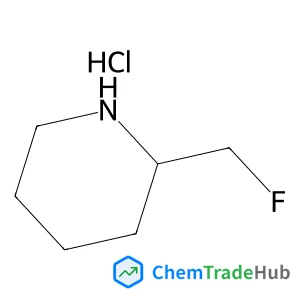
(2S)-2-(Fluoromethyl)piperidine hydrochloride (1:1)
CAS Number:
886216-73-5
Molecular Formula:
C6H13ClFN
Chunjian Tan, Qun Yang, Ruishen Meng, Qiuhua Liang, Junke Jiang, Xiang Sun, D. Q. Yang, Tianling Ren
Development of nanoelectronics requires two-dimensional (2D) systems with both direct-bandgap and tunable electronic properties as they act in response to the external electric field (E-field). Here, we present a detailed theoretical investigation to predict the effect of atomic structure, stacking order and external electric field on the electrical properties of few-layer boron-phosphide (BP). We demonstrate that the splitting of bands and bandgap of BP depends on the number of layers and the stacking order. The values for the bandgap show a monotonically decreasing relationship with increasing layer number. We also show that AB-stacking BP has a direct-bandgap, while ABA-stacking BP has an indirect-bandgap when the number of layers n > 2. In addition, for a bilayer and a trilayer, the bandgap increases (decreases) as the electric field increases along the positive direction of the external electric field (E-field) (negative direction). In the case of four-layer BP, the bandgap exhibits a nonlinearly decreasing behavior as the increase in the electric field is independent of the electric field direction. The tunable mechanism of the bandgap can be attributed to a giant Stark effect. Interestingly, the investigation also shows that a semiconductor-to-metal transition may occur for the four-layer case or more layers beyond the critical electric field. Our findings may inspire more efforts in fabricating new nanoelectronics devices based on few-layer BP.
Nicolas Velasquez, Fernanda B. Nunes, Jessica B. Martins, Denis Céolin, Laure Fillaud, Ralph Püttner, Maria Novella Piancastelli, Michael Odelius, Marcella Iannuzzi
DOI: 10.1039/D3CP04303G
Hongyan Li, Jiang Xiang, Jing Xu, Wei Liu
DOI: 10.1039/D3CP03902A
T. V. Pavlova, V. M. Shevlyuga
DOI: 10.1039/D3CP04962K
Sitong Liu, Bo Liu, Meidong Yu, Hanyu Gao, Haipeng Guo, Daguo Jiang, Shenbo Yang, Yufeng Wen, Yabei Wu
DOI: 10.1039/D3CP04721K
Meixin Cheng
DOI: 10.1039/D3CP04975B
Liying Pan, Xuxin Kang
DOI: 10.1039/D3CP04660E
Li Zhong, Xiaobao Li, Yuxue Pu, Meiqin Wang, Chunxiao Zhan, Xinle Xiao
DOI: 10.1039/D3CP04650H
Edward R. Smith, Panagiotis E. Theodorakis
DOI: 10.1039/D3CP03579D
Jianglu Huang, Donggang Zhao, Yu Zhao
DOI: 10.1039/D3SE01403G
Sergei Prokvolit, Erqian Mao, Thomas G. Gray
DOI: 10.1039/D3CP05385G
Waste containing N-Methoxy-N-methyl-1,3-thiazole-5-carboxamide (CAS: 898825-89-3...
N-(4-Biphenylyl)dibenzo[b,d]furan-4-amine should be stored in a tightly sealed c...
The market for 3-Acetamido-5-amino-2,4,6-triiodobenzoic acid (CAS: 1713-07-1) is...
Benzyl 2-O-acetyl-3,4,6-tri-O-benzyl-beta-D-galactopyranoside (CAS: 61820-03-9) ...
2-Ethylpiperazine dihydrochloride (CAS: 438050-52-3) is regulated under the Glob...
1,1'-[1,3-Phenylenebis(methylene)]bis(3-methyl-1H-pyrrole-2,5-dione) (CAS: 11946...
Several alternatives can be used in the synthesis of 5-Fluoro-2-(1-pyrrolidinyl)...
Proper personal protective equipment (PPE) must be worn when handling this compo...
When handling 6-Bromoimidazo[1,2-a]pyridin-8-amine, it is important to wear appr...
Alternatives to (2S,4R)-4-(4-Nitrobenzyl)pyrrolidine-2-carboxylic acid hydrochlo...

Physical Chemistry Chemical Physics (PCCP) is an international journal co-owned by 19 physical chemistry and physics societies from around the world. This journal publishes original, cutting-edge research in physical chemistry, chemical physics and biophysical chemistry. To be suitable for publication in PCCP, articles must include significant innovation and/or insight into physical chemistry; this is the most important criterion that reviewers and Editors will judge against when evaluating submissions. The journal has a broad scope and welcomes contributions spanning experiment, theory, computation and data science. Topical coverage includes spectroscopy, dynamics, kinetics, statistical mechanics, thermodynamics, electrochemistry, catalysis, surface science, quantum mechanics, quantum computing and machine learning. Interdisciplinary research areas such as polymers and soft matter, materials, nanoscience, energy, surfaces/interfaces, and biophysical chemistry are welcomed if they demonstrate significant innovation and/or insight into physical chemistry. Joined experimental/theoretical studies are particularly appreciated when complementary and based on up-to-date approaches.
![4-Chloro-2-{[(2-chlorophenoxy)acetyl]amino}benzoic acid structure](https://static.chemtradehub.com/structs/351/351424-20-9-9467.webp "4-Chloro-2-{[(2-chlorophenoxy)acetyl]amino}benzoic acid structure")