












![1-Oxa-8-azaspiro[4.5]decan-3-ol structure](https://static.chemtradehub.com/structs/757/757239-76-2-a0ec.webp "1-Oxa-8-azaspiro[4.5]decan-3-ol structure")
The effect of a Ta oxygen scavenger layer on HfO2-based resistive switching behavior: thermodynamic stability, electronic structure, and low-bias transport
Literature Information
Publication Date
2016-02-15
DOI
10.1039/C6CP00450D
Impact Factor
3.676
Authors
Xiaoliang Zhong, Ivan Rungger, Peter Zapol, Hisao Nakamura, Yoshihiro Asai
View Original
Abstract
Reversible resistive switching between high-resistance and low-resistance states in metal–oxide–metal heterostructures makes them very interesting for applications in random access memories. While recent experimental work has shown that inserting a metallic “oxygen scavenger layer” between the positive electrode and oxide improves device performance, the fundamental understanding of how the scavenger layer modifies the heterostructure properties is lacking. We use density functional theory to calculate thermodynamic properties and conductance of TiN/HfO2/TiN heterostructures with and without a Ta scavenger layer. First, we show that Ta insertion lowers the formation energy of low-resistance states. Second, while the Ta scavenger layer reduces the Schottky barrier height in the high-resistance state by modifying the interface charge at the oxide–electrode interface, the heterostructure maintains a high resistance ratio between high- and low-resistance states. Finally, we show that the low-bias conductance of device on-states becomes much less sensitive to the spatial distribution of oxygen removed from the HfO2 in the presence of the Ta layer. By providing a fundamental understanding of the observed improvements with scavenger layers, we open a path to engineer interfaces with oxygen scavenger layers to control and enhance device performance. In turn, this may enable the realization of a non-volatile low-power memory technology with concomitant reduction in energy consumption by consumer electronics and offering significant benefits to society.
Related Literature
The generation and trapping of enantiopure bromonium ions
D. Christopher Braddock, Stephen A. Hermitage, Lilian Kwok, Rebecca Pouwer, Joanna M. Redmond, Andrew J. P. White
2009-01-06
Communication
DOI: 10.1039/B816914D
Stabilizing single-molecular Raman spectrum of a nonbonding molecule on Ag nanoparticles
Zhixun Luo, Yi Luo, Jie Li, Kai Liu, Hongbing Fu, Ying Ma, Jiannian Yao
2009-01-09
Communication
DOI: 10.1039/B819402E
Metal–organic replica of γ-Pu: the first uninodal 10-connected coordination network based on pentanuclear cadmium clusters
Xin-Long Wang, Chao Qin, Ya-Qian Lan, Kui-Zhan Shao, Zhong-Min Su, En-Bo Wang
2008-11-14
Communication
DOI: 10.1039/B815629H
Nanocrystals of [Cu3(btc)2] (HKUST-1): a combined time-resolved light scattering and scanning electron microscopy study
Denise Zacher, Jianing Liu, Klaus Huber, Roland A. Fischer
2009-01-27
Communication
DOI: 10.1039/B819580C
Biomaterials from sugars: ring-opening polymerization of a carbohydrate lactone
Andrew J. P. White, Molly M. Stevens, Charlotte K. Williams
2008-12-18
Communication
DOI: 10.1039/B817658B
Preparation, characterization and catalytic performance of Mo–V–O oxide layers linked by alkylamines
Feng Wang, Wataru Ueda
2009-01-05
Communication
DOI: 10.1039/B817118A
Evidence of strong hydrogen bonding by 8-aminoguanine
Aaron E. Engelhart, Thomas Hellman Morton, Nicholas V. Hud
2008-12-01
Communication
DOI: 10.1039/B818409G
Heteropolyacid-assisted fabrication of carbon nanostructures under ambient conditions
Enbo Wang
2008-12-15
Communication
DOI: 10.1039/B812573B
A robust procedure for the functionalization of gold nanorods and noble metal nanoparticles
Benjamin Thierry, Jane Ng, Tina Krieg, Hans J. Griesser
2009-02-11
Communication
DOI: 10.1039/B820137D
You might also like
Compound Q&A
What precautions should be taken when handling 2-Methyl-2-propanyl 5-amino-2-thiophenecarboxylate (CAS: 1498311-57-1)?
When handling 2-Methyl-2-propanyl 5-amino-2-thiophenecarboxylate (CAS: 1498311-5...
1498311-57-12-Methyl-2-propanyl ...
Compound Q&A
What are the physical and chemical properties of 5-Bromo-1,2-dichloro-3-fluorobenzene (CAS: 1000572-93-9)?
5-Bromo-1,2-dichloro-3-fluorobenzene (CAS: 1000572-93-9) is a crystalline solid ...
1000572-93-95-Bromo-1,2-dichloro...
Compound Q&A
How should (2R)-2-Amino-2-(4-bromophenyl)ethanol (CAS: 354153-64-3) be stored?
(2R)-2-Amino-2-(4-bromophenyl)ethanol (CAS: 354153-64-3) should be stored in a c...
354153-64-3(2R)-2-Amino-2-(4-br...
Compound Q&A
What regulatory guidelines apply to Methyl 4-(aminomethyl)tetrahydro-2H-pyran-4-carboxylate hydrochloride (CAS: 362707-24-2)?
Methyl 4-(aminomethyl)tetrahydro-2H-pyran-4-carboxylate hydrochloride (CAS: 3627...
362707-24-2Methyl 4-(aminomethy...
Compound Q&A
What are the main uses of 1,4-dimethyl-1H-pyrazole-5-sulfonyl chloride (CAS: 1174834-52-6)?
1,4-Dimethyl-1H-pyrazole-5-sulfonyl chloride is primarily used as an intermediat...
1174834-52-61,4-dimethyl-1H-pyra...
Compound Q&A
Is Dinaphtho[1,2-b:2',1'-d]furan (CAS: 239-69-0) safe?
Dinaphtho[1,2-b:2',1'-d]furan is generally safe when handled with appropriate pe...
239-69-0Dinaphtho[1,2-b:2',1...
Compound Q&A
What is the market or research trend for 7-Methyl-7,9-dihydro-1H-purine-2,6,8(3H)-trione (CAS: 612-37-3)?
The market for 7-Methyl-7,9-dihydro-1H-purine-2,6,8(3H)-trione (CAS: 612-37-3) i...
612-37-37-Methyl-7,9-dihydro...
Compound Q&A
What are the physical and chemical properties of 2-(4-Chlorophenyl)malonaldehyde (CAS: 205676-17-1)?
2-(4-Chlorophenyl)malonaldehyde (CAS: 205676-17-1) is a colorless or light yello...
205676-17-12-(4-Chlorophenyl)ma...
Compound Q&A
How is 2-Methylchrysene (CAS: 3351-32-4) typically synthesized?
2-Methylchrysene (CAS: 3351-32-4) is typically synthesized via the reaction of c...
3351-32-42-Methylchrysene
Compound Q&A
Is N-(6-aminopyrimidin-4-yl)acetamide (CAS: 89533-23-3) safe?
N-(6-aminopyrimidin-4-yl)acetamide (CAS: 89533-23-3) is generally considered saf...
89533-23-3N-(6-aminopyrimidin-...
Source Journal
Physical Chemistry Chemical Physics

CiteScore:
5.5
Self-citation Rate:
10.3%
Articles per Year:
3036
Physical Chemistry Chemical Physics (PCCP) is an international journal co-owned by 19 physical chemistry and physics societies from around the world. This journal publishes original, cutting-edge research in physical chemistry, chemical physics and biophysical chemistry. To be suitable for publication in PCCP, articles must include significant innovation and/or insight into physical chemistry; this is the most important criterion that reviewers and Editors will judge against when evaluating submissions. The journal has a broad scope and welcomes contributions spanning experiment, theory, computation and data science. Topical coverage includes spectroscopy, dynamics, kinetics, statistical mechanics, thermodynamics, electrochemistry, catalysis, surface science, quantum mechanics, quantum computing and machine learning. Interdisciplinary research areas such as polymers and soft matter, materials, nanoscience, energy, surfaces/interfaces, and biophysical chemistry are welcomed if they demonstrate significant innovation and/or insight into physical chemistry. Joined experimental/theoretical studies are particularly appreciated when complementary and based on up-to-date approaches.
Recommended Compounds
![4-Chloro-N-{[4-(dimethylamino)phenyl]carbamoyl}benzenesulfonamide structure](https://static.chemtradehub.com/structs/558/5581-42-0-7dcb.webp "4-Chloro-N-{[4-(dimethylamino)phenyl]carbamoyl}benzenesulfonamide structure")
4-Chloro-N-{[4-(dimethylamino)phenyl]carbamoyl}benzenesulfonamide
CAS Number:
5581-42-0
Molecular Formula:
C15H16ClN3O3S
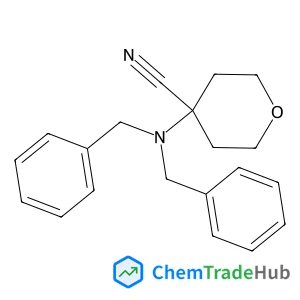
4-(Dibenzylamino)tetrahydro-2H-pyran-4-carbonitrile
CAS Number:
1630906-81-8
Molecular Formula:
C20H22N2O
Recommended Suppliers




Disclaimer
This page provides academic journal information for reference and research purposes only. We are not affiliated with any journal publishers and do not handle publication submissions. For publication-related inquiries, please contact the respective journal publishers directly.
If you notice any inaccuracies in the information displayed, please contact us at support@chemtradehub.com. We will promptly review and address your concerns.