












Chemoselective catalytic reduction of conjugated α,β-unsaturated ketones to saturated ketones via a hydroboration/protodeboronation strategy
Literature Information
Publication Date
2015-10-26
DOI
10.1039/C5QO00289C
Impact Factor
5.281
Authors
Wen Ding
View Original
Abstract
A novel copper-catalyzed chemoselective reduction of a carbon–carbon double or triple bond to a carbon–carbon single bond in α,β-unsaturated ketones is developed. This reaction proceeds under hydrogen gas or stoichiometric metal hydride free conditions. Saturated ketones were obtained in good to excellent yields with a broad substrate scope. Mechanistic studies reveal that the two hydrogen atoms come from H2O in the system. Thus this reaction represents a highly efficient, and remarkably chemoselective strategy.
Recommended Journals
Related Literature
Revision of the full stereochemistry of telomycin
Sandra Resa, Marta González, Fernando Reyes, Ignacio Pérez-Victoria
2023-11-23
Research Article
DOI: 10.1039/D3QO01411H
Controlling the reactivity of phthalonitriles for the efficient synthesis of chiral phthalocyanines with self-assembly abilities
Irene Paramio
2023-11-09
Research Article
DOI: 10.1039/D3QO01630G
Genome-driven discovery of new serrawettin W2 analogues from Serratia fonticola DSM 4576
Haolin Qiu, Yang Xiao, Ling Shen, Tao Han, Qiang He, Aiying Li, Peng Zhang
2023-10-31
Paper
DOI: 10.1039/D3OB01642K
Syntheses of 3H-1,2,4-triazol-3-ones by copper-promoted oxidative N–N bond formation of amidines with isocyanates
Baihui Liang, Xiangya Cai, JingYu Liu, Jie Huang, Youzhi Chen, Haiyin Deng, Quanquan Zhou, Tianxiang Chen, Xiuwen Chen, Zhongzhi Zhu
2023-11-21
Research Article
DOI: 10.1039/D3QO01565C
Enantioselective synthesis of chiral BCPs
Irene Sánchez-Sordo, Sergio Barbeira-Arán, Martín Fañanás-Mastral
2023-12-21
Review Article
DOI: 10.1039/D3QO01631E
Correction: An efficient metal free synthesis of 2-aminobenzothiozoles – a greener approach
Ganesh Sambasivam, Govindarajulu Gavara, Ramraj S, Gaikwad Rajendra, Karthikeyan Sivashanmugam
2023-11-02
Correction
DOI: 10.1039/D3OB90143B
Ni-catalyzed regioselective C–C bond formation of 1,1-disubstituted allenes with aldehydes
Seoyeon Kim, Jinyoung Kim, Shrikant D. Tambe, Eun Jin Cho
2023-12-11
Research Article
DOI: 10.1039/D3QO01800H
Asymmetric permanganate dihydroxylation of enoates: substrate scope, mechanistic insights and application in bicalutamide synthesis
Peilong Gu, Shuangshuang Wang, Xiangxiang Wen, Jinxin Tian, Chao Wang, Lili Zong, Choon-Hong Tan
2023-12-11
Research Article
DOI: 10.1039/D3QO01729J
Serine-mediated hydrazone ligation displaying insulin-like peptides on M13 phage pIII
Nan Zheng, Danny Hung-Chieh Chou
2023-10-24
Paper
DOI: 10.1039/D3OB01487H
You might also like
Compound Q&A
How should 2-Methylbenzene-1,4-diamine dihydrochloride (CAS: 615-45-2) be stored?
2-Methylbenzene-1,4-diamine dihydrochloride (CAS: 615-45-2) should be stored in ...
615-45-22-Methylbenzene-1,4-...
Compound Q&A
Is (1S,4S)-2,5-Diazabicyclo[2.2.1]heptane dihydrobromide (CAS: 132747-20-7) safe?
(1S,4S)-2,5-Diazabicyclo[2.2.1]heptane dihydrobromide is generally considered sa...
132747-20-7(1S,4S)-2,5-Diazabic...
Compound Q&A
What industries use (6-Chloropyridazin-3-YL)methanamine (CAS: 871826-15-2)?
(6-Chloropyridazin-3-YL)methanamine finds applications in the pharmaceutical ind...
871826-15-2(6-Chloropyridazin-3...
Compound Q&A
What are the main uses of 2-Fluoro-3-methylphenol (CAS: 77772-72-6)?
2-Fluoro-3-methylphenol is primarily used in the synthesis of pharmaceuticals, p...
77772-72-62-Fluoro-3-methylphe...
Compound Q&A
What precautions should be taken when handling 3-Methoxy-4-nitrobenzonitrile (CAS: 177476-75-4)?
When handling 3-Methoxy-4-nitrobenzonitrile, it is important to wear appropriate...
177476-75-43-Methoxy-4-nitroben...
Compound Q&A
What precautions should be taken when handling 1,3-Oxazolo[4,5-b]pyridine-2(3H)-thione (CAS: 211949-57-4)?
When handling 1,3-Oxazolo[4,5-b]pyridine-2(3H)-thione (CAS: 211949-57-4), it is ...
211949-57-4[1,3]Oxazolo[4,5-b]p...
Compound Q&A
What regulatory guidelines apply to 4-Ethynylbenzamide (CAS: 90347-86-7)?
4-Ethynylbenzamide (CAS: 90347-86-7) falls under various regulatory guidelines i...
90347-86-74-Ethynylbenzamide
Compound Q&A
What are the main uses of 3-(2-Ethylphenyl)-2-thioxo-4-imidazolidinone (CAS: 186822-57-1)?
3-(2-Ethylphenyl)-2-thioxo-4-imidazolidinone is primarily used as an intermediat...
186822-57-13-(2-Ethylphenyl)-2-...
Compound Q&A
What is (2-Fluoro-6-methoxyphenyl)acetic acid (CAS: 500912-19-6)?
(2-Fluoro-6-methoxyphenyl)acetic acid, also known as 4-fluoro-3-methoxybenzoic a...
500912-19-6(2-Fluoro-6-methoxyp...
Compound Q&A
What is the market or research trend for 2-[4-(Hydroxymethyl)phenoxy]ethanol (CAS: 102196-18-9)?
Market trends for 2-[4-(Hydroxymethyl)phenoxy]ethanol (CAS: 102196-18-9) indicat...
102196-18-92-[4-(Hydroxymethyl)...
Source Journal
Organic Chemistry Frontiers

CiteScore:
7.8
Self-citation Rate:
8.7%
Articles per Year:
724
Organic Chemistry Frontiers publishes high-quality research from across organic chemistry. Emphases are placed on studies that make significant contributions to the field of organic chemistry by reporting either new or significantly improved protocols or methodologies. Topics include, but are not limited to the following: Organic synthesis Development of synthetic methodologies Catalysis Natural products Functional organic materials Supramolecular and macromolecular chemistry Physical and computational organic chemistry
Recommended Compounds
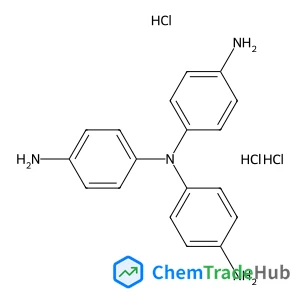
N1,N1-Bis(4-aminophenyl)benzene-1,4-diamine trihydrochloride
CAS Number:
114254-48-7
Molecular Formula:
C18H21Cl3N4
Recommended Suppliers





Disclaimer
This page provides academic journal information for reference and research purposes only. We are not affiliated with any journal publishers and do not handle publication submissions. For publication-related inquiries, please contact the respective journal publishers directly.
If you notice any inaccuracies in the information displayed, please contact us at support@chemtradehub.com. We will promptly review and address your concerns.