












Dimer-mediated cation diffusion in the stoichiometric ionic conductor Li3N
Literature Information
Publication Date
2016-02-01
DOI
10.1039/C5CP07625K
Impact Factor
3.676
Authors
Alexander D. Mulliner, Peter D. Battle
View Original
Abstract
Non-equilibrium molecular dynamics has been used to model cation diffusion in stoichiometric Li3N over the temperature range 50 < T/K < 800. The resulting diffusion coefficients are in excellent agreement with the available experimental data. We present a detailed atomistic account of the diffusion process. Contrary to the conclusions drawn from previous studies, our calculations show that it is unnecessary to invoke the presence of a small concentration of intrinsic defects in order to initiate diffusion. The structure can be considered to consist of alternating layers of composition Li2N and Li. As the temperature increases an increasing number of cations leave the Li2N layers and migrate either to the interlayer space or to the Li layer. Those that move into the interlayer space form Li2 dimers with cations in the Li2N layers and those that move into the neighboring layer form dimers with cations therein. The two types of dimer are aligned parallel and perpendicular to [001], respectively and have lifetimes of ∼3 ps. The vacancies so created facilitate rapid diffusion in the Li2N layers and the interlayer cation motion results in slower diffusion perpendicular to the layers.
Recommended Journals
Related Literature
Self-assembly of trehalose molecules on a lysozyme surface: the broken glass hypothesis
Maxim V. Fedorov, Jonathan M. Goodman, Dmitry Nerukh, Stephan Schumm
2010-11-29
Paper
DOI: 10.1039/C0CP01705A
Redox-induced Ru(bpy)32+-methylviologen radical formation and its dimerization in cucurbit[8]uril
Shiguo Sun, Wenyan Gao, Fengyu Liu, Fusheng Li, Jiangli Fan, Xiaojun Peng
2010-11-01
Paper
DOI: 10.1039/C0CP00712A
The formation of nitrogen-containing functional groups on carbon nanotube surfaces: a quantitative XPS and TPD study
Shankhamala Kundu, Wei Xia, Wilma Busser, Michael Becker, Diedrich A. Schmidt, Martina Havenith, Martin Muhler
2010-02-24
Paper
DOI: 10.1039/B923651A
Surface reaction and transport in mixed conductors with electrochemically-active surfaces: a 2-D numerical study of ceria
Francesco Ciucci, William C. Chueh, David G. Goodwin, Sossina M. Haile
2010-11-30
Paper
DOI: 10.1039/C0CP01219J
Protein adsorption onto CF3-terminated oligo(ethylene glycol) containing self-assembled monolayers (SAMs): the influence of ionic strength and electrostatic forces
Nelly Bonnet, David O'Hagan, Georg Hähner
2010-02-16
Paper
DOI: 10.1039/B923065N
Theoretical studies on the coupling interactions in H2SO4⋯HOO˙⋯(H2O)n (n = 0–2) clusters: toward understanding the role of water molecules in the uptake of HOO˙ radical by sulfuric acid aerosols
Zhiying Ma, Weihua Wang, Yazhou Zhai, Haitao Sun, Siwei Bi
2010-11-05
Paper
DOI: 10.1039/C0CP00908C
Measurements of the wavelength dependent extinction of aerosols by cavity ring down spectroscopy
Rachael E. H. Miles, Svemir Rudić, Andrew J. Orr-Ewing, Jonathan P. Reid
2010-02-23
Paper
DOI: 10.1039/B923758E
Controlling the directionality of charge transfer in phthalocyaninato zinc sensitizer for a dye-sensitized solar cell: density functional theory studies
Liang Wan, Dongdong Qi, Yuexing Zhang, Jianzhuang Jiang
2010-11-22
Paper
DOI: 10.1039/C0CP01572E
You might also like
Compound Q&A
What is 1-(2,4,6-Trifluorophenyl)ethanol (CAS: 1250113-83-7)?
1-(2,4,6-Trifluorophenyl)ethanol is an organic compound with the CAS number 1250...
1250113-83-71-(2,4,6-Trifluoroph...
Compound Q&A
Is 1-(2,4-Dimethoxybenzyl)-4-(hydroxymethyl)-2-pyrrolidinone (CAS: 919111-34-5) safe?
1-(2,4-Dimethoxybenzyl)-4-(hydroxymethyl)-2-pyrrolidinone (CAS: 919111-34-5) is ...
919111-34-51-(2,4-Dimethoxybenz...
Compound Q&A
What are the physical and chemical properties of (7S,15R)-6β,15-Diacetoxy-7α,20-epoxy-7-hydroxykaura-2,16-dien-1-one (CAS: 51419-51-3)?
(7S,15R)-6β,15-Diacetoxy-7α,20-epoxy-7-hydroxykaura-2,16-dien-1-one is a crystal...
51419-51-3(7S,15R)-6β,15-Diace...
Compound Q&A
What regulatory guidelines apply to rac-ethyl (1r,4r)-4-hydroxycyclohexane-1-carboxylate, trans (CAS: 3618-04-0)?
The compound rac-ethyl (1r,4r)-4-hydroxycyclohexane-1-carboxylate, trans (CAS: 3...
3618-04-0rac-ethyl (1r,4r)-4-...
Compound Q&A
What is the market or research trend for 2-(2,4-Difluorophenoxy)-3-nitropyridine (CAS: 175135-62-3)?
The market for 2-(2,4-Difluorophenoxy)-3-nitropyridine (CAS: 175135-62-3) is cur...
175135-62-32-(2,4-Difluoropheno...
Compound Q&A
What are the main uses of 6-Diazo-5-oxo-L-norleucine (CAS: 157-03-9)?
The main uses of 6-Diazo-5-oxo-L-norleucine (CAS: 157-03-9) include research in ...
157-03-96-Diazo-5-oxo-L-norl...
Compound Q&A
What precautions should be taken when handling 2-Aminoethyl-mono-amide-DOTA-tris(tBu ester) (CAS: 173308-19-5)?
When handling 2-Aminoethyl-mono-amide-DOTA-tris(tBu ester) (CAS: 173308-19-5), i...
173308-19-52-Aminoethyl-mono-am...
Compound Q&A
How is 5-Methylimidazo[1,2-a]pyridine-3-carbaldehyde (CAS: 178488-37-4) typically synthesized?
5-Methylimidazo[1,2-a]pyridine-3-carbaldehyde (CAS: 178488-37-4) can be synthesi...
178488-37-45-Methylimidazo[1,2-...
Compound Q&A
Are there alternatives to 2,4,6-Trihydroxyisophthalaldehyde (CAS: 4396-13-8) in synthesis?
There are alternative reagents that can be used in the synthesis of 2,4,6-Trihyd...
4396-13-82,4,6-Trihydroxyisop...
Compound Q&A
What is (2Z)-3-(5-Fluoro-1H-indol-3-yl)-2-sulfanylacrylic acid (CAS: 179461-52-0)?
(2Z)-3-(5-Fluoro-1H-indol-3-yl)-2-sulfanylacrylic acid is a chemical compound wi...
179461-52-0(2Z)-3-(5-Fluoro-1H-...
Source Journal
Physical Chemistry Chemical Physics

CiteScore:
5.5
Self-citation Rate:
10.3%
Articles per Year:
3036
Physical Chemistry Chemical Physics (PCCP) is an international journal co-owned by 19 physical chemistry and physics societies from around the world. This journal publishes original, cutting-edge research in physical chemistry, chemical physics and biophysical chemistry. To be suitable for publication in PCCP, articles must include significant innovation and/or insight into physical chemistry; this is the most important criterion that reviewers and Editors will judge against when evaluating submissions. The journal has a broad scope and welcomes contributions spanning experiment, theory, computation and data science. Topical coverage includes spectroscopy, dynamics, kinetics, statistical mechanics, thermodynamics, electrochemistry, catalysis, surface science, quantum mechanics, quantum computing and machine learning. Interdisciplinary research areas such as polymers and soft matter, materials, nanoscience, energy, surfaces/interfaces, and biophysical chemistry are welcomed if they demonstrate significant innovation and/or insight into physical chemistry. Joined experimental/theoretical studies are particularly appreciated when complementary and based on up-to-date approaches.
Recommended Compounds
![4-{1-[4-(4,4,5,5-Tetramethyl-1,3,2-dioxaborolan-2-yl)phenyl]cyclopropyl}morpholine structure](https://static.chemtradehub.com/structs/120/1206594-08-2-7afb.webp "4-{1-[4-(4,4,5,5-Tetramethyl-1,3,2-dioxaborolan-2-yl)phenyl]cyclopropyl}morpholine structure")
4-{1-[4-(4,4,5,5-Tetramethyl-1,3,2-dioxaborolan-2-yl)phenyl]cyclopropyl}morpholine
CAS Number:
1206594-08-2
Molecular Formula:
C19H28BNO3
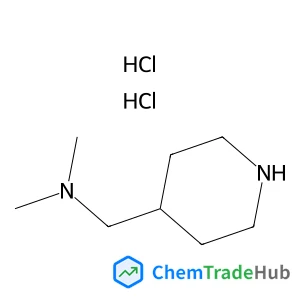
N,N-dimethyl(piperidin-4-yl)methanamine hydrochloride
CAS Number:
172281-72-0
Molecular Formula:
C8H20Cl2N2

![9,9'-Spirobi[fluoren]-2-amine structure](https://static.chemtradehub.com/structs/118/118951-68-1-0d14.webp "9,9'-Spirobi[fluoren]-2-amine structure")
Recommended Suppliers




Disclaimer
This page provides academic journal information for reference and research purposes only. We are not affiliated with any journal publishers and do not handle publication submissions. For publication-related inquiries, please contact the respective journal publishers directly.
If you notice any inaccuracies in the information displayed, please contact us at support@chemtradehub.com. We will promptly review and address your concerns.