












Composition dependent reactivity of titanium oxide clusters
Literature Information
Publication Date
2016-03-14
DOI
10.1039/C5CP07425H
Impact Factor
3.676
Authors
Yao Guo, Jian-Fu Li, Xinrui Niu, Alexis Markovits, Rui-Qin Zhang
View Original
Abstract
Based on first-principles calculations of titanium oxide clusters, TinOm (n = 1–4), we reveal the composition dependent reactivity of titanium oxide clusters. Our interesting results include: (1) the reactivity depends on the ratio of O atoms in the clusters, with smaller O ratios associated with higher reactivity; (2) among the different titanium oxide species investigated, the most stable structures are TinO2n, but their reactivities are relatively lower than the clusters with a smaller O atom ratio; moreover, (3) when the O atom ratio is small, the reactivity required to form the Ti–Ti bond is larger than either the Ti–O or O–O bond between two interacting titanium oxide clusters. These results will be useful for designing efficient titanium oxide catalysts, or photocatalysts, in particular, for energy and environmental applications.
Related Literature
Anions coordinating anions: analysis of the interaction between anionic Keplerate nanocapsules and their anionic ligands
Josep Bonet Avalos
2017-01-25
Paper
DOI: 10.1039/C6CP08511C
Covalent functionalization of polyhedral graphitic particles synthesized by arc discharge from graphite
E. Voss, B. Vigolo, G. Medjahdi, C. Hérold, J.-F. Marêché, J. Ghanbaja, F. Le Normand, V. Mamane
2017-01-26
Paper
DOI: 10.1039/C6CP08568G
Enhanced selective oxidation of h-BN nanosheet through a substrate-mediated localized charge effect
Xiaojun Wu, Jinlong Yang
2017-01-12
Paper
DOI: 10.1039/C6CP07402B
Prediction of a novel 10-fold gold coordinated structure in AuIn2 above 10 GPa
P. Modak, Ashok K. Verma
2017-01-06
Paper
DOI: 10.1039/C6CP07805B
Exciton-vibrational resonance and dynamics of charge separation in the photosystem II reaction center
Vladimir I. Novoderezhkin, Elisabet Romero, Javier Prior, Rienk van Grondelle
2017-01-17
Paper
DOI: 10.1039/C6CP07308E
Triplet exciton dissociation and electron extraction in graphene-templated pentacene observed with ultrafast spectroscopy
Thomas J. McDonough, Lushuai Zhang, Susmit Singha Roy, Nicholas M. Kearns, Michael S. Arnold, Martin T. Zanni
2017-01-23
Paper
DOI: 10.1039/C6CP06454J
Coarse-grained molecular dynamics study on the self-assembly of Gemini surfactants: the effect of spacer length
Xiaoli Sun
2017-01-09
Paper
DOI: 10.1039/C6CP07690D
Temperature-dependent ESR and computational studies on antiferromagnetic electron transfer in the yeast NADH dehydrogenase Ndi1
Kaiqi Wu, Wenfei Li, Lu Yu, Wei Tong, Yue Feng, Shenglong Ling, Longhua Zhang, Xiao Zheng, Maojun Yang
2017-01-09
Paper
DOI: 10.1039/C6CP08107J
Ionic liquids and deep eutectic solvents for lignocellulosic biomass fractionation
Dannie J. G. P. van Osch, Laura J. B. M. Kollau, Sari Asikainen, Marisa A. A. Rocha
2016-12-02
Perspective
DOI: 10.1039/C6CP07499E
Intramolecular dehydration of biomass-derived sugar alcohols in high-temperature water
Natsumi Muramatsu, Naoki Mimura, Osamu Sato
2016-11-29
Paper
DOI: 10.1039/C6CP06831F
You might also like
Compound Q&A
What precautions should be taken when handling 4-(2-Furylmethyl)thiomorpholine 1,1-dioxide (CAS: 79206-94-3)?
When handling 4-(2-Furylmethyl)thiomorpholine 1,1-dioxide (CAS: 79206-94-3), it ...
79206-94-34-(2-Furylmethyl)thi...
Compound Q&A
What precautions should be taken when handling 4-Chloro-N-[2-(4-morpholinyl)ethyl]benzamide (CAS: 71320-77-9)?
When handling 4-Chloro-N-[2-(4-morpholinyl)ethyl]benzamide (CAS: 71320-77-9), it...
71320-77-94-Chloro-N-[2-(4-mor...
Compound Q&A
How should waste containing 2-[2-(2-Methoxyethoxy)ethoxy]ethyl 4-methylbenzenesulfonate (CAS: 62921-74-8) be handled?
Waste containing this compound (CAS: 62921-74-8) should be handled according to ...
62921-74-82-[2-(2-Methoxyethox...
Compound Q&A
How should waste containing (S)-Methyl 2-amino-3-cyclohexylpropanoate be handled?
Waste containing (S)-Methyl 2-amino-3-cyclohexylpropanoate should be collected i...
40056-18-6(S)-Methyl 2-amino-3...
Compound Q&A
How is 5-({4-[(2S,4R)-4-Hydroxy-2-methyltetrahydro-2H-pyran-4-yl]-2-thienyl}sulfanyl)-1-methyl-1,3-dihydro-2H-indol-2-one (CAS: 166882-70-8) typically synthesized?
This compound can be synthesized using a multi-step process involving the conjug...
166882-70-85-({4-[(2S,4R)-4-Hyd...
Compound Q&A
Are there alternatives to (2E)-3-(3,4-Dichlorophenyl)acrylic acid (CAS: 7312-27-8) in synthesis?
There are several alternatives to (2E)-3-(3,4-Dichlorophenyl)acrylic acid in syn...
7312-27-8(2E)-3-(3,4-Dichloro...
Compound Q&A
How should Ethyl 6-(2-nitrophenyl)imidazo[2,1-b][1,3]thiazole-3-carboxylate (CAS: 925437-84-9) be stored?
Ethyl 6-(2-nitrophenyl)imidazo[2,1-b][1,3]thiazole-3-carboxylate (CAS: 925437-84...
925437-84-9Ethyl 6-(2-nitrophen...
Compound Q&A
How should waste containing 2-(1,3-Thiazol-2-yl)ethanamine (CAS: 18453-07-1) be handled?
Waste containing 2-(1,3-Thiazol-2-yl)ethanamine (CAS: 18453-07-1) should be coll...
18453-07-12-(1,3-Thiazol-2-yl)...
Compound Q&A
How is Methyl 5-iodo-2-methylbenzoate (CAS: 103440-54-6) typically synthesized?
Methyl 5-iodo-2-methylbenzoate can be synthesized through the iodination of meth...
103440-54-6Methyl 5-iodo-2-meth...
Compound Q&A
How is 5-Chloro[1,2,4]triazolo[1,5-a]pyridine (CAS: 1427399-34-5) typically synthesized?
5-Chloro[1,2,4]triazolo[1,5-a]pyridine is commonly synthesized via the condensat...
1427399-34-55-Chloro[1,2,4]triaz...
Source Journal
Physical Chemistry Chemical Physics

CiteScore:
5.5
Self-citation Rate:
10.3%
Articles per Year:
3036
Physical Chemistry Chemical Physics (PCCP) is an international journal co-owned by 19 physical chemistry and physics societies from around the world. This journal publishes original, cutting-edge research in physical chemistry, chemical physics and biophysical chemistry. To be suitable for publication in PCCP, articles must include significant innovation and/or insight into physical chemistry; this is the most important criterion that reviewers and Editors will judge against when evaluating submissions. The journal has a broad scope and welcomes contributions spanning experiment, theory, computation and data science. Topical coverage includes spectroscopy, dynamics, kinetics, statistical mechanics, thermodynamics, electrochemistry, catalysis, surface science, quantum mechanics, quantum computing and machine learning. Interdisciplinary research areas such as polymers and soft matter, materials, nanoscience, energy, surfaces/interfaces, and biophysical chemistry are welcomed if they demonstrate significant innovation and/or insight into physical chemistry. Joined experimental/theoretical studies are particularly appreciated when complementary and based on up-to-date approaches.
Recommended Compounds

![1,2-Diphenyl-4-[2-(phenylsulfinyl)ethyl]-3,5-pyrazolidinedione structure](https://static.chemtradehub.com/structs/57-/57-96-5-efcc.webp "1,2-Diphenyl-4-[2-(phenylsulfinyl)ethyl]-3,5-pyrazolidinedione structure")
1,2-Diphenyl-4-[2-(phenylsulfinyl)ethyl]-3,5-pyrazolidinedione
CAS Number:
57-96-5
Molecular Formula:
C23H20N2O3S
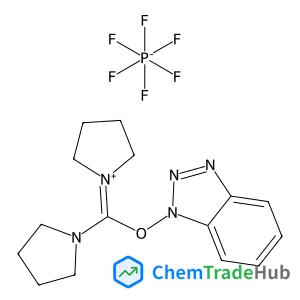
(1H-Benzotriazol-1-yloxy)(di-1-pyrrolidinyl)methylium hexafluorophosphate
CAS Number:
105379-24-6
Molecular Formula:
C15H21F6N5OP
Recommended Suppliers




Disclaimer
This page provides academic journal information for reference and research purposes only. We are not affiliated with any journal publishers and do not handle publication submissions. For publication-related inquiries, please contact the respective journal publishers directly.
If you notice any inaccuracies in the information displayed, please contact us at support@chemtradehub.com. We will promptly review and address your concerns.