












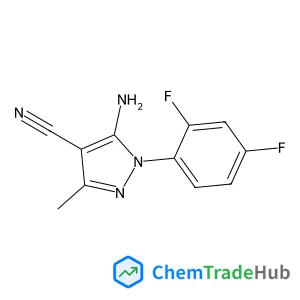
5-Amino-1-(2,4-difluorophenyl)-3-methyl-1H-pyrazole-4-carbonitrile
CAS Number:
1020057-92-4
Molecular Formula:
C11H8F2N4
Michael Capron, Jérémy Bourgalais, Ranjith Kumar Abhinavam Kailasanathan, David L. Osborn, Sébastien D. Le Picard, Fabien Goulay
Product detection studies of C(3P) atom reactions with ethylene, C2H4(X1Ag) and propylene, C3H6(X1A′) are carried out in a flow tube reactor at 332 K and 4 Torr (553.3 Pa) under multiple collision conditions. Ground state carbon atoms are generated by 193 nm laser photolysis of carbon suboxide, C3O2 in a buffer of helium. Thermalized reaction products are detected using tunable VUV photoionization and time of flight mass spectrometry. For C(3P) + ethylene, propargyl (C3H3) is detected as the only molecular product in agreement with previous studies on this reaction. The temporal profiles of the detected ions are used to discriminate C(3P) reaction products from side reaction products. For C(3P) + propylene, two reaction channels are identified through the detection of methyl (CH3) and propargyl (C3H3) radicals for the first channel and C4H5 for the second one. Franck–Condon Factor simulations are employed to infer the C4H5-isomer distribution. The measured 1 : 4 ratio for the i-C4H5 isomer relative to the methylpropargyl isomers is similar to the C4H5 isomer distribution observed in low-pressure flames and differs from crossed molecular beams data. The accuracy of these isomer distributions is discussed in view of large uncertainties on the photoionization spectra of the pure C4H5 isomers.
Carlos A. Silvera-Batista, Randy K. Wang, Philip Weinberg
DOI: 10.1039/B927053A
Rogerio Manica
DOI: 10.1039/C0CP00677G
Matthew J. Tucker, Xin Sonia Gai, Edward E. Fenlon, Scott H. Brewer, Robin M. Hochstrasser
DOI: 10.1039/C0CP01625J
Harald Schöbel, Christian Leidlmair, Peter Bartl, Abid Aleem, Michaela Hager, Olof Echt, Tilmann D. Märk, Paul Scheier
DOI: 10.1039/C0CP01268H
Juan Aragó, Pedro M. Viruela, Enrique Ortí, Begoña Milián-Medina
DOI: 10.1039/C0CP00410C
Yoshihiro Takeda, Tamotsu Kondow, Fumitaka Mafuné
DOI: 10.1039/C0CP00770F
M. Eugenia Sanz, Juan C. López, José L. Alonso
DOI: 10.1039/B926520A
Fabio Chiatti, Marta Corno, Yuriy Sakhno, Gianmario Martra, Piero Ugliengo
DOI: 10.1039/C0CP01143F
1-(2,4,6-Trifluorophenyl)ethanol is an organic compound with the CAS number 1250...
1-(2,4-Dimethoxybenzyl)-4-(hydroxymethyl)-2-pyrrolidinone (CAS: 919111-34-5) is ...
(7S,15R)-6β,15-Diacetoxy-7α,20-epoxy-7-hydroxykaura-2,16-dien-1-one is a crystal...
The compound rac-ethyl (1r,4r)-4-hydroxycyclohexane-1-carboxylate, trans (CAS: 3...
The market for 2-(2,4-Difluorophenoxy)-3-nitropyridine (CAS: 175135-62-3) is cur...
The main uses of 6-Diazo-5-oxo-L-norleucine (CAS: 157-03-9) include research in ...
When handling 2-Aminoethyl-mono-amide-DOTA-tris(tBu ester) (CAS: 173308-19-5), i...
5-Methylimidazo[1,2-a]pyridine-3-carbaldehyde (CAS: 178488-37-4) can be synthesi...
There are alternative reagents that can be used in the synthesis of 2,4,6-Trihyd...
(2Z)-3-(5-Fluoro-1H-indol-3-yl)-2-sulfanylacrylic acid is a chemical compound wi...

Physical Chemistry Chemical Physics (PCCP) is an international journal co-owned by 19 physical chemistry and physics societies from around the world. This journal publishes original, cutting-edge research in physical chemistry, chemical physics and biophysical chemistry. To be suitable for publication in PCCP, articles must include significant innovation and/or insight into physical chemistry; this is the most important criterion that reviewers and Editors will judge against when evaluating submissions. The journal has a broad scope and welcomes contributions spanning experiment, theory, computation and data science. Topical coverage includes spectroscopy, dynamics, kinetics, statistical mechanics, thermodynamics, electrochemistry, catalysis, surface science, quantum mechanics, quantum computing and machine learning. Interdisciplinary research areas such as polymers and soft matter, materials, nanoscience, energy, surfaces/interfaces, and biophysical chemistry are welcomed if they demonstrate significant innovation and/or insight into physical chemistry. Joined experimental/theoretical studies are particularly appreciated when complementary and based on up-to-date approaches.
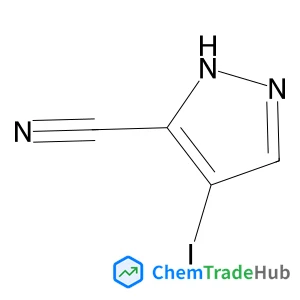
![[2-(Benzyloxy)-3-bromo-5-methylphenyl]boronic acid structure](https://static.chemtradehub.com/structs/870/870777-20-1-24ac.webp "[2-(Benzyloxy)-3-bromo-5-methylphenyl]boronic acid structure")
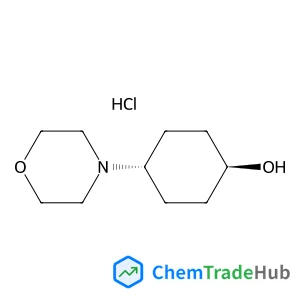
![9,9'-Spirobi[fluoren]-2-amine structure](https://static.chemtradehub.com/structs/118/118951-68-1-0d14.webp "9,9'-Spirobi[fluoren]-2-amine structure")





