












Phase evolution and electrical properties of Co–Sb alloys fabricated from Co/Sb bilayers by thermal annealing and ion beam mixing
Literature Information
Publication Date
2015-08-19
DOI
10.1039/C5CP03360H
Impact Factor
3.676
Authors
Manju Bala, Compesh pannu, Srashti Gupta, Tripurari S. Tripathi, Surya K. Tripathi, K. Asokan, Devesh K. Avasthi
View Original
Abstract
An investigation was carried out to understand the phase evolution and study the structural, morphological, optical and electrical properties of Co–Sb alloys fabricated by two different approaches: (a) thermal annealing and (b) ion-beam mixing followed by post annealing. The as-deposited and 100 MeV Ag ion beam irradiated Co/Sb bilayer thin films were subjected to thermal annealing from 200 to 400 °C for 1 hour. The Rutherford backscattering spectrometry (RBS) results showed partial mixing for the thermally annealed films and complete mixing for the irradiated and post annealed films at 400 °C. The XRD and RAMAN measurements indicated the formation of Co–Sb alloy, with ∼70% concentration of CoSb3 phase in the irradiated post annealed sample at 400 °C. The band gaps of the annealed and post irradiated annealed Co–Sb alloys were determined using UV-visible spectroscopy. Electrical and thermoelectric power measurements were performed in the temperature range of 300–420 K. It was observed that the alloys formed by ion-beam induced mixing exhibited higher electrical conductivity and thermoelectric power than the as-deposited and thermally annealed Co/Sb bilayer thin films.
Related Literature
Design and development of quantum dots and other nanoparticles based cellular imaging probe
2010-11-10
Perspective
DOI: 10.1039/C0CP00726A
Temperature-resolved thermal analysis of cisplatin by means of Li+ ion attachment mass spectrometry
Seiji Takahashi, Yuki Kitahara, Megumi Nakamura, Yoshiro Shiokawa, Toshihiro Fujii
2010-02-24
Paper
DOI: 10.1039/B923454C
Self-assembly of trehalose molecules on a lysozyme surface: the broken glass hypothesis
Maxim V. Fedorov, Jonathan M. Goodman, Dmitry Nerukh, Stephan Schumm
2010-11-29
Paper
DOI: 10.1039/C0CP01705A
Direct ab initio MD study on the interaction of hydroperoxy radical (HOO) with water molecules
Hiroto Tachikawa, Shigeaki Abe
2010-02-24
Paper
DOI: 10.1039/B923310E
Six conformers of neutral aspartic acid identified in the gas phase
M. Eugenia Sanz, Juan C. López, José L. Alonso
2010-03-05
Paper
DOI: 10.1039/B926520A
Photoelectron spectroscopy of homogeneous nucleic acid base dimer anions
Yeon Jae Ko, Haopeng Wang, Rui Cao, Dunja Radisic, Soren N. Eustis, Sarah T. Stokes, Svetlana Lyapustina, Shan Xi Tian, Kit H. Bowen
2010-02-11
Paper
DOI: 10.1039/B924950H
Ion–molecule reactions of ammonia clusters with C60 aggregates embedded in helium droplets
Harald Schöbel, Christian Leidlmair, Peter Bartl, Abid Aleem, Michaela Hager, Olof Echt, Tilmann D. Märk, Paul Scheier
2010-11-12
Paper
DOI: 10.1039/C0CP01268H
Supramolecular assembly of a biomineralizing antimicrobial peptide in coarse-grained Monte Carlo simulations
Glenn R. Johnson, Barry L. Farmer, Ras B. Pandey
2010-11-12
Paper
DOI: 10.1039/C0CP01364A
You might also like
Compound Q&A
What is 1-(2,4,6-Trifluorophenyl)ethanol (CAS: 1250113-83-7)?
1-(2,4,6-Trifluorophenyl)ethanol is an organic compound with the CAS number 1250...
1250113-83-71-(2,4,6-Trifluoroph...
Compound Q&A
Is 1-(2,4-Dimethoxybenzyl)-4-(hydroxymethyl)-2-pyrrolidinone (CAS: 919111-34-5) safe?
1-(2,4-Dimethoxybenzyl)-4-(hydroxymethyl)-2-pyrrolidinone (CAS: 919111-34-5) is ...
919111-34-51-(2,4-Dimethoxybenz...
Compound Q&A
What are the physical and chemical properties of (7S,15R)-6β,15-Diacetoxy-7α,20-epoxy-7-hydroxykaura-2,16-dien-1-one (CAS: 51419-51-3)?
(7S,15R)-6β,15-Diacetoxy-7α,20-epoxy-7-hydroxykaura-2,16-dien-1-one is a crystal...
51419-51-3(7S,15R)-6β,15-Diace...
Compound Q&A
What regulatory guidelines apply to rac-ethyl (1r,4r)-4-hydroxycyclohexane-1-carboxylate, trans (CAS: 3618-04-0)?
The compound rac-ethyl (1r,4r)-4-hydroxycyclohexane-1-carboxylate, trans (CAS: 3...
3618-04-0rac-ethyl (1r,4r)-4-...
Compound Q&A
What is the market or research trend for 2-(2,4-Difluorophenoxy)-3-nitropyridine (CAS: 175135-62-3)?
The market for 2-(2,4-Difluorophenoxy)-3-nitropyridine (CAS: 175135-62-3) is cur...
175135-62-32-(2,4-Difluoropheno...
Compound Q&A
What are the main uses of 6-Diazo-5-oxo-L-norleucine (CAS: 157-03-9)?
The main uses of 6-Diazo-5-oxo-L-norleucine (CAS: 157-03-9) include research in ...
157-03-96-Diazo-5-oxo-L-norl...
Compound Q&A
What precautions should be taken when handling 2-Aminoethyl-mono-amide-DOTA-tris(tBu ester) (CAS: 173308-19-5)?
When handling 2-Aminoethyl-mono-amide-DOTA-tris(tBu ester) (CAS: 173308-19-5), i...
173308-19-52-Aminoethyl-mono-am...
Compound Q&A
How is 5-Methylimidazo[1,2-a]pyridine-3-carbaldehyde (CAS: 178488-37-4) typically synthesized?
5-Methylimidazo[1,2-a]pyridine-3-carbaldehyde (CAS: 178488-37-4) can be synthesi...
178488-37-45-Methylimidazo[1,2-...
Compound Q&A
Are there alternatives to 2,4,6-Trihydroxyisophthalaldehyde (CAS: 4396-13-8) in synthesis?
There are alternative reagents that can be used in the synthesis of 2,4,6-Trihyd...
4396-13-82,4,6-Trihydroxyisop...
Compound Q&A
What is (2Z)-3-(5-Fluoro-1H-indol-3-yl)-2-sulfanylacrylic acid (CAS: 179461-52-0)?
(2Z)-3-(5-Fluoro-1H-indol-3-yl)-2-sulfanylacrylic acid is a chemical compound wi...
179461-52-0(2Z)-3-(5-Fluoro-1H-...
Source Journal
Physical Chemistry Chemical Physics

CiteScore:
5.5
Self-citation Rate:
10.3%
Articles per Year:
3036
Physical Chemistry Chemical Physics (PCCP) is an international journal co-owned by 19 physical chemistry and physics societies from around the world. This journal publishes original, cutting-edge research in physical chemistry, chemical physics and biophysical chemistry. To be suitable for publication in PCCP, articles must include significant innovation and/or insight into physical chemistry; this is the most important criterion that reviewers and Editors will judge against when evaluating submissions. The journal has a broad scope and welcomes contributions spanning experiment, theory, computation and data science. Topical coverage includes spectroscopy, dynamics, kinetics, statistical mechanics, thermodynamics, electrochemistry, catalysis, surface science, quantum mechanics, quantum computing and machine learning. Interdisciplinary research areas such as polymers and soft matter, materials, nanoscience, energy, surfaces/interfaces, and biophysical chemistry are welcomed if they demonstrate significant innovation and/or insight into physical chemistry. Joined experimental/theoretical studies are particularly appreciated when complementary and based on up-to-date approaches.
Recommended Compounds
![9,9'-Spirobi[fluoren]-2-amine structure](https://static.chemtradehub.com/structs/118/118951-68-1-0d14.webp "9,9'-Spirobi[fluoren]-2-amine structure")
![Imidazo[1,5-a]pyrazine structure](https://static.chemtradehub.com/structs/274/274-49-7-d749.webp "Imidazo[1,5-a]pyrazine structure")
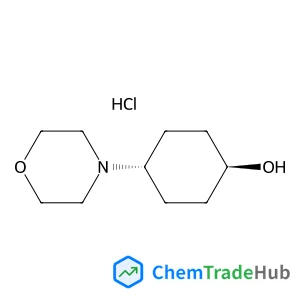
trans-4-(4-Morpholinyl)cyclohexanol hydrochloride (1:1)
CAS Number:
1588441-09-1
Molecular Formula:
C10H20ClNO2
Recommended Suppliers






Disclaimer
This page provides academic journal information for reference and research purposes only. We are not affiliated with any journal publishers and do not handle publication submissions. For publication-related inquiries, please contact the respective journal publishers directly.
If you notice any inaccuracies in the information displayed, please contact us at support@chemtradehub.com. We will promptly review and address your concerns.