












Effect of electron-donating substituent groups on aromatic ring on photoluminescence properties of complexes of benzoic acid-functionalized polysulfone with Eu(iii) ions
Literature Information
Publication Date
2015-08-25
DOI
10.1039/C5CP03300D
Impact Factor
3.676
Authors
Baojiao Gao, Lulu Chen, Tao Chen
View Original
Abstract
By molecular design and via polymer reactions, methoxybenzoic acid (MOBA) and hydroxybenzoic acid (HBA) were bonded onto the side chains of polysulfone (PSF) for preparing two benzoic acid-functionalized PSFs, PSF-MOBA and PSF-HBA, respectively. Based on full characterization of their structures, the two macromolecule ligands were made to coordinate to Eu3+ ions, and two binary polymer-rare earth complexes, PSF-(MOBA)3–Eu(III) and PSF-(HBA)3–Eu(III), were obtained. At the same time, using phenanthroline (Phen) as a second small-molecule ligand, the corresponding two ternary complexes, PSF-(MOBA)3–Eu(III)-Phen1 and PSF-(HBA)3–Eu(III)-Phen1, were also prepared. The photo physical behaviors of these complexes were examined in depth, and the luminescent properties of these prepared polymer-rare earth complexes were mainly investigated. The experimental results show that the two electron-donating substituent groups on the aromatic ring of the bonded benzoic acid significantly affect the luminescence properties of these complexes of benzoic acid-functionalized PSF and Eu(III) ions, and they can effectively strengthen the fluorescence emission intensities of the complexes. The possible reason is that through the p–π conjugative effect, the two electron-donating substituent groups can remarkably decline the triplet state energy levels of the bonded ligand MOBA and HBA, and strengthen the matching degree of energy between the triplet state energy level of the ligand and the resonant energy level of Eu(III) ions, resulting in the enhancement of fluorescence emission intensities of the complexes. Besides, the fluorescence emissions of the binary complexes are stronger than those of the corresponding ternary complexes because of the synergistic coordination effect of Phen with the macromolecular ligand.
Related Literature
Conformations and vibrational spectra of a model tripeptide: change of secondary structure upon micro-solvation
Hui Zhu, Martine Blom, Isabel Compagnon, Anouk M. Rijs, Santanu Roy, Gert von Helden, Burkhard Schmidt
2010-02-23
Paper
DOI: 10.1039/B926413B
Analysis of parity violation in chiral molecules
Radovan Bast, Anton Koers, André Severo Pereira Gomes, Miroslav Iliaš, Lucas Visscher, Peter Schwerdtfeger, Trond Saue
2010-12-08
Paper
DOI: 10.1039/C0CP01483D
Excitation energy transfer in donor–bridge–acceptor systems
Bo Albinsson, Jerker Mårtensson
2010-06-16
Perspective
DOI: 10.1039/C003805A
Molecular dynamics calculation of activation volumes
Elna Deglint, Heather Martens, Essex Edwards, Nicholas Boon, Paul Dance
2010-11-12
Communication
DOI: 10.1039/C0CP01570A
Nickel based electrocatalysts for oxygen evolution in high current density, alkaline water electrolysers
Xiaohong Li, Frank C. Walsh, Derek Pletcher
2010-11-15
Paper
DOI: 10.1039/C0CP00993H
Molecular mechanisms of the photostability of indigo
Andrzej L. Sobolewski, Wolfgang Domcke
2010-12-09
Paper
DOI: 10.1039/C0CP01901A
Theoretical spectroscopy of floppy peptides at room temperature. A DFTMD perspective: gas and aqueous phase
2010-03-10
Perspective
DOI: 10.1039/B924048A
Accurate determination of the dielectric parameters of spherical shells in suspension
Niloofar Asgharian, Zoltan A. Schelly
2010-06-08
Paper
DOI: 10.1039/B922123A
Effect of hydrophobic nanopatches within an ionic surface on the structure of liquids
Christopher Hardacre
2010-11-01
Paper
DOI: 10.1039/C0CP01838D
You might also like
Compound Q&A
What is 1-(2,4,6-Trifluorophenyl)ethanol (CAS: 1250113-83-7)?
1-(2,4,6-Trifluorophenyl)ethanol is an organic compound with the CAS number 1250...
1250113-83-71-(2,4,6-Trifluoroph...
Compound Q&A
Is 1-(2,4-Dimethoxybenzyl)-4-(hydroxymethyl)-2-pyrrolidinone (CAS: 919111-34-5) safe?
1-(2,4-Dimethoxybenzyl)-4-(hydroxymethyl)-2-pyrrolidinone (CAS: 919111-34-5) is ...
919111-34-51-(2,4-Dimethoxybenz...
Compound Q&A
What are the physical and chemical properties of (7S,15R)-6β,15-Diacetoxy-7α,20-epoxy-7-hydroxykaura-2,16-dien-1-one (CAS: 51419-51-3)?
(7S,15R)-6β,15-Diacetoxy-7α,20-epoxy-7-hydroxykaura-2,16-dien-1-one is a crystal...
51419-51-3(7S,15R)-6β,15-Diace...
Compound Q&A
What regulatory guidelines apply to rac-ethyl (1r,4r)-4-hydroxycyclohexane-1-carboxylate, trans (CAS: 3618-04-0)?
The compound rac-ethyl (1r,4r)-4-hydroxycyclohexane-1-carboxylate, trans (CAS: 3...
3618-04-0rac-ethyl (1r,4r)-4-...
Compound Q&A
What is the market or research trend for 2-(2,4-Difluorophenoxy)-3-nitropyridine (CAS: 175135-62-3)?
The market for 2-(2,4-Difluorophenoxy)-3-nitropyridine (CAS: 175135-62-3) is cur...
175135-62-32-(2,4-Difluoropheno...
Compound Q&A
What are the main uses of 6-Diazo-5-oxo-L-norleucine (CAS: 157-03-9)?
The main uses of 6-Diazo-5-oxo-L-norleucine (CAS: 157-03-9) include research in ...
157-03-96-Diazo-5-oxo-L-norl...
Compound Q&A
What precautions should be taken when handling 2-Aminoethyl-mono-amide-DOTA-tris(tBu ester) (CAS: 173308-19-5)?
When handling 2-Aminoethyl-mono-amide-DOTA-tris(tBu ester) (CAS: 173308-19-5), i...
173308-19-52-Aminoethyl-mono-am...
Compound Q&A
How is 5-Methylimidazo[1,2-a]pyridine-3-carbaldehyde (CAS: 178488-37-4) typically synthesized?
5-Methylimidazo[1,2-a]pyridine-3-carbaldehyde (CAS: 178488-37-4) can be synthesi...
178488-37-45-Methylimidazo[1,2-...
Compound Q&A
Are there alternatives to 2,4,6-Trihydroxyisophthalaldehyde (CAS: 4396-13-8) in synthesis?
There are alternative reagents that can be used in the synthesis of 2,4,6-Trihyd...
4396-13-82,4,6-Trihydroxyisop...
Compound Q&A
What is (2Z)-3-(5-Fluoro-1H-indol-3-yl)-2-sulfanylacrylic acid (CAS: 179461-52-0)?
(2Z)-3-(5-Fluoro-1H-indol-3-yl)-2-sulfanylacrylic acid is a chemical compound wi...
179461-52-0(2Z)-3-(5-Fluoro-1H-...
Source Journal
Physical Chemistry Chemical Physics

CiteScore:
5.5
Self-citation Rate:
10.3%
Articles per Year:
3036
Physical Chemistry Chemical Physics (PCCP) is an international journal co-owned by 19 physical chemistry and physics societies from around the world. This journal publishes original, cutting-edge research in physical chemistry, chemical physics and biophysical chemistry. To be suitable for publication in PCCP, articles must include significant innovation and/or insight into physical chemistry; this is the most important criterion that reviewers and Editors will judge against when evaluating submissions. The journal has a broad scope and welcomes contributions spanning experiment, theory, computation and data science. Topical coverage includes spectroscopy, dynamics, kinetics, statistical mechanics, thermodynamics, electrochemistry, catalysis, surface science, quantum mechanics, quantum computing and machine learning. Interdisciplinary research areas such as polymers and soft matter, materials, nanoscience, energy, surfaces/interfaces, and biophysical chemistry are welcomed if they demonstrate significant innovation and/or insight into physical chemistry. Joined experimental/theoretical studies are particularly appreciated when complementary and based on up-to-date approaches.
Recommended Compounds

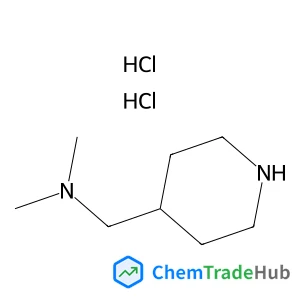
N,N-dimethyl(piperidin-4-yl)methanamine hydrochloride
CAS Number:
172281-72-0
Molecular Formula:
C8H20Cl2N2

![4-[(1-Methyl-1H-pyrrol-2-yl)methylene]-1,3(2H,4H)-isoquinolinedione structure](https://static.chemtradehub.com/structs/110/1104546-89-5-a600.webp "4-[(1-Methyl-1H-pyrrol-2-yl)methylene]-1,3(2H,4H)-isoquinolinedione structure")
4-[(1-Methyl-1H-pyrrol-2-yl)methylene]-1,3(2H,4H)-isoquinolinedione
CAS Number:
1104546-89-5
Molecular Formula:
C15H12N2O2
Recommended Suppliers




Disclaimer
This page provides academic journal information for reference and research purposes only. We are not affiliated with any journal publishers and do not handle publication submissions. For publication-related inquiries, please contact the respective journal publishers directly.
If you notice any inaccuracies in the information displayed, please contact us at support@chemtradehub.com. We will promptly review and address your concerns.