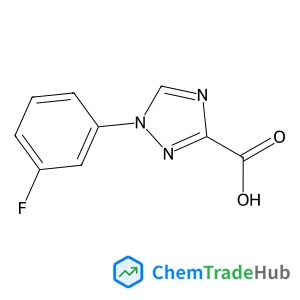
1-(3-Fluorophenyl)-1H-1,2,4-triazole-3-carboxylic acid
CAS Number:
1292369-51-7
Molecular Formula:
C9H6FN3O2
Wenqiang Dang, Hungru Chen, Naoto Umezawa, Junying Zhang
Sensitizing wide band gap photo-functional materials under visible-light irradiation is an important task for efficient solar energy conversion. Although nitrogen doping into anatase TiO2 has been extensively studied for this purpose, it is hard to increase the nitrogen content in anatase TiO2 because of the aliovalent nitrogen substituted for oxygen, leading to the formation of secondary phases or defects that hamper the migration of photoexcited charge carriers. In this paper, electronic structures of (TiO2)1−x(TaON)x (0 ≤ x ≤ 1) solid solutions, in which the stoichiometry is satisfied with the co-substitution of Ti for Ta along with O for N, are investigated within the anatase crystal structure using first-principles calculations. Our computational results show that the solid solutions have substantially narrower band gaps than TiO2, without introducing any localized energy states in the forbidden gap. In addition, in comparison with the pristine TiO2, the solid solution has a direct band gap when the content of TaON exceeds 0.25, which is advantageous to light absorption. The valence band maximum (VBM) of the solid solutions, which is mainly composed of N 2p states hybridized with O 2p, Ti 3d or Ta 5d orbitals, is higher in energy than that of pristine anatase TiO2 consisting of non-bonding O 2p states. On the other hand, incorporating TaON into TiO2 causes the formation of d–d bonding states through π interactions and substantially lowers the conduction band minimum (CBM) because of the shortened distance between some metal atoms. As a result, the anatase (TiO2)1−x(TaON)x is expected to become a promising visible-light absorber. In addition, some atomic configurations are found to possess exceptionally narrow band gaps.

Photochemical & Photobiological Sciences

Green Chemistry

Advanced Engineering Materials

European Journal of Organic Chemistry

Contact Lens & Anterior Eye

Angewandte Chemie International Edition

Coloration Technology

Nature Reviews Drug Discovery

Current Pharmaceutical Biotechnology

Journal of Enzyme inhibition and Medicinal Chemistry
DOI: 10.1039/D3NJ05137D
Lili Song
DOI: 10.1039/D3NP00029J
Balamurugan Selvaraj, Balaji Sambandam, Sungjin Kim, Vinod Mathew, Sehong Seo, Moonsu Song, Jaekook Kim
DOI: 10.1039/D3TA03912A
Angela A. Salim, Mark S. Butler, Mark A. T. Blaskovich, Ian R. Henderson, Robert J. Capon
DOI: 10.1039/D3NP00019B
Christina Braun, Lukas Martin Wingen, Dirk Menche
DOI: 10.1039/D3NP00018D
Rabban Rabban, Jinti Moni Kumar, Naiwrit Karmodak, Bappaditya Gole
DOI: 10.1039/D3NJ05283D
Shu-Ming Yeh, Chia-Chen Li
DOI: 10.1039/D3TA05329F
Waste containing N-Methoxy-N-methyl-1,3-thiazole-5-carboxamide (CAS: 898825-89-3...
N-(4-Biphenylyl)dibenzo[b,d]furan-4-amine should be stored in a tightly sealed c...
The market for 3-Acetamido-5-amino-2,4,6-triiodobenzoic acid (CAS: 1713-07-1) is...
Benzyl 2-O-acetyl-3,4,6-tri-O-benzyl-beta-D-galactopyranoside (CAS: 61820-03-9) ...
2-Ethylpiperazine dihydrochloride (CAS: 438050-52-3) is regulated under the Glob...
1,1'-[1,3-Phenylenebis(methylene)]bis(3-methyl-1H-pyrrole-2,5-dione) (CAS: 11946...
Several alternatives can be used in the synthesis of 5-Fluoro-2-(1-pyrrolidinyl)...
Proper personal protective equipment (PPE) must be worn when handling this compo...
When handling 6-Bromoimidazo[1,2-a]pyridin-8-amine, it is important to wear appr...
Alternatives to (2S,4R)-4-(4-Nitrobenzyl)pyrrolidine-2-carboxylic acid hydrochlo...

Physical Chemistry Chemical Physics (PCCP) is an international journal co-owned by 19 physical chemistry and physics societies from around the world. This journal publishes original, cutting-edge research in physical chemistry, chemical physics and biophysical chemistry. To be suitable for publication in PCCP, articles must include significant innovation and/or insight into physical chemistry; this is the most important criterion that reviewers and Editors will judge against when evaluating submissions. The journal has a broad scope and welcomes contributions spanning experiment, theory, computation and data science. Topical coverage includes spectroscopy, dynamics, kinetics, statistical mechanics, thermodynamics, electrochemistry, catalysis, surface science, quantum mechanics, quantum computing and machine learning. Interdisciplinary research areas such as polymers and soft matter, materials, nanoscience, energy, surfaces/interfaces, and biophysical chemistry are welcomed if they demonstrate significant innovation and/or insight into physical chemistry. Joined experimental/theoretical studies are particularly appreciated when complementary and based on up-to-date approaches.
![4-[(2-{2-[2-(2-Aminoethoxy)ethoxy]ethoxy}ethyl)amino]-2-(2,6-dioxo-3-piperidinyl)-1H-isoindole-1,3(2H)-dione structure](https://static.chemtradehub.com/structs/209/2093416-31-8-3162.webp "4-[(2-{2-[2-(2-Aminoethoxy)ethoxy]ethoxy}ethyl)amino]-2-(2,6-dioxo-3-piperidinyl)-1H-isoindole-1,3(2H)-dione structure")