












Long-term non-invasive interrogation of human dorsal root ganglion neuronal cultures on an integrated microfluidic multielectrode array platform
Literature Information
Publication Date
2016-06-28
DOI
10.1039/C5AN01728A
Impact Factor
4.616
Authors
H. A. Enright, S. H. Felix, N. O. Fischer, E. V. Mukerjee, D. Soscia, M. Mcnerney, K. Kulp, J. Zhang, G. Page, P. Miller, A. Ghetti, E. K. Wheeler, S. Pannu
View Original
Abstract
Scientific studies in drug development and toxicology rely heavily on animal models, which often inaccurately predict the true response for human exposure. This may lead to unanticipated adverse effects or misidentified risks that result in, for example, drug candidate elimination. The utilization of human cells and tissues for in vitro physiological platforms has become a growing area of interest to bridge this gap and to more accurately predict human responses to drugs and toxins. The effects of new drugs and toxins on the peripheral nervous system are often investigated with neurons isolated from dorsal root ganglia (DRG), typically with one-time measurement techniques such as patch clamping. Here, we report the use of our multi-electrode array (MEA) platform for long-term noninvasive assessment of human DRG cell health and function. In this study, we acquired simultaneous optical and electrophysiological measurements from primary human DRG neurons upon chemical stimulation repeatedly through day in vitro (DIV) 23. Distinct chemical signatures were noted for the cellular responses evoked by each chemical stimulus. Additionally, the cell viability and function of the human DRG neurons were consistent through DIV 23. To the best of our knowledge, this is the first report on long-term measurements of the cell health and function of human DRG neurons on a MEA platform. Future generations will include higher electrode numbers in customized arrangements as well as integration with different tissue types on a single device. This platform will provide a valuable testing tool for both rodent and human cells, enabling a more comprehensive risk assessment for drug candidates and toxicants.
Related Literature
Bond and site selectivity in dissociative electron attachment to gas phase and condensed phase ethanol and trifluoroethanol
Mario Orzol, Isabel Martin, Jaroslav Kocisek, Iwona Dabkowska, Judith Langer, Eugen Illenberger
2007-04-26
Paper
DOI: 10.1039/B701543G
Highly dispersed magnesium oxide species on silica as photoactive sites for photoinduced direct methane coupling and photoluminescence
Leny Yuliati, Tadashi Hattori, Hisao Yoshida
2004-11-15
Paper
DOI: 10.1039/B410089A
Mechanism for the conductivity changes caused by membrane electroporation of CHO cell-pellets‡
Marco Schmeer, Thomas Seipp, Uwe Pliquett, Sergej Kakorin, Eberhard Neumann
2004-11-23
Paper
DOI: 10.1039/B411037D
Phase field modeling of CH4hydrate conversion into CO2 hydrate in the presence of liquid CO2
B. Kvamme
2007-04-27
Paper
DOI: 10.1039/B700423K
Modeling of dense ceramic bilayer membranes
Michael Schroeder
2004-11-29
Paper
DOI: 10.1039/B405436A
The rotational spectra of conformers of biomolecules: tryptamine
2004-03-05
Paper
DOI: 10.1039/B315707E
Chirality transfer through hydrogen-bonding: Experimental and ab initio analyses of vibrational circular dichroismspectra of methyl lactate in water
Martin Losada, Yunjie Xu
2007-05-03
Paper
DOI: 10.1039/B703368K
A crossed molecular beam study on the formation of hexenediynyl radicals (H2CCCCCCH; C6H3 (X2A′)) via reactions of tricarbon molecules, C3(X1Σg+), with allene (H2CCCH2; X1A1) and methylacetylene (CH3CCH; X1A1)
Ying Guo, Xibin Gu, Fangtong Zhang, Alexander M. Mebel, Ralf I. Kaiser
2007-02-15
Paper
DOI: 10.1039/B618179A
The interaction of n-nonyl-β-d-glucopyranoside and sodium dodecyl sulfate with DMPC and DMPG monolayers studied by infrared reflection absorption spectroscopy
Annette Meister, Andreas Kerth, Alfred Blume
2004-09-13
Paper
DOI: 10.1039/B410761F
You might also like
Compound Q&A
What precautions should be taken when handling 2-Chloro-1,2-bis(4-methylphenyl)ethanone (CAS: 71193-32-3)?
When handling 2-Chloro-1,2-bis(4-methylphenyl)ethanone (CAS: 71193-32-3), it is ...
71193-32-32-Chloro-1,2-bis(4-m...
Compound Q&A
What industries use 4-Ethoxy-3-(5-methyl-4-oxo-7-propyl-1,4-dihydroimidazo[5,1-f][1,2,4]triazin-2-yl)benzenesulfonyl chloride (CAS: 224789-26-8)?
4-Ethoxy-3-(5-methyl-4-oxo-7-propyl-1,4-dihydroimidazo[5,1-f][1,2,4]triazin-2-yl...
224789-26-84-Ethoxy-3-(5-methyl...
Compound Q&A
How should Methyl 3-Oxo-4-Androsten-17-Carboxylate (CAS: 2681-55-2) be stored?
Methyl 3-Oxo-4-Androsten-17-Carboxylate (CAS: 2681-55-2) should be stored in a c...
2681-55-2Methyl 3-Oxo-4-Andro...
Compound Q&A
What are the main uses of (R)-3-Amino-4-(3-hexylphenylamino)-4-oxobutylphosphonic acid (CAS: 909725-61-7)?
(R)-3-Amino-4-(3-hexylphenylamino)-4-oxobutylphosphonic acid is primarily used i...
909725-61-7(R)-3-Amino-4-(3-hex...
Compound Q&A
What regulatory guidelines apply to 2-Methyl-2-propanyl 3-amino-3-carbamoyl-1-azetidinecarboxylate (CAS: 1254120-14-3)?
2-Methyl-2-propanyl 3-amino-3-carbamoyl-1-azetidinecarboxylate (CAS: 1254120-14-...
1254120-14-32-Methyl-2-propanyl ...
Compound Q&A
Are there alternatives to (E)-4-(tert-Butoxy)-4-oxobut-2-enoic acid (CAS: 135355-96-3) in synthesis?
There are alternative reagents that can be used in synthesis instead of (E)-4-(t...
135355-96-3(E)-4-(tert-Butoxy)-...
Compound Q&A
What are the physical and chemical properties of [2-(3-Chlorophenyl)-1,3-thiazol-4-yl]methanol (CAS: 121202-20-8)?
[2-(3-Chlorophenyl)-1,3-thiazol-4-yl]methanol (CAS: 121202-20-8) is a crystallin...
121202-20-8[2-(3-Chlorophenyl)-...
Compound Q&A
What is the market or research trend for Methyl (2S)-[(4S)-2,2-dimethyl-1,3-dioxolan-4-yl]{[(4-methylphenyl)sulfonyl]oxy}acetate (CAS: 166249-17-8)?
The market and research trends for Methyl (2S)-[(4S)-2,2-dimethyl-1,3-dioxolan-4...
166249-17-8Methyl (2S)-[(4S)-2,...
Compound Q&A
What is the market or research trend for 1-Bromo-2-isocyanatoethane (CAS: 42865-19-0)?
The market for 1-Bromo-2-isocyanatoethane (CAS: 42865-19-0) is driven by its use...
42865-19-01-Bromo-2-isocyanato...
Compound Q&A
What are the main uses of 4-Nitro-D-phenylalanine hydrochloride (CAS: 147065-06-3)?
4-Nitro-D-phenylalanine hydrochloride (CAS: 147065-06-3) is primarily used in re...
147065-06-34-Nitro-D-phenylalan...
Source Journal
Analyst

CiteScore:
7.8
Self-citation Rate:
5.6%
Articles per Year:
653
Analyst publishes analytical and bioanalytical research that reports premier fundamental discoveries and inventions, and the applications of those discoveries, unconfined by traditional discipline barriers.
Recommended Compounds

![7-Amino-5-methyl-5,7-dihydro-6H-dibenzo[b,d]azepin-6-one hydrochloride (1:1) structure](https://static.chemtradehub.com/structs/209/209984-32-7-9912.webp "7-Amino-5-methyl-5,7-dihydro-6H-dibenzo[b,d]azepin-6-one hydrochloride (1:1) structure")
7-Amino-5-methyl-5,7-dihydro-6H-dibenzo[b,d]azepin-6-one hydrochloride (1:1)
CAS Number:
209984-32-7
Molecular Formula:
C15H15ClN2O
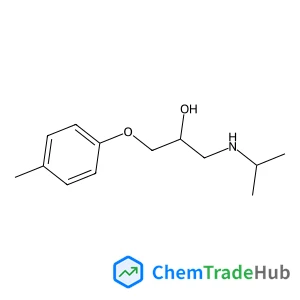
1-(4-Methylphenoxy)-3-(propan-2-ylamino)propan-2-ol
CAS Number:
5790-46-5
Molecular Formula:
C13H21NO2
Recommended Suppliers



Disclaimer
This page provides academic journal information for reference and research purposes only. We are not affiliated with any journal publishers and do not handle publication submissions. For publication-related inquiries, please contact the respective journal publishers directly.
If you notice any inaccuracies in the information displayed, please contact us at support@chemtradehub.com. We will promptly review and address your concerns.