![L-Lysine,N6-[2-[[(1,1-dimethylethoxy)carbonyl]amino]benzoyl]-N2-[(9H-fluoren-9-ylmethoxy)carbonyl]- structure](https://static.chemtradehub.com/structs/159/159322-59-5-c046.webp "L-Lysine,N6-[2-[[(1,1-dimethylethoxy)carbonyl]amino]benzoyl]-N2-[(9H-fluoren-9-ylmethoxy)carbonyl]- structure")
L-Lysine,N6-[2-[[(1,1-dimethylethoxy)carbonyl]amino]benzoyl]-N2-[(9H-fluoren-9-ylmethoxy)carbonyl]-
CAS Number:
159322-59-5
Molecular Formula:
C33H37N3O7
Scott C. Radzinski, Jeffrey C. Foster, John B. Matson
A novel dithiocarbamate chain transfer agent (CTA1) with a directly polymerizable Z-group was synthesized for use in reversible addition–fragmentation chain transfer polymerization (RAFT). This CTA effectively mediated RAFT polymerization of styrenic and acrylic monomers with dispersities (Đ) < 1.08. Utilizing the polymerizable Z-group on the ω-chain end that is inherited from the RAFT process, bottlebrush polymers were synthesized via ring-opening metathesis polymerization (ROMP) in a grafting-through process. The effect of a number of parameters on the grafting process was studied, and optimized conditions yielded bottlebrush polymers of controllable molecular weights, narrow molecular weight distributions, and high conversions (>90%). Bottlebrush polymers made by a transfer-to strategy were also synthesized from CTA1. In this case, ROMP was first carried out to produce poly(CTA1) (PCTA1), then RAFT was performed from the PCTA1 backbone. This technique allows for the preparation of high molecular weight bottlebrush polymers without radical coupling between bottlebrush polymers. Lastly, regardless of the synthetic method, all bottlebrush polymers produced using CTA1 are composed of polymeric side chains that are attached to the bottlebrush backbone through a labile dithiocarbamate linkage that can be cleaved in the presence of nucleophiles such as amines. The unique combination of these capabilities allows for the study of bottlebrush polymer formation by both transfer-to and grafting-through strategies using a single agent.
Haruka Momose, Fumiaki Takagi, Sora Fujisawa
DOI: 10.1039/D1SE00914A
Ciler Özen, Keisuke Obata, Peter Bogdanoff, Fatwa F. Abdi
DOI: 10.1039/D1SE01475G
Xin Li, Ming Gao, Qi Liu, Huiqin Wang, Pengwei Huo
DOI: 10.1039/D1SE00974E
Osamu Tomita, Hiroki Naito, Akinobu Nakada, Masanobu Higashi
DOI: 10.1039/D1SE01619A
P. Arévalo-Cid, P. Dias, A. Mendes, J. Azevedo
DOI: 10.1039/D1SE00839K
Peisen Wu, Yongbo Wu, Kaiyin Zhu, Guozheng Ma, Xiaoming Lin, Akif Zeb, Xinli Chen, Kang Li
DOI: 10.1039/D1SE01368H
Cristina V. Manzano, Cristina Llorente del Olmo, Olga Caballero-Calero, Marisol Martín-González
DOI: 10.1039/D1SE01061A
Rong-hao Cen, Xueping Zong, Yang Cheng, Mei Zhao, Ming Luo, Yantao Zhang, Song Xue
DOI: 10.1039/D1SE90080C
Ming Fang, Jishen Cao, Jianxiao Zou, Yating Song
DOI: 10.1039/D1SE01421H
When handling 2-Methyl-2-propanyl 5-amino-2-thiophenecarboxylate (CAS: 1498311-5...
5-Bromo-1,2-dichloro-3-fluorobenzene (CAS: 1000572-93-9) is a crystalline solid ...
(2R)-2-Amino-2-(4-bromophenyl)ethanol (CAS: 354153-64-3) should be stored in a c...
Methyl 4-(aminomethyl)tetrahydro-2H-pyran-4-carboxylate hydrochloride (CAS: 3627...
1,4-Dimethyl-1H-pyrazole-5-sulfonyl chloride is primarily used as an intermediat...
Dinaphtho[1,2-b:2',1'-d]furan is generally safe when handled with appropriate pe...
The market for 7-Methyl-7,9-dihydro-1H-purine-2,6,8(3H)-trione (CAS: 612-37-3) i...
2-(4-Chlorophenyl)malonaldehyde (CAS: 205676-17-1) is a colorless or light yello...
2-Methylchrysene (CAS: 3351-32-4) is typically synthesized via the reaction of c...
N-(6-aminopyrimidin-4-yl)acetamide (CAS: 89533-23-3) is generally considered saf...

Polymer Chemistry welcomes submissions in all areas of polymer science that have a strong focus on macromolecular chemistry. Manuscripts may cover a broad range of fields, yet no direct application focus is required.
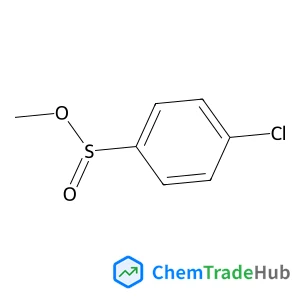
![methyl 6-amino-1H-pyrrolo[2,3-b]pyridine-4-carboxylate structure](https://static.chemtradehub.com/structs/119/1190315-60-6-9d9a.webp "methyl 6-amino-1H-pyrrolo[2,3-b]pyridine-4-carboxylate structure")