












N-confused porphyrin tautomers: lessons from density functional theory
Literature Information
Publication Date
2015-01-08
DOI
10.1039/C4CP05158K
Impact Factor
3.676
Authors
Gabriel Marchand, Hélène Roy, David Mendive-Tapia
View Original
Abstract
Using first-principle calculations, we characterize the properties of N-confused porphyrins (NCP), with a focus on the differences between the 2H and 3H tautomers. We find that NCP-3H is almost as strongly aromatic as porphyrin, and about twice as aromatic, i.e., remarkably more stable, than NCP-2H, due to the less efficient π-conjugation in the latter form. The deprotonation of the NH-group at the external side of the inverted ring of NCP-2H, adds a lone pair to the π-system, which restores a strong aromaticity, while methylation has no significant effect. Investigating the impact of solvation using a continuum model, we find quite stable solvation energies with a relative dielectric constant, εr, in the 5–40 range, for both tautomers. NCP-3H presents a slightly lower energy than its NCP-2H counterpart in all solvents. However, the energy differences between the two species are of the order of the error margin of the method, hence too small to discuss the experimentally observed stabilization of NCP-3H in dichloromethane (DCM, a poorly polar solvent) and NCP-2H in N,N-dimethylformamide (DMF, a strongly polar solvent) or to extract the population ratios between the two forms in the different solvents. Therefore, the vibronic absorption spectra are also investigated in an effort to rationalize the complex absorption profiles of these NCP derivatives. We find very distinct spectra for the 2H and 3H forms in DMF and DCM, respectively, each fairly reproducing the experiment. We also find that, in the same solvent, the two species exhibit very different signatures, which allows us to conclude that the 2H and 3H tautomers are largely dominant in DMF and DCM, respectively. Interestingly, the vibrational motions that strongly participate in the shoulder of the Soret band and the multiple maxima of the Q-bands largely differ in the two tautomers.
Related Literature
Rapid, selective and stable HaloTag-LbADH immobilization directly from crude cell extract for the continuous biocatalytic production of chiral alcohols and epoxides
M. Pohl, S. V. Ley, B. Musio
2018-01-17
Communication
DOI: 10.1039/C7RE00173H
Site-specific modification and segmental isotope labelling of HMGN1 reveals long-range conformational perturbations caused by posttranslational modifications
Gerhard Niederacher, Debra Urwin, Yasmin Dijkwel, David J. Tremethick, K. Johan Rosengren, Christian F. W. Becker, Anne C. Conibear
2021-01-05
Paper
DOI: 10.1039/D0CB00175A
Stapling proteins in the RELA complex inhibits TNFα-induced nuclear translocation of RELA
Smit Kour, Sandeep Rana, Smitha Kizhake, David Klinkebiel, Jayapal Reddy Mallareddy, Tom Huxford
2021-10-28
Communication
DOI: 10.1039/D1CB00183C
A primer on harnessing non-enzymatic post-translational modifications for drug design
Marcus J. C. Long, Phillippe Ly, Yimon Aye
2021-10-26
Opinion
DOI: 10.1039/D1MD00157D
Structural and biophysical insights into the mode of covalent binding of rationally designed potent BMX inhibitors
João D. Seixas, Marta C. Marques, Ana Guerreiro, Rui Traquete, Tiago Rodrigues, Inês S. Albuquerque, Di Wu, Shelby K. Doyle, Carol V. Robinson, Angela N. Koehler, Francisco Corzana
2020-08-28
Paper
DOI: 10.1039/D0CB00033G
Generation of glucosylated sn-1-glycerolphosphate teichoic acids: glycerol stereochemistry affects synthesis and antibody interaction
Francesca Berni, Liming Wang, Ermioni Kalfopoulou, D. Linh Nguyen, Daan van der Es, Johannes Huebner, Herman S. Overkleeft, Cornelis H. Hokke, Gijsbert A. van der Marel, Angela van Diepen, Jeroen D. C. Codée
2020-12-23
Communication
DOI: 10.1039/D0CB00206B
Deciphering the substrate recognition mechanisms of the heparan sulfate 3-O-sulfotransferase-3
Rylee Wander, Andrea M. Kaminski, Yongmei Xu, Vijayakanth Pagadala, Juno M. Krahn, Truong Quang Pham, Jian Liu, Lars C. Pedersen
2021-05-28
Paper
DOI: 10.1039/D1CB00079A
Combining bacteriophage engineering and linear dichroism spectroscopy to produce a DNA hybridisation assay
Haydn A. Little, Jake G. Carter, Craig Douglas, Matthew R. Hicks, David M. Kenyon, Christophe Lacomme, Richard T. Logan, Timothy R. Dafforn, James H. R. Tucker
2020-10-23
Paper
DOI: 10.1039/D0CB00135J
A live-cell assay for the detection of pre-microRNA–protein interactions
Sydney L. Rosenblum, Daniel A. Lorenz
2020-12-08
Paper
DOI: 10.1039/D0CB00055H
You might also like
Compound Q&A
How should waste containing N-Methoxy-N-methyl-1,3-thiazole-5-carboxamide (CAS: 898825-89-3) be handled?
Waste containing N-Methoxy-N-methyl-1,3-thiazole-5-carboxamide (CAS: 898825-89-3...
898825-89-3N-Methoxy-N-methyl-1...
Compound Q&A
How should N-(4-Biphenylyl)dibenzo[b,d]furan-4-amine (CAS: 1318338-47-4) be stored?
N-(4-Biphenylyl)dibenzo[b,d]furan-4-amine should be stored in a tightly sealed c...
1318338-47-4N-(4-Biphenylyl)dibe...
Compound Q&A
What is the market or research trend for 3-Acetamido-5-amino-2,4,6-triiodobenzoic acid (CAS: 1713-07-1)?
The market for 3-Acetamido-5-amino-2,4,6-triiodobenzoic acid (CAS: 1713-07-1) is...
1713-07-13-Acetamido-5-amino-...
Compound Q&A
How should Benzyl 2-O-acetyl-3,4,6-tri-O-benzyl-beta-D-galactopyranoside (CAS: 61820-03-9) be stored?
Benzyl 2-O-acetyl-3,4,6-tri-O-benzyl-beta-D-galactopyranoside (CAS: 61820-03-9) ...
61820-03-9Benzyl 2-O-acetyl-3,...
Compound Q&A
What regulatory guidelines apply to 2-Ethylpiperazine dihydrochloride (CAS: 438050-52-3)?
2-Ethylpiperazine dihydrochloride (CAS: 438050-52-3) is regulated under the Glob...
438050-52-32-Ethylpiperazine di...
Compound Q&A
What regulatory guidelines apply to 1,1'-[1,3-Phenylenebis(methylene)]bis(3-methyl-1H-pyrrole-2,5-dione) (CAS: 119462-56-5)?
1,1'-[1,3-Phenylenebis(methylene)]bis(3-methyl-1H-pyrrole-2,5-dione) (CAS: 11946...
119462-56-51,1'-[1,3-Phenyleneb...
Compound Q&A
Are there alternatives to 5-Fluoro-2-(1-pyrrolidinyl)pyridine (CAS: 1287217-79-1) in synthesis?
Several alternatives can be used in the synthesis of 5-Fluoro-2-(1-pyrrolidinyl)...
1287217-79-15-Fluoro-2-(1-pyrrol...
Compound Q&A
What precautions should be taken when handling 1-((2R,3R,4R,5R)-5-((bis(4-methoxyphenyl)(phenyl)methoxy)methyl)-4-hydroxy-3-methoxytetrahydrofuran-2-yl)-5-methylpyrimidine-2,4(1H,3H)-dione (CAS: 153631-19-7)?
Proper personal protective equipment (PPE) must be worn when handling this compo...
153631-19-71-((2R,3R,4R,5R)-5-(...
Compound Q&A
What precautions should be taken when handling 6-Bromoimidazo[1,2-a]pyridin-8-amine (CAS: 676371-00-9)?
When handling 6-Bromoimidazo[1,2-a]pyridin-8-amine, it is important to wear appr...
676371-00-96-Bromoimidazo[1,2-a...
Compound Q&A
Are there alternatives to (2S,4R)-4-(4-Nitrobenzyl)pyrrolidine-2-carboxylic acid hydrochloride (CAS: 1049740-22-8) in synthesis?
Alternatives to (2S,4R)-4-(4-Nitrobenzyl)pyrrolidine-2-carboxylic acid hydrochlo...
1049740-22-8(2S,4R)-4-(4-Nitrobe...
Source Journal
Physical Chemistry Chemical Physics

CiteScore:
5.5
Self-citation Rate:
10.3%
Articles per Year:
3036
Physical Chemistry Chemical Physics (PCCP) is an international journal co-owned by 19 physical chemistry and physics societies from around the world. This journal publishes original, cutting-edge research in physical chemistry, chemical physics and biophysical chemistry. To be suitable for publication in PCCP, articles must include significant innovation and/or insight into physical chemistry; this is the most important criterion that reviewers and Editors will judge against when evaluating submissions. The journal has a broad scope and welcomes contributions spanning experiment, theory, computation and data science. Topical coverage includes spectroscopy, dynamics, kinetics, statistical mechanics, thermodynamics, electrochemistry, catalysis, surface science, quantum mechanics, quantum computing and machine learning. Interdisciplinary research areas such as polymers and soft matter, materials, nanoscience, energy, surfaces/interfaces, and biophysical chemistry are welcomed if they demonstrate significant innovation and/or insight into physical chemistry. Joined experimental/theoretical studies are particularly appreciated when complementary and based on up-to-date approaches.
Recommended Compounds

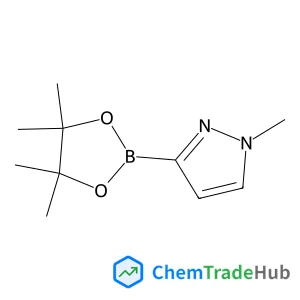
1-Methyl-3-(4,4,5,5-tetramethyl-1,3,2-dioxaborolan-2-yl)-1H-pyrazole
CAS Number:
1020174-04-2
Molecular Formula:
C10H17BN2O2
![5-Acetyl-2,3-dihydrobenzo[b]furan structure](https://static.chemtradehub.com/structs/908/90843-31-5-eea4.webp "5-Acetyl-2,3-dihydrobenzo[b]furan structure")
Recommended Suppliers






Disclaimer
This page provides academic journal information for reference and research purposes only. We are not affiliated with any journal publishers and do not handle publication submissions. For publication-related inquiries, please contact the respective journal publishers directly.
If you notice any inaccuracies in the information displayed, please contact us at support@chemtradehub.com. We will promptly review and address your concerns.