












Thermoelectric properties of a Mn substituted synthetic tetrahedrite
Literature Information
Publication Date
2014-12-02
DOI
10.1039/C4CP04039B
Impact Factor
3.676
Authors
Raju Chetty, Prem Kumar D. S., Herwig Michor, Satyam Suwas, Stephan Puchegger, Gerald Giester, Ramesh Chandra Mallik
View Original
Abstract
Tetrahedrite compounds Cu12−xMnxSb4S13 (0 ≤ x ≤ 1.8) were prepared by solid state synthesis. A detailed crystal structure analysis of Cu10.6Mn1.4Sb4S13 was performed by single crystal X-ray diffraction (XRD) at 100, 200 and 300 K confirming the noncentrosymmetric structure (space group I3m) of a tetrahedrite. The large atomic displacement parameter of the Cu2 atoms was described by splitting the 12e site into a partially and randomly occupied 24g site (Cu22) in addition to the regular 12e site (Cu21), suggesting a mix of dynamic and static off-plane Cu2 atom disorder. Rietveld powder XRD pattern and electron probe microanalysis revealed that all the Mn substituted samples showed a single tetrahedrite phase. The electrical resistivity increased with increasing Mn due to substitution of Mn2+ at the Cu1+ site. The positive Seebeck coefficient for all samples indicates that the dominant carriers are holes. Even though the thermal conductivity decreased as a function of increasing Mn, the thermoelectric figure of merit ZT decreased, because the decrease of the power factor is stronger than the decrease of the thermal conductivity. The maximum ZT = 0.76 at 623 K is obtained for Cu12Sb4S13. The coefficient of thermal expansion 13.5 ± 0.1 × 10⁻⁶ K−1 is obtained in the temperature range from 460 K to 670 K for Cu10.2Mn1.8Sb4S13. The Debye temperature, ΘD = 244 K for Cu10.2Mn1.8Sb4S13, was estimated from an evaluation of the elastic properties. The effective paramagnetic moment 7.45 μB/f.u. for Cu10.2Mn1.8Sb4S13 is fairly consistent with a high spin 3d5 ground state of Mn.
Related Literature
Experimental and simulation studies of unusual current blockade induced by translocation of small oxidized PEG through a single nanopore
S. Cabello-Aguilar, A. Abou Chaaya, F. Picaud, M. Bechelany, C. Pochat-Bohatier, S. Yesylevskyy, S. Kraszewski, M. C. Bechelany, F. Rossignol, E. Balanzat, J. M. Janot, P. Miele, P. Dejardin, S. Balme
2014-07-08
Paper
DOI: 10.1039/C4CP01954G
ortho-Dihydroxyl-9,10-anthraquinone dyes as visible-light sensitizers that exhibit a high turnover number for hydrogen evolution
Qin Li, Yanke Che, Hongwei Ji, Chuncheng Chen, Huaiyong Zhu, Wanhong Ma, Jincai Zhao
2014-02-14
Communication
DOI: 10.1039/C4CP00626G
A bolaamphiphilic amino acid appended photo-switching supramolecular gel and tuning of photo-switching behaviour
Subhasish Roy, Dibakar Kumar Maiti, Shrabani Panigrahi, Durga Basak, Arindam Banerjee
2014-02-03
Paper
DOI: 10.1039/C3CP55108C
Ordered mesoporous carbons obtained by a simple soft template method as sulfur immobilizers for lithium–sulfur cells
Noelia Moreno, Alvaro Caballero, Lourdes Hernán, Julián Morales, Jesús Canales-Vázquez
2014-07-03
Paper
DOI: 10.1039/C4CP02829E
Hematite photoelectrodes for water splitting: evaluation of the role of film thickness by impedance spectroscopy
Tânia Lopes, Luísa Andrade, Florian Le Formal, Michael Gratzel, Kevin Sivula, Adélio Mendes
2014-07-02
Paper
DOI: 10.1039/C3CP55473B
Modelling retinal chromophores photoisomerization: from minimal models in vacuo to ultimate bidimensional spectroscopy in rhodopsins
Artur Nenov
2014-02-11
Perspective
DOI: 10.1039/C3CP55211J
Ionic liquid clusters: structure, formation mechanism, and effect on the behavior of ionic liquids
Shimou Chen, Suojiang Zhang, Xiaomin Liu, Jinquan Wang, Jianji Wang, Kun Dong, Jian Sun, Baohua Xu
2013-10-17
Perspective
DOI: 10.1039/C3CP53116C
Molecules in the mirror: how SERS backgrounds arise from the quantum method of images
Stephen M. Barnett, Nadine Harris, Jeremy J. Baumberg
2014-02-20
Communication
DOI: 10.1039/C4CP00093E
High throughput first-principles calculations of bixbyite oxides for TCO applications
Nasrin Sarmadian, Rolando Saniz, Bart Partoens, Dirk Lamoen, Kalpana Volety, Guido Huyberechts, Johan Paul
2014-07-07
Paper
DOI: 10.1039/C4CP02788D
Non-classical logic inverter coupling a ZnO nanowire-based Schottky barrier transistor and adjacent Schottky diode
Seyed Hossein Hosseini Shokouh, Syed Raza Ali Raza, Hee Sung Lee, Seongil Im
2014-05-30
Communication
DOI: 10.1039/C4CP01266F
You might also like
Compound Q&A
What are the main uses of (5-Sulfamoyl-3-pyridinyl)boronic acid (CAS: 951233-61-7)?
(5-Sulfamoyl-3-pyridinyl)boronic acid is primarily used in chemical synthesis, p...
951233-61-7(5-Sulfamoyl-3-pyrid...
Compound Q&A
How is Benzyl 2-methyl-2-(methylsulfonyl)-4-pentenoate (CAS: 1942858-50-5) typically synthesized?
Benzyl 2-methyl-2-(methylsulfonyl)-4-pentenoate is typically synthesized via est...
1942858-50-5Benzyl 2-methyl-2-(m...
Compound Q&A
What precautions should be taken when handling 8-Fluoroquinolin-6-ol (CAS: 209353-22-0)?
When handling 8-Fluoroquinolin-6-ol (CAS: 209353-22-0), it is important to use p...
209353-22-08-Fluoroquinolin-6-o...
Compound Q&A
What are the physical and chemical properties of 1,3-Dibromo-5-(2-methyl-2-propanyl)benzene (CAS: 129316-09-2)?
1,3-Dibromo-5-(2-methyl-2-propanyl)benzene (CAS: 129316-09-2) is a crystalline c...
129316-09-21,3-Dibromo-5-(2-met...
Compound Q&A
What industries use Ethyl 7-chloro-4-oxo-1-(1,3-thiazol-2-yl)-1,4-dihydro-1,8-naphthyridine-3-carboxylate (CAS: 174726-87-5)?
Ethyl 7-chloro-4-oxo-1-(1,3-thiazol-2-yl)-1,4-dihydro-1,8-naphthyridine-3-carbox...
174726-87-5Ethyl 7-chloro-4-oxo...
Compound Q&A
What precautions should be taken when handling Delta-7-Avenasterol (CAS: 23290-26-8)?
When handling Delta-7-Avenasterol (CAS: 23290-26-8), it is important to wear app...
23290-26-8Delta-7-Avenasterol
Compound Q&A
What precautions should be taken when handling N-({(5R)-3-[3-Fluoro-4-(4-morpholinyl)phenyl]-2-oxo-1,3-oxazolidin-5-yl}methyl)acetamide (CAS: 872992-20-6)?
Proper handling involves the use of personal protective equipment such as gloves...
872992-20-6N-({(5R)-3-[3-Fluoro...
Compound Q&A
What precautions should be taken when handling 2-Methyl-2-proanyl 4-[(2-aminophenyl)amino]-1-piperidinecarboxylate (CAS: 79099-00-6)?
When handling 2-Methyl-2-proanyl 4-[(2-aminophenyl)amino]-1-piperidinecarboxylat...
79099-00-62-Methyl-2-propanyl ...
Compound Q&A
What is N-Methyl-4-chlorobenzylamine hydrochloride (CAS: 65542-24-7)?
N-Methyl-4-chlorobenzylamine hydrochloride (CAS: 65542-24-7) is a organic compou...
65542-24-7N-Methyl-4-chloroben...
Compound Q&A
Is [2-(Dodecyloxy)ethoxy]acetic acid (CAS: 27306-90-7) safe?
[2-(Dodecyloxy)ethoxy]acetic acid (CAS: 27306-90-7) is generally considered safe...
27306-90-7[2-(Dodecyloxy)ethox...
Source Journal
Physical Chemistry Chemical Physics

CiteScore:
5.5
Self-citation Rate:
10.3%
Articles per Year:
3036
Physical Chemistry Chemical Physics (PCCP) is an international journal co-owned by 19 physical chemistry and physics societies from around the world. This journal publishes original, cutting-edge research in physical chemistry, chemical physics and biophysical chemistry. To be suitable for publication in PCCP, articles must include significant innovation and/or insight into physical chemistry; this is the most important criterion that reviewers and Editors will judge against when evaluating submissions. The journal has a broad scope and welcomes contributions spanning experiment, theory, computation and data science. Topical coverage includes spectroscopy, dynamics, kinetics, statistical mechanics, thermodynamics, electrochemistry, catalysis, surface science, quantum mechanics, quantum computing and machine learning. Interdisciplinary research areas such as polymers and soft matter, materials, nanoscience, energy, surfaces/interfaces, and biophysical chemistry are welcomed if they demonstrate significant innovation and/or insight into physical chemistry. Joined experimental/theoretical studies are particularly appreciated when complementary and based on up-to-date approaches.
Recommended Compounds
![5-Chloropyrrolo[2,1-f][1,2,4]triazin-4(3H)-one structure](https://static.chemtradehub.com/structs/888/888720-60-3-4f7c.webp "5-Chloropyrrolo[2,1-f][1,2,4]triazin-4(3H)-one structure")
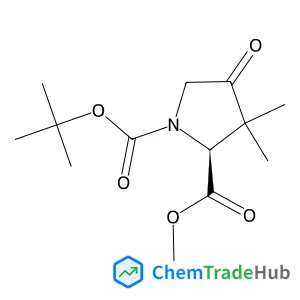
2-Methyl 1-(2-methyl-2-propanyl) (2S)-3,3-dimethyl-4-oxo-1,2-pyrrolidinedicarboxylate
CAS Number:
478698-30-5
Molecular Formula:
C13H21NO5
Recommended Suppliers





Disclaimer
This page provides academic journal information for reference and research purposes only. We are not affiliated with any journal publishers and do not handle publication submissions. For publication-related inquiries, please contact the respective journal publishers directly.
If you notice any inaccuracies in the information displayed, please contact us at support@chemtradehub.com. We will promptly review and address your concerns.