












A comparison between QM/MM and QM/QM based fitting of condensed-phase atomic polarizabilities
Literature Information
Publication Date
2014-07-21
DOI
10.1039/C4CP02401J
Impact Factor
3.676
Authors
C. Ruben Vosmeer, Karin Kiewisch, Karlijn Keijzer, Lucas Visscher, Daan P. Geerke
View Original
Abstract
Recently we reported a combined QM/MM approach to estimate condensed-phase values of atomic polarizabilities for use in (bio)molecular simulation. The setup relies on a MM treatment of the solvent when determining atomic polarizabilities to describe the response of a QM described solute to its external electric field. In this work, we study the effect of using alternative descriptions of the solvent molecules when evaluating atomic polarizabilities of a methanol solute. In a first step, we show that solute polarizabilities are not significantly affected upon substantially increasing the MM dipole moments towards values that are typically reported in literature for water solvent molecules. Subsequently, solute polarization is evaluated in the presence of a QM described solvent (using the frozen-density embedding method). In the latter case, lower oxygen polarizabilities were obtained than when using MM point charges to describe the solvent, due to introduction of Pauli-repulsion effects.
Related Literature
Construction of the first cross-linked double helical polyiodide
Caitlin J. Horn, Alexander J. Blake, Neil R. Champness, Vito Lippolis, Martin Schröder
2003-05-29
Communication
DOI: 10.1039/B303289B
The two-step chemical vapor deposition of Pd(allyl)Cp as an atom-efficient route to synthesize highly dispersed palladium nanoparticles on carbon nanofibers
Changhai Liang, Wei Xia, Hamideh Soltani-Ahmadi, Oliver Schlüter, Roland A. Fischer, Martin Muhler
2004-11-23
Communication
DOI: 10.1039/B412150C
Enantioselectivity in the catalytic hydroesterification of acenaphthylene: direct evidence of the racemization of PdII-alkyl species by a degenerate substitution equilibrium with Pd0Ln
Jordi Gironès, Josep Duran, Alfonso Polo, Julio Real
2003-06-13
Communication
DOI: 10.1039/B304553F
An apatite for fast oxide ion conduction
M. Saiful Islam, Julian R. Tolchard, Peter R. Slater
2003-05-21
Communication
DOI: 10.1039/B301179H
Bis(dioxaborine) compounds with large two-photon cross sections, and their use in the photodeposition of silver
Marcus Halik, Cara Grasso, Francesco Stellacci, Stephen Barlow, Jean-Luc Brédas
2003-05-21
Communication
DOI: 10.1039/B303135G
Gram-scale CCVD synthesis of double-walled carbon nanotubes
Emmanuel Flahaut, Revathi Bacsa, Alain Peigney, Christophe Laurent
2003-05-19
Communication
DOI: 10.1039/B301514A
Magnetic field effect on singlet oxygen production in a biochemical system
Yan Liu, Ruth Edge, Kevin Henbest, Christiane R. Timmel, P. J. Hore, Peter Gast
2004-11-11
Communication
DOI: 10.1039/B413489C
Microwave absorption by nanostructural ferric oxide encapsulated within MCM-41
Haiquan Guo, Wei Xu, Min-Hui Cui, Nan-Loh Yang, Daniel L. Akins
2003-05-19
Communication
DOI: 10.1039/B303224H
You might also like
Compound Q&A
What are the main uses of (3.beta.)-3-Hydroxy-N,N-dimethyl-chol-5-en-24-amide (CAS: 79066-03-8)?
(3.beta.)-3-Hydroxy-N,N-dimethyl-chol-5-en-24-amide (CAS: 79066-03-8) is primari...
79066-03-8(3.beta.)-3-Hydroxy-...
Compound Q&A
What regulatory guidelines apply to 5-(aminomethyl)-2-methoxyphenol (CAS: 89702-89-6)?
5-(Aminomethyl)-2-methoxyphenol (CAS: 89702-89-6) is classified under GHS as a s...
89702-89-65-(aminomethyl)-2-me...
Compound Q&A
What is Thieno[2,3-c]pyridin-7(6H)-one (CAS: 28981-13-7)?
Thieno[2,3-c]pyridin-7(6H)-one (CAS: 28981-13-7) is a heterocyclic organic compo...
28981-13-7Thieno[2,3-c]pyridin...
Compound Q&A
Is 1-[(6-Methoxy-3-pyridinyl)methyl]-4-piperidinamine dihydrochloride (CAS: 1185311-28-7) safe?
1-[(6-Methoxy-3-pyridinyl)methyl]-4-piperidinamine dihydrochloride is generally ...
1185311-28-71-[(6-Methoxy-3-pyri...
Compound Q&A
What regulatory guidelines apply to [(2E)-3-Phenyl-2-propen-1-yl]phosphonic acid (CAS: 146404-58-2)?
[(2E)-3-Phenyl-2-propen-1-yl]phosphonic acid (CAS: 146404-58-2) is regulated und...
146404-58-2[(2E)-3-Phenyl-2-pro...
Compound Q&A
What regulatory guidelines apply to 6-Bromo-7-methoxyquinoline (CAS: 1620515-86-7)?
6-Bromo-7-methoxyquinoline (CAS: 1620515-86-7) falls under the scope of the Glob...
1620515-86-76-Bromo-7-methoxyqui...
Compound Q&A
What industries use (2R)-1-(1-Benzofuran-2-yl)-N-propyl-2-pentanamine (CAS: 260550-89-8)?
This compound is primarily used in the pharmaceutical industry for the developme...
260550-89-8(2R)-1-(1-Benzofuran...
Compound Q&A
What are the main uses of 1-Ethyl-7-[2-methyl-6-(4H-1,2,4-triazol-3-yl)-3-pyridinyl]-3,5-dihydropyrazino[2,3-b]pyrazin-2(1H)-one (CAS: 1228013-15-7)?
1-Ethyl-7-[2-methyl-6-(4H-1,2,4-triazol-3-yl)-3-pyridinyl]-3,5-dihydropyrazino[2...
1228013-15-71-Ethyl-7-[2-methyl-...
Compound Q&A
Are there alternatives to {5-(Acryloylamino)-2-[(dimethylamino)methyl]phenyl}boronic acid (CAS: 1217500-78-1) in synthesis?
Alternative reagents such as 2-[(dimethylamino)methyl]phenylboronic acid or rela...
1217500-78-1{5-(Acryloylamino)-2...
Compound Q&A
What is 3-(Piperidin-4-yloxy)pyridine (CAS: 310881-48-2)?
3-(Piperidin-4-yloxy)pyridine (CAS: 310881-48-2) is an organic compound with the...
310881-48-23-(Piperidin-4-yloxy...
Source Journal
Physical Chemistry Chemical Physics

CiteScore:
5.5
Self-citation Rate:
10.3%
Articles per Year:
3036
Physical Chemistry Chemical Physics (PCCP) is an international journal co-owned by 19 physical chemistry and physics societies from around the world. This journal publishes original, cutting-edge research in physical chemistry, chemical physics and biophysical chemistry. To be suitable for publication in PCCP, articles must include significant innovation and/or insight into physical chemistry; this is the most important criterion that reviewers and Editors will judge against when evaluating submissions. The journal has a broad scope and welcomes contributions spanning experiment, theory, computation and data science. Topical coverage includes spectroscopy, dynamics, kinetics, statistical mechanics, thermodynamics, electrochemistry, catalysis, surface science, quantum mechanics, quantum computing and machine learning. Interdisciplinary research areas such as polymers and soft matter, materials, nanoscience, energy, surfaces/interfaces, and biophysical chemistry are welcomed if they demonstrate significant innovation and/or insight into physical chemistry. Joined experimental/theoretical studies are particularly appreciated when complementary and based on up-to-date approaches.
Recommended Compounds
![N-[(6-Bromo-3-pyridinyl)methyl]ethanamine structure](https://static.chemtradehub.com/structs/120/120740-05-8-ca55.webp "N-[(6-Bromo-3-pyridinyl)methyl]ethanamine structure")
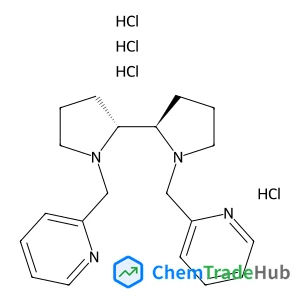
(2R,2'R)-1,1'-Bis(2-pyridinylmethyl)-2,2'-bipyrrolidine tetrahydrochloride
CAS Number:
1228077-88-0
Molecular Formula:
C20H30Cl4N4
![4-[(4-Bromophenyl)sulfonyl]thiomorpholine structure](https://static.chemtradehub.com/structs/223/223555-81-5-2d67.webp "4-[(4-Bromophenyl)sulfonyl]thiomorpholine structure")

1-(3',5'-Di-O-benzoyl-2'-deoxy-2'-fluoro-b-D-arabinofuranosyl)thymine
CAS Number:
97614-47-6
Molecular Formula:
C24H21FN2O7
Recommended Suppliers






Disclaimer
This page provides academic journal information for reference and research purposes only. We are not affiliated with any journal publishers and do not handle publication submissions. For publication-related inquiries, please contact the respective journal publishers directly.
If you notice any inaccuracies in the information displayed, please contact us at support@chemtradehub.com. We will promptly review and address your concerns.