












Photoinduced water splitting with oxotitanium tetraphenylporphyrin
Literature Information
Publication Date
2014-06-09
DOI
10.1039/C4CP02269F
Impact Factor
3.676
Authors
O. Morawski, K. Izdebska, E. Karpiuk, J. Nowacki, A. Suchocki, A. L. Sobolewski
View Original
Abstract
Photocatalytic splitting of water was investigated in a heterogeneous system consisting of micro-crystallites of oxotitanium tetraphenylporphyrin deposited on fused silica plates, immersed in water and excited within the visible range of their absorption spectra. The water photolysis was evidenced by the spectroscopic detection of hydroxyl radicals generated in the reaction. The experimental results confirm the mechanism of water splitting and generation of OH˙ radicals proposed theoretically by Sobolewski and Domcke [Phys. Chem. Chem. Phys., 2012, 14, 12807] for the oxotitaniumporphyrin–water complex. It is shown that photocatalytic water splitting occurs in pure water, and neither pH-bias nor external voltage is required to promote the reaction.
Related Literature
Nanoscale coupling of photons to vibrational excitation of Agnanoparticle 2D array studied by scanning tunneling microscope light emission spectroscopy
Satoshi Katano, Yoichi Uehara
2010-10-12
Paper
DOI: 10.1039/C0CP01005G
A DFT study of PtAu bimetallic clusters adsorbed on MgO/Ag(100) ultrathin films
Sabrina Sicolo, Gianfranco Pacchioni
2010-03-10
Paper
DOI: 10.1039/C000841A
Stabilisation of liquid–air surfaces by particles of low surface energy
Bernard P. Binks, Anaïs Rocher
2010-06-22
Communication
DOI: 10.1039/C0CP00777C
Simultaneous adsorption of benzene and dioxygen in CuHY zeolites as a precursor process to the aerobic oxidation of benzene to phenol
Shampa Santra, Hermann Stoll, Guntram Rauhut
2010-02-10
Paper
DOI: 10.1039/B921531J
Study of polycyclic aromatic hydrocarbons adsorbed on graphene using density functional theory with empirical dispersion correction
Olga V. Ershova, Timothy C. Lillestolen, Elena Bichoutskaia
2010-04-09
Paper
DOI: 10.1039/C000370K
Pronounced polarization anisotropy in resonant X-ray emission from acetic acid molecules in solution
Atsunari Hiraya
2010-06-21
Communication
DOI: 10.1039/C003644G
A facile chemical approach for preparing a SERS active silver substrate
Cheng Yang, Yu-Tao Xie, Matthew M. F. Yuen, Xiaomin Xiong, C. P. Wong
2010-09-30
Communication
DOI: 10.1039/C0CP00414F
CO as an IRprobe molecule for characterization of copper ions in a basolite C300 MOF sample
Nikola Drenchev, Elena Ivanova, Mihail Mihaylov, Konstantin Hadjiivanov
2010-04-14
Paper
DOI: 10.1039/C000949K
Metallofullerenes as fuelcell electrocatalysts: A theoretical investigation of adsorbates on C59Pt
Luigi Genovese, Guillaume Krosnicki, Olivier Lemaire, Thierry Deutsch, Alejandro A. Franco
2010-07-08
Paper
DOI: 10.1039/B927111B
You might also like
Compound Q&A
How should waste containing N-Methoxy-N-methyl-1,3-thiazole-5-carboxamide (CAS: 898825-89-3) be handled?
Waste containing N-Methoxy-N-methyl-1,3-thiazole-5-carboxamide (CAS: 898825-89-3...
898825-89-3N-Methoxy-N-methyl-1...
Compound Q&A
How should N-(4-Biphenylyl)dibenzo[b,d]furan-4-amine (CAS: 1318338-47-4) be stored?
N-(4-Biphenylyl)dibenzo[b,d]furan-4-amine should be stored in a tightly sealed c...
1318338-47-4N-(4-Biphenylyl)dibe...
Compound Q&A
What is the market or research trend for 3-Acetamido-5-amino-2,4,6-triiodobenzoic acid (CAS: 1713-07-1)?
The market for 3-Acetamido-5-amino-2,4,6-triiodobenzoic acid (CAS: 1713-07-1) is...
1713-07-13-Acetamido-5-amino-...
Compound Q&A
How should Benzyl 2-O-acetyl-3,4,6-tri-O-benzyl-beta-D-galactopyranoside (CAS: 61820-03-9) be stored?
Benzyl 2-O-acetyl-3,4,6-tri-O-benzyl-beta-D-galactopyranoside (CAS: 61820-03-9) ...
61820-03-9Benzyl 2-O-acetyl-3,...
Compound Q&A
What regulatory guidelines apply to 2-Ethylpiperazine dihydrochloride (CAS: 438050-52-3)?
2-Ethylpiperazine dihydrochloride (CAS: 438050-52-3) is regulated under the Glob...
438050-52-32-Ethylpiperazine di...
Compound Q&A
What regulatory guidelines apply to 1,1'-[1,3-Phenylenebis(methylene)]bis(3-methyl-1H-pyrrole-2,5-dione) (CAS: 119462-56-5)?
1,1'-[1,3-Phenylenebis(methylene)]bis(3-methyl-1H-pyrrole-2,5-dione) (CAS: 11946...
119462-56-51,1'-[1,3-Phenyleneb...
Compound Q&A
Are there alternatives to 5-Fluoro-2-(1-pyrrolidinyl)pyridine (CAS: 1287217-79-1) in synthesis?
Several alternatives can be used in the synthesis of 5-Fluoro-2-(1-pyrrolidinyl)...
1287217-79-15-Fluoro-2-(1-pyrrol...
Compound Q&A
What precautions should be taken when handling 1-((2R,3R,4R,5R)-5-((bis(4-methoxyphenyl)(phenyl)methoxy)methyl)-4-hydroxy-3-methoxytetrahydrofuran-2-yl)-5-methylpyrimidine-2,4(1H,3H)-dione (CAS: 153631-19-7)?
Proper personal protective equipment (PPE) must be worn when handling this compo...
153631-19-71-((2R,3R,4R,5R)-5-(...
Compound Q&A
What precautions should be taken when handling 6-Bromoimidazo[1,2-a]pyridin-8-amine (CAS: 676371-00-9)?
When handling 6-Bromoimidazo[1,2-a]pyridin-8-amine, it is important to wear appr...
676371-00-96-Bromoimidazo[1,2-a...
Compound Q&A
Are there alternatives to (2S,4R)-4-(4-Nitrobenzyl)pyrrolidine-2-carboxylic acid hydrochloride (CAS: 1049740-22-8) in synthesis?
Alternatives to (2S,4R)-4-(4-Nitrobenzyl)pyrrolidine-2-carboxylic acid hydrochlo...
1049740-22-8(2S,4R)-4-(4-Nitrobe...
Source Journal
Physical Chemistry Chemical Physics

CiteScore:
5.5
Self-citation Rate:
10.3%
Articles per Year:
3036
Physical Chemistry Chemical Physics (PCCP) is an international journal co-owned by 19 physical chemistry and physics societies from around the world. This journal publishes original, cutting-edge research in physical chemistry, chemical physics and biophysical chemistry. To be suitable for publication in PCCP, articles must include significant innovation and/or insight into physical chemistry; this is the most important criterion that reviewers and Editors will judge against when evaluating submissions. The journal has a broad scope and welcomes contributions spanning experiment, theory, computation and data science. Topical coverage includes spectroscopy, dynamics, kinetics, statistical mechanics, thermodynamics, electrochemistry, catalysis, surface science, quantum mechanics, quantum computing and machine learning. Interdisciplinary research areas such as polymers and soft matter, materials, nanoscience, energy, surfaces/interfaces, and biophysical chemistry are welcomed if they demonstrate significant innovation and/or insight into physical chemistry. Joined experimental/theoretical studies are particularly appreciated when complementary and based on up-to-date approaches.
Recommended Compounds
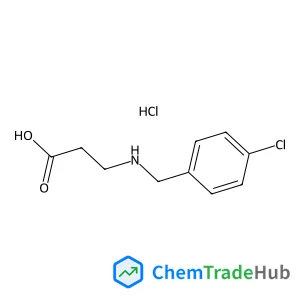
N-(4-Chlorobenzyl)-beta-alanine hydrochloride (1:1)
CAS Number:
1172479-10-5
Molecular Formula:
C10H13Cl2NO2
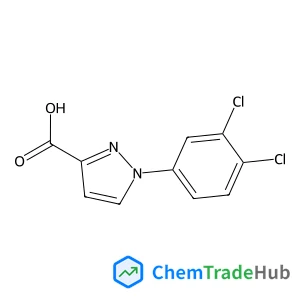
1-(3,4-Dichlorophenyl)-1H-pyrazole-3-carboxylic acid
CAS Number:
1152949-12-6
Molecular Formula:
C10H6Cl2N2O2
Recommended Suppliers





Disclaimer
This page provides academic journal information for reference and research purposes only. We are not affiliated with any journal publishers and do not handle publication submissions. For publication-related inquiries, please contact the respective journal publishers directly.
If you notice any inaccuracies in the information displayed, please contact us at support@chemtradehub.com. We will promptly review and address your concerns.