













Partitioning of prototropic species of an anticancer drug ellipticine in bile salt aggregates of different head groups and hydrophobic skeletons: a photophysical study to probe bile salts as multisite drug carriers
Literature Information
Publication Date
2014-04-25
DOI
10.1039/C4CP01308E
Impact Factor
3.676
Authors
Raina Thakur, Anupam Das, Chandan Adhikari, Anjan Chakraborty
View Original
Abstract
The entrapment of neutral and cationic species of an anticancer drug, namely ellipticine and their dynamic features in different bile salt aggregates have been investigated for the first time using steady state and time-resolved fluorescence spectroscopy. Because ellipticine exists in various prototropic forms under physiological conditions, we performed comparative photophysical and dynamical studies on these prototropic species in different bile salts varying in their head groups and hydrophobic skeletons. We found that the initial interaction between ellipticine and bile salts is governed by the electrostatic forces where cationic ellipticine is anchored to the head groups of bile salts. Bile salts having conjugated head groups are better candidates to bind with the cationic species than those having the non-conjugated ones. The fact implies that binding of cationic species to different bile salts depends on the pKa of the corresponding bile acids. The hydrophobic interaction dominates at higher concentrations of bile salts due to formation of aggregates and results in entrapment of neutral ellipticine molecules according to their hydrophobicity indices. Thus bile salts act as multisite drug carriers. The rotational relaxation parameters of cationic ellipticine were found to be dependent on head groups and the number of hydroxyl groups on the hydrophilic surface of bile salts. Cationic ellipticine exhibits a faster rotational relaxation in the tri-hydroxy bile salt aggregates than in di-hydroxy bile salts. We interpreted this observation from the fact that tri-hydroxy bile salts hold a higher number of water molecules in their hydrophilic surface offering a less viscous environment for ellipticine compared to di-hydroxy bile salts. Surprisingly, the neutral ellipticine molecules display almost the same rotational relaxation in all the bile salts. The observation indicates that after intercalation inside the hydrophobic pocket, neutral ellipticine molecules experience similar confinement in all the bile salts.
Related Literature
Voltammetric studies of ion transfer across model biological membranes
Review Article
DOI: 10.1039/CS9881700317
N-Directed fluorination of unactivated Csp3–H bonds
Emily N. Pinter, Jenna E. Bingham, Deyaa I. AbuSalim, Silas P. Cook
2019-12-16
Edge Article
DOI: 10.1039/C9SC04055B
Angular geometries and other properties of hydrogen-bonded dimers: a simple electrostatic interpretation of the success of the electron-pair model
Review Article
DOI: 10.1039/CS9871600467
A sildenafil cocrystal based on acetylsalicylic acid exhibits an enhanced intrinsic dissolution rate
Miroslav Žegarac, Edislav Lekšić, Maja Devčić Bogdanović, Dejan-Krešimir Bučar, Miljenko Dumić, Ernest Meštrović
2013-10-09
Communication
DOI: 10.1039/C3CE42013B
Recent developments in the synthesis of myo-inositol phosphates
Review Article
DOI: 10.1039/CS9891800083
Structural isomerization in DNA: the formation of cruciform structures in supercoiled DNA molecules
Review Article
DOI: 10.1039/CS9891800053
You might also like
Compound Q&A
What are the main uses of 1H-Indazole-6-carbonitrile (CAS: 141290-59-7)?
1H-Indazole-6-carbonitrile finds applications in pharmaceuticals, where it serve...
141290-59-71H-Indazole-6-carbon...
Compound Q&A
How should waste containing Dioctyl (2E)-2-butenedioate (CAS: 2997-85-5) be handled?
Waste containing Dioctyl (2E)-2-butenedioate (CAS: 2997-85-5) should be collecte...
2997-85-5Dioctyl (2E)-2-buten...
Compound Q&A
What industries use Sodium [(1,2-benzoxazol-3-ylmethyl)sulfonyl]azanide (CAS: 68291-98-5)?
Sodium [(1,2-benzoxazol-3-ylmethyl)sulfonyl]azanide is primarily used in pharmac...
68291-98-5Sodium [(1,2-benzoxa...
Compound Q&A
Are there alternatives to Dimethyl 4-(4,4,5,5-tetramethyl-1,3,2-dioxaborolan-2-yl)-2,6-pyridinedicarboxylate (CAS: 741709-66-0) in synthesis?
Dimethyl 4-(4,4,5,5-tetramethyl-1,3,2-dioxaborolan-2-yl)-2,6-pyridinedicarboxyla...
741709-66-0Dimethyl 4-(4,4,5,5-...
Compound Q&A
How should waste containing 2-Fluoro-6-hydrazinopyridine (CAS: 80714-39-2) be handled?
Waste containing 2-Fluoro-6-hydrazinopyridine (CAS: 80714-39-2) should be manage...
80714-39-22-Fluoro-6-hydrazino...
Compound Q&A
What is 6-Formyl-2-pyridinecarboxylic acid (CAS: 499214-11-8)?
6-Formyl-2-pyridinecarboxylic acid is an organic compound with the molecular for...
499214-11-86-Formyl-2-pyridinec...
Compound Q&A
What is the market or research trend for 3-(3,4-dimethoxyphenyl)-2,5-dimethyl-N-(2-morpholin-4-ylethyl)pyrazolo[1,5-a]pyrimidin-7-amine (CAS: 900874-91-1)?
Research trends for this compound indicate a focus on its potential applications...
900874-91-13-(3,4-dimethoxyphen...
Compound Q&A
How is 9H-Tribenzo[b,d,f]azepine (CAS: 29875-73-8) typically synthesized?
9H-Tribenzo[b,d,f]azepine is typically synthesized via a multi-step process invo...
29875-73-89H-Tribenzo[b,d,f]az...
Compound Q&A
How is 1-Cyclopropyl-7-ethoxy-6-fluoro-8-methoxy-4-oxo-1,4-dihydro-3-quinolinecarboxylic acid (CAS: 1797982-51-4) typically synthesized?
1-Cyclopropyl-7-ethoxy-6-fluoro-8-methoxy-4-oxo-1,4-dihydro-3-quinolinecarboxyli...
1797982-51-41-Cyclopropyl-7-etho...
Compound Q&A
How should waste containing Methyl 3-oxo-1,2,3,4-tetrahydro-6-quinoxalinecarboxylate (CAS: 671820-52-3) be handled?
Waste containing Methyl 3-oxo-1,2,3,4-tetrahydro-6-quinoxalinecarboxylate (CAS: ...
671820-52-3Methyl 3-oxo-1,2,3,4...
Source Journal
Physical Chemistry Chemical Physics

CiteScore:
5.5
Self-citation Rate:
10.3%
Articles per Year:
3036
Physical Chemistry Chemical Physics (PCCP) is an international journal co-owned by 19 physical chemistry and physics societies from around the world. This journal publishes original, cutting-edge research in physical chemistry, chemical physics and biophysical chemistry. To be suitable for publication in PCCP, articles must include significant innovation and/or insight into physical chemistry; this is the most important criterion that reviewers and Editors will judge against when evaluating submissions. The journal has a broad scope and welcomes contributions spanning experiment, theory, computation and data science. Topical coverage includes spectroscopy, dynamics, kinetics, statistical mechanics, thermodynamics, electrochemistry, catalysis, surface science, quantum mechanics, quantum computing and machine learning. Interdisciplinary research areas such as polymers and soft matter, materials, nanoscience, energy, surfaces/interfaces, and biophysical chemistry are welcomed if they demonstrate significant innovation and/or insight into physical chemistry. Joined experimental/theoretical studies are particularly appreciated when complementary and based on up-to-date approaches.
Recommended Compounds


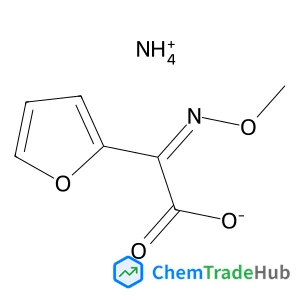
Ammonium (Z)-2-(furan-2-yl)-2-(methoxyimino)acetate
CAS Number:
97148-39-5
Molecular Formula:
C7H10N2O4
Recommended Suppliers




Disclaimer
This page provides academic journal information for reference and research purposes only. We are not affiliated with any journal publishers and do not handle publication submissions. For publication-related inquiries, please contact the respective journal publishers directly.
If you notice any inaccuracies in the information displayed, please contact us at support@chemtradehub.com. We will promptly review and address your concerns.