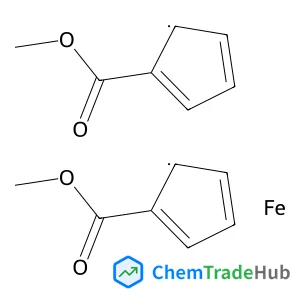
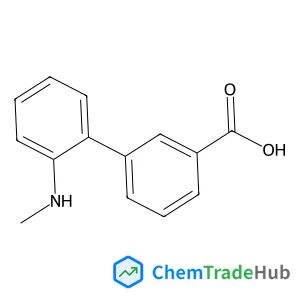
(S)-(9H-Fluoren-9-yl)methyl (pyrrolidin-2-ylmethyl)carbamate hydrochloride
CAS Number:
1217813-15-4
Molecular Formula:
C20H23ClN2O2
Matti Kiupel, Vilma Yuzbasiyan-Gurkan, Don McNaughton, Bayden R. Wood
FTIR spectroscopy is a widely used technique that provides insights into disease processes at the molecular level. Due to its numerous advantages it is becoming an increasingly powerful tool for the study of biological materials and has the potential to become an excellent diagnostic method, especially considering the low cost of transflection substrates. However, questions about the usefulness of the transflection measurement mode due to the complicated nature of physical processes occurring during the measurement and in particular the Electric Field Standing Wave (EFSW) effect have been raised. In this paper we present a comparison of the two most common FT-IR measurement modes: transmission and transfection using healthy and pathologically altered tissue (histiocytic sarcoma). We found that the major differences between normal and cancerous tissue were associated with changes DNA and carbohydrate content. In particular we identified a band at 964 cm−1 assigned to a nucleic acid phosphodiester backbone mode, which appeared more pronounced in cancerous tissue irrespective of the substrate. We applied Principal Component Analysis, Unsupervised Hierarchical Cluster Analysis and k-means clustering to transmission and transflection substrates and found that both measurement modes were equally capable of discrimination normal form cancerous tissue. Moreover, the differences between spectra from cancerous and normal tissue were significantly more important than the ones arising from the measurement modes.
Meng Xia, Xinyao Liu, Zhaorong Shang, Fuqiang Fan
DOI: 10.1039/D3CP03879C
Hao Jiang, Ulf Ryde
DOI: 10.1039/D3CP05181A
Ting Li, Zhongfu Yan, Mengjiao Liu, Xinyu Liu, Liang Liu, Jiahao Chen, Jianping Long
DOI: 10.1039/D3SE01334K
Sergey S. Nikitin, Alexander D. Koryakov, Elizaveta A. Antipinskaya, Mikhail V. Patrakeev
DOI: 10.1039/D3CP05421G
Hainan Jiang, Yaolong He, Xiaolin Li, Zhiyao Jin, Huijie Yu, Dawei Li
DOI: 10.1039/D3CP04274J
Xiao-Juan Wang, Yan Long, Chuan-Wan Wei, Shu-Qin Gao
DOI: 10.1039/D3CP05403A
Li-Ting Cui, Wen-Feng Lin, Shi-Gang Sun
DOI: 10.1039/D3SE01275A
Matej Kanduč, Emanuel Schneck, Roland R. Netz
DOI: 10.1039/D3CP05084J
DOI: 10.1039/D3CP03393G
Shengzhuo Chen, Juntian Niu, Xianrong Zheng, Haiyu Liu, Yan Jin, Jingyu Ran
DOI: 10.1039/D3CP05435G
Waste containing N-Methoxy-N-methyl-1,3-thiazole-5-carboxamide (CAS: 898825-89-3...
N-(4-Biphenylyl)dibenzo[b,d]furan-4-amine should be stored in a tightly sealed c...
The market for 3-Acetamido-5-amino-2,4,6-triiodobenzoic acid (CAS: 1713-07-1) is...
Benzyl 2-O-acetyl-3,4,6-tri-O-benzyl-beta-D-galactopyranoside (CAS: 61820-03-9) ...
2-Ethylpiperazine dihydrochloride (CAS: 438050-52-3) is regulated under the Glob...
1,1'-[1,3-Phenylenebis(methylene)]bis(3-methyl-1H-pyrrole-2,5-dione) (CAS: 11946...
Several alternatives can be used in the synthesis of 5-Fluoro-2-(1-pyrrolidinyl)...
Proper personal protective equipment (PPE) must be worn when handling this compo...
When handling 6-Bromoimidazo[1,2-a]pyridin-8-amine, it is important to wear appr...
Alternatives to (2S,4R)-4-(4-Nitrobenzyl)pyrrolidine-2-carboxylic acid hydrochlo...

Analyst publishes analytical and bioanalytical research that reports premier fundamental discoveries and inventions, and the applications of those discoveries, unconfined by traditional discipline barriers.