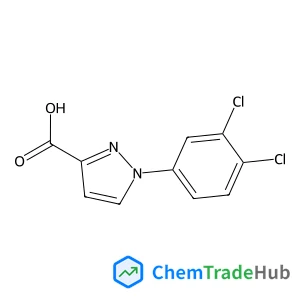
1-(3,4-Dichlorophenyl)-1H-pyrazole-3-carboxylic acid
CAS Number:
1152949-12-6
Molecular Formula:
C10H6Cl2N2O2
Peng Gu, Renqing Lü, Dong Liu, Shutao Wang
In order to gain an understanding of the nature of the interactions among thiophene (TS), thiophene sulfone (TSO2), dibenzothiophene (DBT), dibenzothiophene sulfone (DBTO2) and the ionic liquid N-butylpyridinium hydrogen sulfate ([BPY][HSO4]), a systematic investigation has been carried out using ab initio methods. The most stable structures indicate that both [BPY]+ and [HSO4]− play crucial roles in the interactions between TS, TSO2, DBT, DBTO2 and [BPY][HSO4]. Analyses of the most stable optimized structures suggest the occurrence of steric effects, π–π stacking effects, hydrogen bonds, and dihydrogen bonds. The π–π stacking effect in [BPY][HSO4]–TSO2/[BPY][HSO4]–DBTO2 is less significant than that in [BPY][HSO4]–TS/[BPY][HSO4]–DBT, as TSO2 and DBTO2 are more nucleophilic than TS and DBT, resulting in stronger interactions between [BPY][HSO4] and TSO2/DBTO2 than between [BPY][HSO4] and TS/DBT. Thermodynamical data also demonstrate that TSO2/DBTO2 are more prone to interact with [BPY][HSO4] compared with TS/DBT.
Yongliang Zhang, Xilong Zhang, Mingjie Li, Yunfei Liu, Zhen Hu
DOI: 10.1039/D3SE00989K
Robert Tirawat, Mengjin Yang, Severin N. Habisreutinger, Soňa Uličná, Ross A. Kerner, Kai Zhu, Laura T. Schelhas, Axel F. Palmstrom
DOI: 10.1039/D3SE01268A
Zhiye Wang, Yunchuan Li, Mingjun Sun
DOI: 10.1039/D3CP04593E
Ekaterina A. Konopkina, Alexander V. Gopin, Anton S. Pozdeev, Maria G. Chernysheva, Paulina Kalle, Elizaveta A. Pavlova, Stepan N. Kalmykov, Vladimir G. Petrov, Nataliya E. Borisova, Alexander A. Guda, Petr I. Matveev
DOI: 10.1039/D3CP05081E
Srinivas Pattipaka, Tae Wan Park, Young Min Bae, Yujin Na, Kyeongwoon Chung, Kwi-Il Park, Jungho Ryu, Woon Ik Park, Geon-Tae Hwang
DOI: 10.1039/D3SE01206A
Zhifeng Lin, Xueding Jiang, Weicheng Xu, Fuhua Li, Xin Chen, Si Liu, Xihong Lu
DOI: 10.1039/D3CP04350A
Iosif V. Leibin, Dmitry S. Bezrukov, Alexei A. Buchachenko
DOI: 10.1039/D3CP04178F
DOI: 10.1039/D3CP03393G
Waste containing N-Methoxy-N-methyl-1,3-thiazole-5-carboxamide (CAS: 898825-89-3...
N-(4-Biphenylyl)dibenzo[b,d]furan-4-amine should be stored in a tightly sealed c...
The market for 3-Acetamido-5-amino-2,4,6-triiodobenzoic acid (CAS: 1713-07-1) is...
Benzyl 2-O-acetyl-3,4,6-tri-O-benzyl-beta-D-galactopyranoside (CAS: 61820-03-9) ...
2-Ethylpiperazine dihydrochloride (CAS: 438050-52-3) is regulated under the Glob...
1,1'-[1,3-Phenylenebis(methylene)]bis(3-methyl-1H-pyrrole-2,5-dione) (CAS: 11946...
Several alternatives can be used in the synthesis of 5-Fluoro-2-(1-pyrrolidinyl)...
Proper personal protective equipment (PPE) must be worn when handling this compo...
When handling 6-Bromoimidazo[1,2-a]pyridin-8-amine, it is important to wear appr...
Alternatives to (2S,4R)-4-(4-Nitrobenzyl)pyrrolidine-2-carboxylic acid hydrochlo...

Physical Chemistry Chemical Physics (PCCP) is an international journal co-owned by 19 physical chemistry and physics societies from around the world. This journal publishes original, cutting-edge research in physical chemistry, chemical physics and biophysical chemistry. To be suitable for publication in PCCP, articles must include significant innovation and/or insight into physical chemistry; this is the most important criterion that reviewers and Editors will judge against when evaluating submissions. The journal has a broad scope and welcomes contributions spanning experiment, theory, computation and data science. Topical coverage includes spectroscopy, dynamics, kinetics, statistical mechanics, thermodynamics, electrochemistry, catalysis, surface science, quantum mechanics, quantum computing and machine learning. Interdisciplinary research areas such as polymers and soft matter, materials, nanoscience, energy, surfaces/interfaces, and biophysical chemistry are welcomed if they demonstrate significant innovation and/or insight into physical chemistry. Joined experimental/theoretical studies are particularly appreciated when complementary and based on up-to-date approaches.
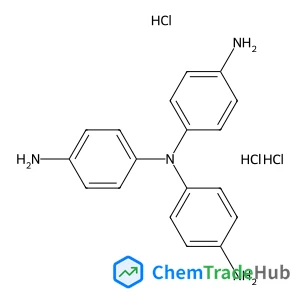
![2-Methylbenzo[h]quinoline structure](https://static.chemtradehub.com/structs/605/605-88-9-ac43.webp "2-Methylbenzo[h]quinoline structure")